
Jamaican Jerk Pork is a flavorful Caribbean dish made with pork, hot peppers, fresh herbs, and warm spices. The marinade gives the meat its signature taste, with a mix of heat, savory seasoning, and a hint of sweetness. Grilling adds a smoky finish, but you can also make this dish in your oven.
You don’t need a special outdoor setup to enjoy jerk pork at home. Choose a suitable cut of pork, give it time to absorb the marinade, and cook it slowly when using larger cuts. Serve it with rice and peas, fried plantains, or steamed cabbage for a satisfying Jamaican-style meal.
What Is Jamaican Jerk Pork?
Jamaican jerk pork is pork seasoned with a spicy mixture of peppers, herbs, and spices. Common ingredients include Scotch bonnet peppers, thyme, scallions, garlic, ginger, and allspice. The marinade gives the meat its distinctive Jamaican flavor.
Traditional jerk cooking uses wood smoke to add another layer of flavor. At home, you can prepare jerk pork on a charcoal grill, a gas grill, or in the oven. Each method produces a slightly different result, but the seasoning remains the heart of the dish.
The Jamaican Tradition Behind Jerk Cooking
Jerk cooking is an important part of Jamaica’s food heritage. Its history is associated with the Maroons, who resisted enslavement and established communities in Jamaica. Over time, local ingredients and traditional cooking methods helped shape the jerk style enjoyed today.
Traditional jerk seasoning often includes Scotch bonnet peppers, allspice, and thyme. Cooking over wood adds a smoky taste that is difficult to reproduce exactly indoors.
Today, jerk pork is served at Jamaican cookshops, street food stalls, family gatherings, and restaurants. Home cooks around the world have also adapted the dish for their own kitchens.
What Makes Jerk Pork Different from Regular Barbecue?
The biggest difference is the seasoning. Jamaican jerk pork relies on a spicy marinade made with herbs, peppers, and allspice. American barbecue often uses a dry rub, a sweet or tangy sauce, or a combination of both.
Traditional jerk cooking also uses smoke to build flavor. Barbecue methods vary by region, so not every barbecue dish tastes the same.
Both styles can produce delicious pork, but jerk seasoning gives the meat a distinctive combination of peppery heat, herbal flavor, and warm spices.
Ingredients for Jamaican Jerk Pork
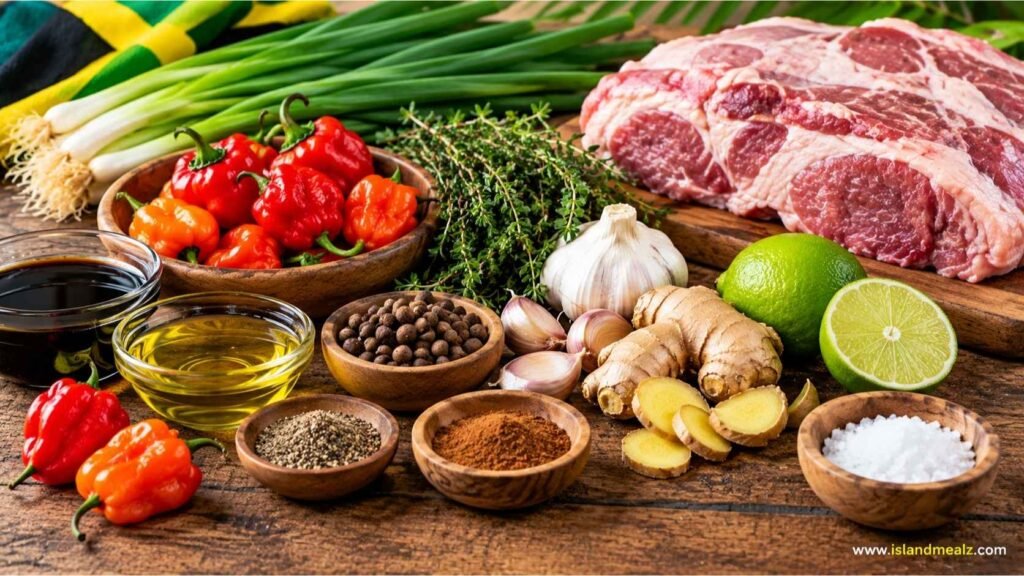
You can make a flavorful jerk marinade with ingredients available at many American grocery stores. Fresh peppers, herbs, and scallions bring brightness, while allspice, garlic, and ginger add depth. The amounts below provide a starting point for seasoning three pounds of pork.
Best Cut of Pork to Use
Pork shoulder is a good choice when you want tender meat that can be sliced or shredded after slow cooking. Boston butt is another suitable option and is commonly sold as a pork shoulder cut.
Pork loin and pork chops work if you prefer leaner meat or shorter cooking times. They have less fat than shoulder, so watch them closely to prevent overcooking.
Ingredients for Homemade Jerk Marinade
| Ingredient | Amount |
| Pork shoulder | 3 pounds |
| Scotch bonnet peppers | 1–2 |
| Scallions, chopped | 4 |
| Garlic cloves | 4 |
| Fresh ginger, grated | 1 tablespoon |
| Fresh thyme leaves | 2 teaspoons |
| Ground allspice | 2 teaspoons |
| Soy sauce | 2 tablespoons |
| Brown sugar | 1 tablespoon |
| Lime juice | 2 tablespoons |
| Vegetable oil | 2 tablespoons |
| Ground black pepper | 1 teaspoon |
| Salt | 1 teaspoon |
| Ground cinnamon | ¼ teaspoon |
| Ground nutmeg | ¼ teaspoon |
The amount of Scotch bonnet pepper will determine much of the marinade’s heat. Start with one pepper if you’re unsure how spicy you want the pork. You can adjust the seasoning the next time you prepare it.
Scotch Bonnet Pepper Substitutes
Scotch bonnet peppers have a fruity flavor and strong heat. If your grocery store doesn’t carry them, habanero peppers are a reasonable substitute. They are also very hot, so use them carefully.
For a milder version, try a small amount of jalapeño. The flavor will be different, but the marinade will still include fresh pepper and herbs.
Wear gloves when cutting hot peppers, and wash your hands and utensils thoroughly afterward. Avoid touching your eyes while handling them.
How to Make Jamaican Jerk Pork
The process starts with a homemade marinade and ends with pork that’s cooked to the texture you prefer. Allow enough time for marinating, and choose your cooking method based on the cut of meat.
Step 1: Prepare the Jerk Marinade
Add the Scotch bonnet peppers, scallions, garlic, ginger, thyme, allspice, soy sauce, brown sugar, lime juice, oil, salt, black pepper, cinnamon, and nutmeg to a blender.
Blend until the mixture forms a thick paste. If needed, add a little water to help the ingredients blend. Taste a small amount carefully before adding it to the pork, keeping in mind that Scotch bonnet peppers can be very hot.
Step 2: Season and Marinate the Pork
Place the pork in a large bowl or food-safe container. Spread the marinade over the meat, making sure to cover all sides. Cover the container and refrigerate for at least four hours.
For a stronger flavor, marinate the pork overnight. Keep it refrigerated rather than leaving it on the counter. Wash your hands and any surfaces that come into contact with raw pork.
Step 3: Prepare the Grill
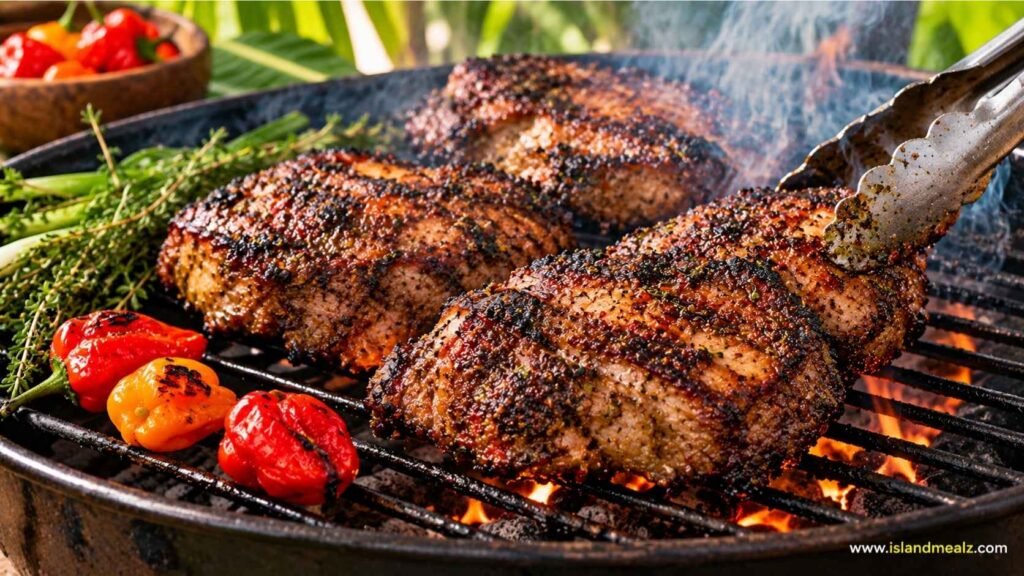
Preheat your grill to medium heat. If you’re using charcoal, arrange the coals so you have a hot area for browning and a cooler area for slower cooking.
Lightly oil the grill grates to reduce sticking. Let excess marinade drip off the pork before placing it on the grill. This helps limit flare-ups and reduces the chance of the sugary marinade burning.
Step 4: Grill the Pork Until Tender
Start by browning the pork over direct heat, turning it as needed. Move larger pieces to indirect heat and close the lid so they can cook more gradually.
Cooking time depends on the cut and size of the pieces. Thin pork chops will cook much faster than a whole pork shoulder. Use a food thermometer to check doneness instead of relying only on color.
If you’re cooking shoulder for pulled pork, allow extra time for the connective tissue to soften. The meat should become easy to pull apart when it has reached the texture you want.
Step 5: Check the Internal Temperature and Rest
For whole cuts of pork, the USDA recommends a minimum internal temperature of 145°F (63°C), followed by a three-minute rest. Check the thickest part with a food thermometer, avoiding any bone.
If you want pork shoulder that shreds easily, it generally needs to cook beyond this minimum temperature. Continue cooking until the meat is tender enough for your intended serving style.
Let the pork rest before slicing or shredding. This gives you time to prepare the side dishes and makes the meat easier to handle.
Oven Method for Jamaican Jerk Pork
Preheat your oven to 325°F (163°C). Place the marinated pork in a roasting pan. For a large shoulder intended for slow cooking, cover the pan to help retain moisture.
Cooking time will vary with the size of the cut. Check the internal temperature and tenderness as the pork cooks rather than relying on a fixed time alone.
Near the end, remove the cover to brown the surface. You can also use the broiler briefly, but watch the pork closely because the marinade contains sugar and can burn quickly.
Rest the cooked pork before serving. Pair it with rice and peas, fried plantains, or steamed cabbage for a complete meal.
Tips for the Best Jamaican Jerk Pork
A few adjustments can help you get better results from your jerk pork. Focus on the marinade, the heat level, and how you cook the meat.

How to Get Smoky Flavor at Home
Charcoal grilling adds a smoky flavor that works well with jerk seasoning. Traditional pimento wood is worth trying if you can find it. Otherwise, follow your grill manufacturer’s guidance for suitable smoking wood.
If you’re cooking indoors, the oven is a practical alternative. You won’t get exactly the same smoke flavor, but the marinade will still season the pork.
How to Control the Heat
Scotch bonnet peppers can make the marinade very spicy. Start with one pepper and adjust the amount to your preference. A small amount of jalapeño is another option if you want a milder result.
Don’t remove so much seasoning that the marinade loses its character. Allspice, thyme, garlic, and scallions help build flavor even when you reduce the heat.
Common Mistakes to Avoid
Don’t rush the marinating process. Four hours is a useful starting point, while overnight marinating allows more time for the flavors to develop.
Avoid cooking large pieces over high heat from beginning to end. The outside may burn before the inside becomes tender. Use indirect heat and check the temperature with a thermometer.
Finally, choose the right cooking goal for your cut. Pork chops need less time than a large shoulder, while pulled pork needs longer cooking to become easy to shred.
What to Serve with Jamaican Jerk Pork
Jamaican jerk pork has a strong, spicy flavor, so it pairs well with sides that bring a little sweetness, freshness, or creaminess to the plate.
Traditional Jamaican Side Dishes
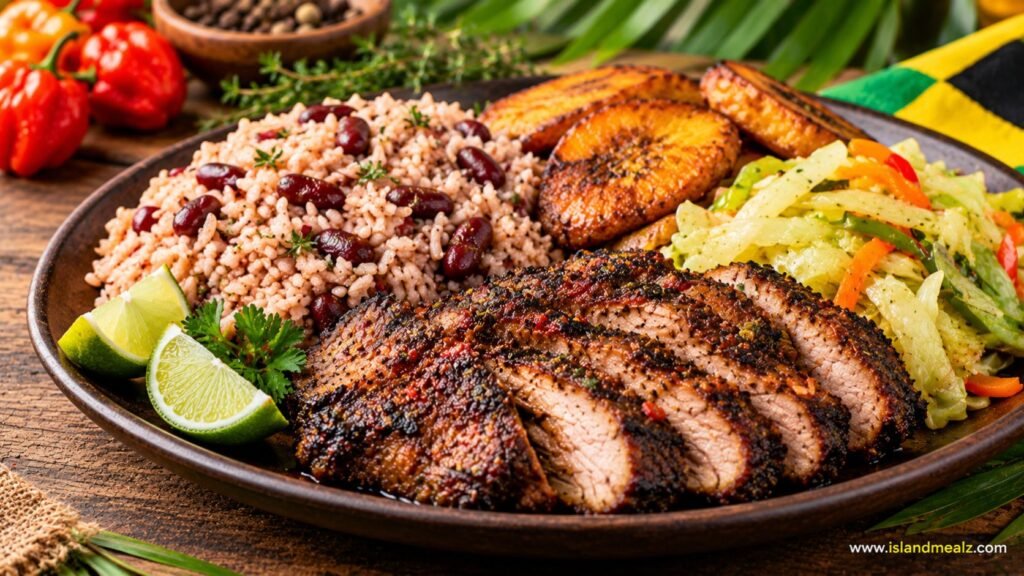
Rice and peas is a classic Jamaican side made with rice, beans, coconut milk, and seasonings. Its mild flavor works well with spicy pork.
Fried plantains add sweetness, while Jamaican festival dumplings offer a lightly sweet, crisp outside and a soft center. Steamed cabbage is another good choice if you want a simple vegetable side.
Easy Sides for an American Dinner
For a quick dinner, serve jerk pork with white rice, roasted vegetables, or a fresh green salad. Corn on the cob and baked sweet potatoes also pair well with the seasoning.
If you’re serving a group, offer lime wedges and keep the side dishes mild. This gives everyone a chance to balance the pork’s heat according to their taste.
How to Store and Reheat Leftover Jerk Pork
Store leftover jerk pork carefully so you can enjoy it later without losing too much moisture or flavor. Refrigerate leftovers within two hours of cooking in a clean, airtight container.
Refrigeration and Freezing
Cooked pork can generally stay in the refrigerator for three to four days. For longer storage, place it in a freezer-safe container or bag and label it with the date.
For the best quality, use frozen leftovers within two to three months. Thaw frozen pork in the refrigerator, not on the kitchen counter.
Best Way to Reheat Without Drying It Out
To reheat a larger portion, place the pork in an oven-safe dish with a small splash of broth or water. Cover it with foil and heat until the center reaches 165°F.
For smaller portions, use a microwave-safe dish and cover it loosely. Heat in short intervals, turning or stirring the meat as needed.
Adding a little liquid helps keep the pork moist. Reheat only the amount you plan to eat, and return any remaining leftovers to the refrigerator promptly.
Frequently Asked Questions
How long should you marinate Jamaican jerk pork?
Marinate the pork for at least four hours in the refrigerator. Leaving it overnight gives the seasoning more time to develop. Keep the meat covered while it marinates.
Is Jamaican jerk pork very spicy?
It can be, especially when the marinade contains Scotch bonnet peppers. Start with one pepper or use a milder substitute if you prefer less heat.
Can you make Jamaican jerk pork in the oven?
Yes. Roast the marinated pork at 325°F and check the temperature as it cooks. Cooking time depends on the cut and size of the meat. Broil briefly at the end if you want a browned surface.
What cut of pork is best for jerk pork?
Pork shoulder is a good choice for slow cooking because its fat and connective tissue help it become tender. Pork butt also works well. Pork chops and loin are leaner options that need less cooking time.
What temperature should pork reach?
Whole cuts of pork should reach at least 145°F, followed by a three-minute rest. For shoulder that you want to shred, cook it longer until it becomes tender. Always use a food thermometer.
Can you make jerk pork without a grill?
Yes. An oven works well when outdoor grilling isn’t available. The pork won’t have quite the same smoky flavor, but the jerk marinade still gives it plenty of seasoning.
Can you use store-bought jerk seasoning?
Yes. Store-bought seasoning saves preparation time. Check the label before adding extra salt or hot pepper. You can also add fresh scallions, garlic, and lime juice to bring more freshness to the flavor.
What is the difference between jerk pork and pulled pork?
Jerk pork is known for Jamaican seasonings such as allspice, thyme, and Scotch bonnet peppers. Pulled pork is commonly associated with American barbecue and often uses a dry rub, smoke, and barbecue sauce. Pork shoulder can be used for either dish, but the seasonings and final flavors differ.
Final Thoughts
Jamaican Jerk Pork is a flavorful way to bring Jamaican cooking into your home. The combination of Scotch bonnet peppers, allspice, thyme, and garlic gives the meat its distinctive taste. Allow enough time for marinating, choose a cooking method that suits your cut of pork, and adjust the heat to your liking. Serve it with rice and peas, fried plantains, or steamed c