
Jamaican hard dough bread is a slightly sweet loaf with a golden crust and a close, firm crumb. It is a familiar choice in Jamaican homes and bakeries, where people enjoy it with butter, cheese, or a hearty breakfast. Its sturdy slices also make it useful for sandwiches and toast.
You can make hardo bread at home with basic baking ingredients and a little patience. The key is to knead the dough well, give it enough time to rise, and shape it carefully before baking. The steps below explain how to make a loaf with a tender inside and a lightly firm crust.
What Is Jamaican Hard Dough Bread?
Jamaican hard dough bread, often called hardo bread, is a traditional loaf enjoyed in Jamaican homes and bakeries. It has a mild sweetness and a close crumb that holds together well when sliced. People often serve it with butter, cheese, eggs, or traditional Jamaican dishes.
The bread is firmer and more compact than many soft American sandwich loaves, but it should not be hard or dry. A good loaf is easy to slice and has a tender center. Its simple flavor works with both savory meals and sweet spreads.
Why Is It Called Hardo Bread?
“Hardo bread” is a common name for Jamaican hard dough bread. The word “hard” can be misleading because a properly baked loaf should not be tough. The name is associated with its firmer structure and close texture compared with softer breads.
The inside should remain tender, while the crust gives the loaf some structure. Kneading, shaping, and proofing all affect the final result.
What Makes Jamaican Hard Dough Bread Different?
Hard dough bread is usually shaped into a loaf and baked in a pan. Its close crumb and sturdy slices help it hold together when cut. The exact texture depends on the recipe, the flour, and how the dough is handled.
Unlike very airy breads, hard dough bread is meant to have a more compact inside. It should still feel tender when you bite into it. This balance is what makes it suitable for toast, sandwiches, and Jamaican meals.
Ingredients for Jamaican Hard Dough Bread
You can make Jamaican hard dough bread with a handful of everyday baking ingredients. Flour gives the loaf its structure, yeast helps it rise, and sugar adds a mild sweetness. Butter or shortening adds richness and helps keep the crumb tender.
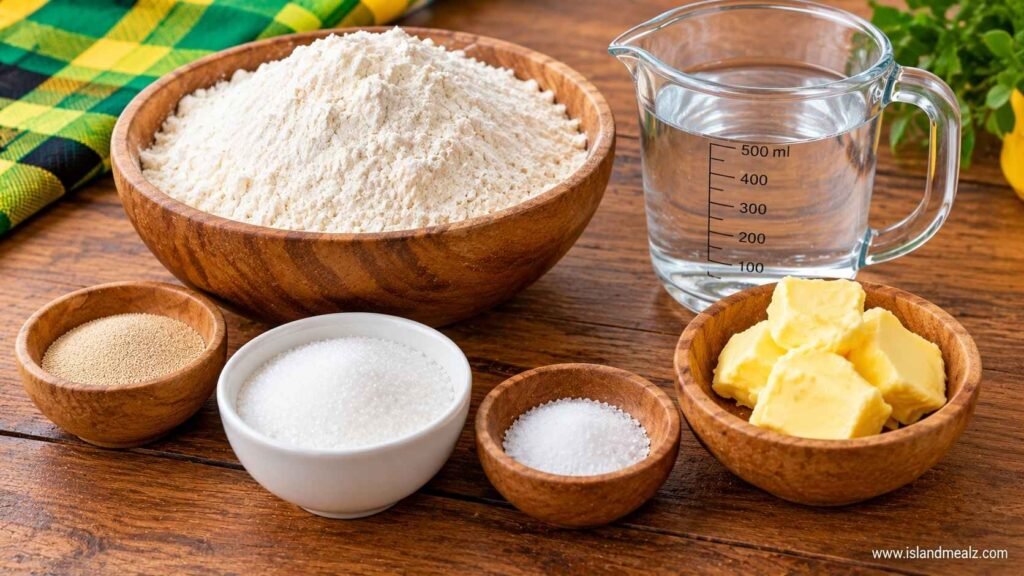
| Ingredient | What it does |
| Bread flour | Builds structure and gives the loaf a chewier texture. |
| Instant yeast | Helps the dough rise. |
| Granulated sugar | Adds sweetness and supports yeast activity. |
| Salt | Balances the flavor and affects dough development. |
| Butter or vegetable shortening | Adds richness and tenderness. |
| Warm water | Hydrates the flour and brings the dough together. |
Add the water gradually because different brands of flour absorb different amounts of liquid. The dough should feel soft and slightly tacky, not stiff or wet. Use warm water, not hot water, so you do not damage the yeast.
Bread flour is a good choice because it generally contains more protein than all-purpose flour. All-purpose flour can also work, although the loaf may have a slightly different texture. If you use active dry yeast instead of instant yeast, follow the package directions for preparing it.
How to Make Jamaican Hard Dough Bread
Making Jamaican hard dough bread at home takes a little patience, but the process is straightforward. The key is to knead the dough well, give it enough time to rise, and shape it properly before baking. Follow these steps for a loaf with a soft inside, a firm crust, and the close crumb that makes hard dough bread different from regular sandwich bread.
Step 1: Mix the Dry Ingredients
Add the bread flour, sugar, salt, and instant yeast to a large mixing bowl. Stir until everything is evenly combined. Mixing the dry ingredients first helps distribute the yeast and salt throughout the flour.
Step 2: Add the Butter or Shortening
Add the softened butter or shortening to the flour mixture. Rub it into the flour with your fingertips or mix it in using a stand mixer. The mixture should look slightly crumbly, with the fat spread throughout the flour.
Step 3: Add Water and Knead the Dough
Pour in the water gradually while mixing. Start with a smaller amount and add more as needed until the flour comes together into a firm dough. Avoid adding too much water at once because the dough should be smooth and manageable, not overly sticky.
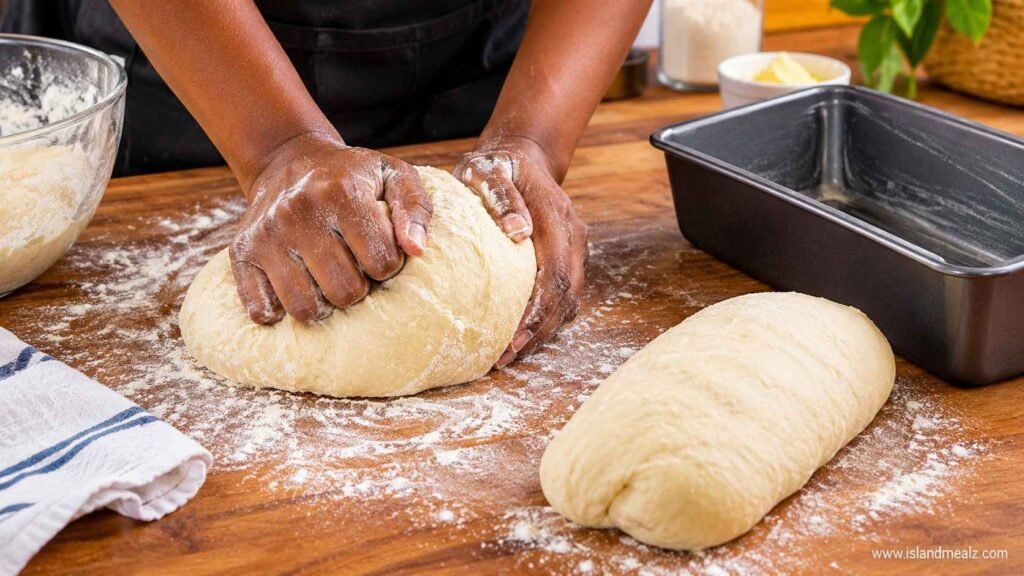
Knead by hand on a lightly floured surface or use a stand mixer with a dough hook. Continue until the dough feels smooth and elastic. This step helps develop the gluten, which gives the bread its structure.
Step 4: Let the Dough Rise
Place the dough in a lightly greased bowl and cover it with a clean kitchen towel or plastic wrap. Leave it in a warm place until it has increased noticeably in size. The exact time depends on the room temperature and the activity of the yeast.
Do not rush this step. Dough that has not rested long enough may produce a loaf that is too heavy or uneven inside.
Step 5: Shape the Loaf
Gently press the dough to release large air pockets. Shape it into a neat rectangle, then roll it into a tight loaf. Pinch the seam closed and place the dough seam-side down in a greased loaf pan.
Shaping the dough evenly helps the bread bake consistently and gives the finished loaf a familiar sandwich-bread shape.
Step 6: Let the Dough Rise Again
Cover the loaf pan and leave the dough to rise for a second time. It should look fuller and rise toward the top of the pan. Avoid letting it rise too far, as overproofed dough may collapse during baking.
Step 7: Bake the Bread
Preheat the oven and bake the loaf according to your recipe’s temperature and timing. The top should turn golden brown, and the loaf should feel firm when gently tapped. If the crust begins browning too quickly, check the oven temperature and adjust as needed.
Allow the bread to bake through before removing it from the oven. Cutting into an underbaked loaf can leave the center sticky or gummy.
Step 8: Cool Before Slicing
Remove the bread from the pan and place it on a wire rack. Let it cool completely before slicing. This gives the inside time to settle and makes it easier to cut neat, even slices.
For the best texture, use a sharp serrated bread knife and cut with a gentle sawing motion rather than pressing down hard on the loaf.
Tips for the Best Jamaican Hard Dough Bread
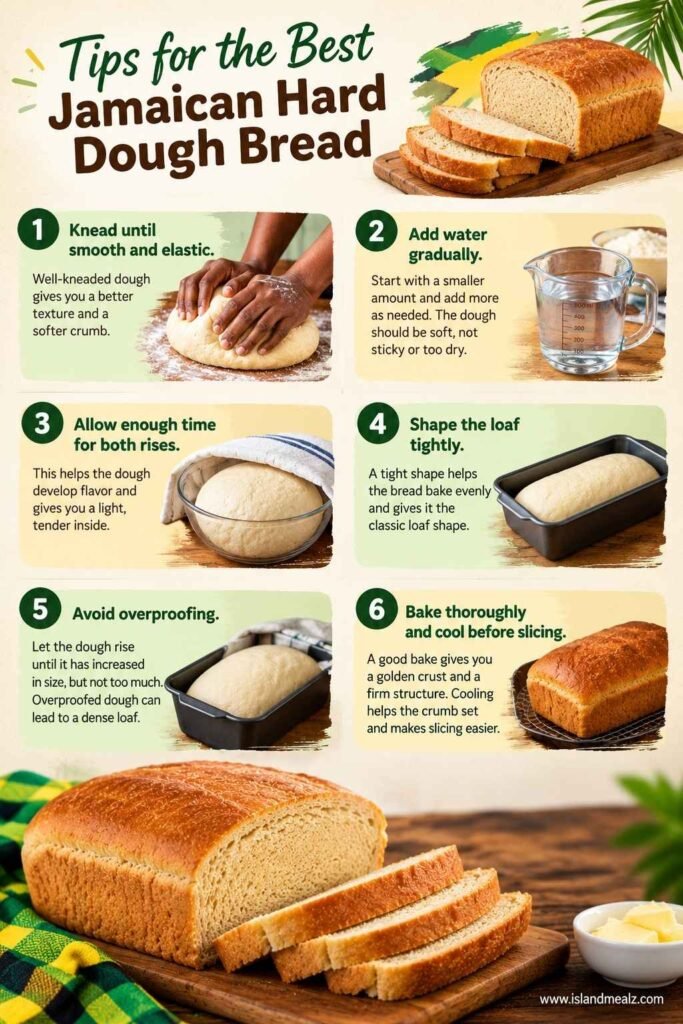
Homemade hard dough bread turns out better when you pay attention to the dough’s texture, rising time, and shape. A few small adjustments can make a noticeable difference in the finished loaf.
How to Get a Dense, Even Crumb
Jamaican hard dough bread is known for its close, even texture. To achieve this, knead the dough until it becomes smooth and elastic. Proper kneading helps the loaf hold its shape and prevents large, uneven holes from forming inside.
Shape the dough tightly before placing it in the pan. Large air pockets left inside the rolled dough can create gaps in the finished loaf. Give the dough enough time to rise, but avoid leaving it until it becomes weak or starts to collapse.
How to Avoid Dry or Heavy Bread
Measure the flour carefully instead of adding too much during kneading. Extra flour can make the dough stiff and leave the baked bread dry. If the dough feels slightly tacky, knead it for a little longer before adding more flour.
Check that your yeast is fresh and active. Old yeast may not help the dough rise properly, resulting in a short, heavy loaf. Also, allow the bread to cool before slicing. Cutting it while hot can affect the texture and make the inside seem damp or compressed.
Use the Right Loaf Pan
A suitable loaf pan helps the dough keep its shape as it rises and bakes. Choose a pan that gives the dough enough room to expand without spreading too much. Grease it lightly to help the bread release easily after baking.
Watch the Dough, Not Just the Clock
Rising times can change depending on the temperature of your kitchen. Instead of relying only on a timer, look at the dough. It should become visibly fuller during each rise. This simple habit helps you avoid underproofing or overproofing the loaf.
Common Hard Dough Bread Problems and Fixes
Even an experienced home baker can have a loaf that does not turn out as expected. The good news is that most hard dough bread problems come from a few common causes. Use the table below to identify what may have gone wrong and how to improve your next loaf.
| Problem | Possible Cause | How to Fix It |
| Bread is too dense | The dough was not kneaded enough or did not rise properly | Knead until smooth and elastic, and allow enough time for rising |
| Bread did not rise | The yeast may be inactive, or the water was too hot or too cold | Check the yeast’s freshness and use water at a suitable temperature |
| Loaf collapsed in the oven | The dough may have risen too much before baking | Bake when the dough has risen sufficiently but still holds its shape |
| Bread is dry | Too much flour was added, or the loaf was baked too long | Measure flour carefully and check the loaf near the end of baking |
| Crust is too dark | The oven may be too hot or the bread may be baking too close to the heat source | Check the oven temperature and adjust the rack position if needed |
| Center is gummy | The loaf may be underbaked or sliced while still hot | Bake until done and let the loaf cool completely before slicing |
| Slices fall apart | The loaf may be too warm, or the dough structure may be weak | Cool fully and knead the dough properly next time |
How to Improve Your Next Loaf
If your first loaf is not perfect, change one thing at a time. Check the yeast, measure the flour carefully, and pay attention to the dough during kneading and rising. Keeping notes about your ingredients and baking time can help you identify what works best in your kitchen.
A little practice makes it easier to recognize when the dough is ready and how the finished loaf should look and feel.
What to Eat with Jamaican Hard Dough Bread
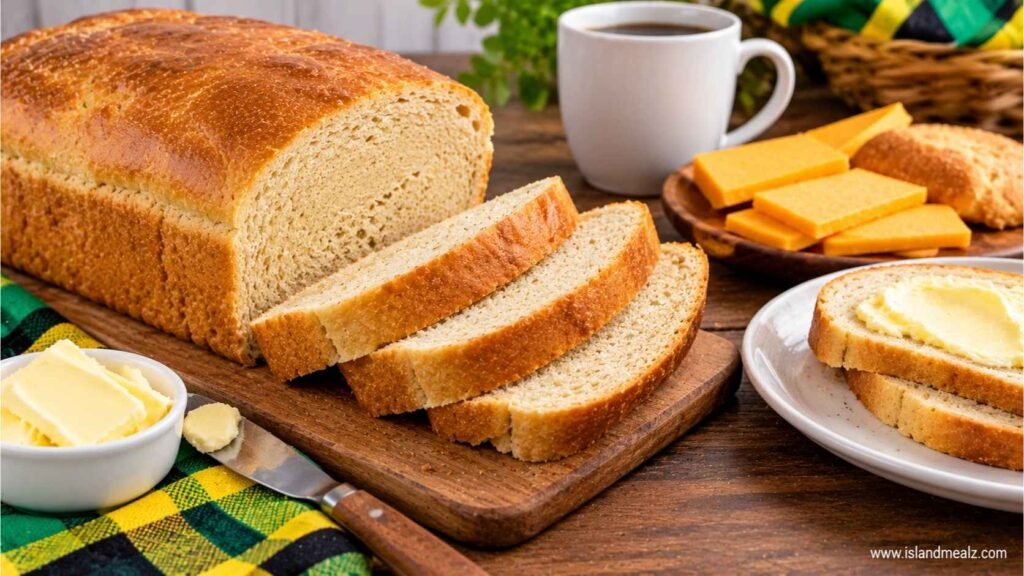
Jamaican hard dough bread is versatile enough for breakfast, lunch, or a simple snack. Its firm slices hold their shape well, making it a practical choice for spreading, dipping, or building sandwiches. The mild flavor also pairs nicely with both sweet and savory foods.
Traditional Jamaican Serving Ideas
One of the simplest ways to enjoy hard dough bread is with butter. A slice of fresh bread with butter makes an easy breakfast or afternoon snack. You can also serve it with Jamaican bun and cheese, especially around Easter or whenever you want a familiar Caribbean combination.
Hard dough bread also works well alongside Jamaican dishes that have a rich sauce or gravy. Use a slice to soak up the sauce from a cooked meal, or serve it on the side with eggs for a filling breakfast.
Sandwiches, Toast, and Breakfast
The firm texture makes hard dough bread suitable for sandwiches. Fill it with cheese, sliced vegetables, eggs, chicken, or your favorite sandwich ingredients. Its sturdy slices are useful when you want bread that holds up without becoming too soft.
For breakfast, toast the slices lightly and add butter, jam, or peanut butter. You can also serve them with scrambled eggs or an omelet. If the bread is a day or two old, toasting is a good way to enjoy it while adding a little crispness to the outside.
Whether you serve it with traditional Jamaican foods or use it for an everyday sandwich, hard dough bread is an easy addition to the table.
How to Store and Freeze Jamaican Hard Dough Bread
Proper storage helps homemade Jamaican hard dough bread stay fresh and maintain its texture. Let the loaf cool completely before wrapping or storing it. Trapping steam while the bread is still warm can create moisture inside the packaging and make the crust soft.
Room-Temperature Storage
Once the bread has cooled, place it in a clean, airtight bread bag or container. Keep it in a cool, dry place away from direct sunlight and heat. For the best texture, slice only what you need instead of cutting the entire loaf at once.
Homemade bread does not contain the same preservatives as many commercial loaves, so it may not stay fresh for as long. Check it before eating, and discard it if you notice mold, an unusual smell, or other signs of spoilage. Avoid storing bread in a damp area, as moisture can encourage mold growth.
Freezing and Reheating
Freezing is a useful option if you have made more bread than you can eat in a few days. After the loaf has cooled completely, wrap it securely in freezer-safe packaging. You can freeze the loaf whole or slice it first so you can take out only the amount you need.
For easier portions, place parchment paper between slices before freezing. This helps keep them from sticking together. Label the package with the date so you can keep track of how long it has been stored.
To use frozen slices, let them thaw at room temperature or place them directly in a toaster if they are suitable for toasting. For a whole loaf, allow it to thaw before serving. Avoid repeatedly freezing and thawing the same bread, as this can affect its texture.
Frequently Asked Questions
What Makes Jamaican Hard Dough Bread So Dense?
Jamaican hard dough bread has a close, firm crumb rather than the light, airy texture of many other breads. Its texture depends on the recipe, how the dough is kneaded and shaped, and how long it rises. It should be firm but not dry or unpleasantly hard.
Is Hard Dough Bread the Same as Hardo Bread?
Yes. Hardo bread is a common name for Jamaican hard dough bread. Both names refer to the familiar loaf often served with butter, cheese, eggs, or sandwich fillings.
Can I Make Jamaican Hard Dough Bread with All-Purpose Flour?
Yes, all-purpose flour can be used, although the texture may be slightly different. Bread flour generally contains more protein, which helps develop the gluten needed for a firm, structured loaf. If you use all-purpose flour, pay attention to the dough as you knead it and avoid adding too much extra flour.
Why Did My Hard Dough Bread Not Rise?
The yeast may be inactive, the water may have been too hot or too cold, or the dough may have been kept in a place that was too cool. Too much salt in direct contact with yeast can also interfere with its activity. Check the freshness of your yeast and allow the dough enough time to rise in a comfortably warm place.
Can I Make Hard Dough Bread Without a Stand Mixer?
Yes. A stand mixer can save time, but it is not essential. You can mix the ingredients in a large bowl and knead the dough by hand on a clean surface. Continue kneading until the dough becomes smooth and elastic. Hand kneading takes effort, but it works well for home baking.
Final Thoughts
Jamaican hard dough bread is a familiar Caribbean staple that works just as well for a simple breakfast as it does for sandwiches and family meals. Its firm crust and close crumb make it different from softer sandwich breads, while its mild flavor pairs easily with sweet and savory foods.
Making it at home takes some practice, especially when it comes to kneading, shaping, and allowing the dough to rise. Start by following each step carefully, and pay attention to how the dough looks and feels rather than relying only on the clock. Once you become comfortable with the process, you can enjoy homemade hard dough bread fresh from your own kitchen.