
Jamaican cow foot is the kind of dish that needs a little patience, but the result is worth it. The pieces cook slowly until the skin and connective tissue become soft. Garlic, scallion, thyme, pimento, and Scotch bonnet bring the bold flavor that makes this dish stand out.
This Jamaican cow foot recipe includes butter beans and a thick, savory gravy. You can use a pressure cooker when you want to shorten the cooking time, or let it simmer on the stovetop. Serve it with rice and peas or white rice, and let the gravy do the rest.
What Is Jamaican Cow Foot?
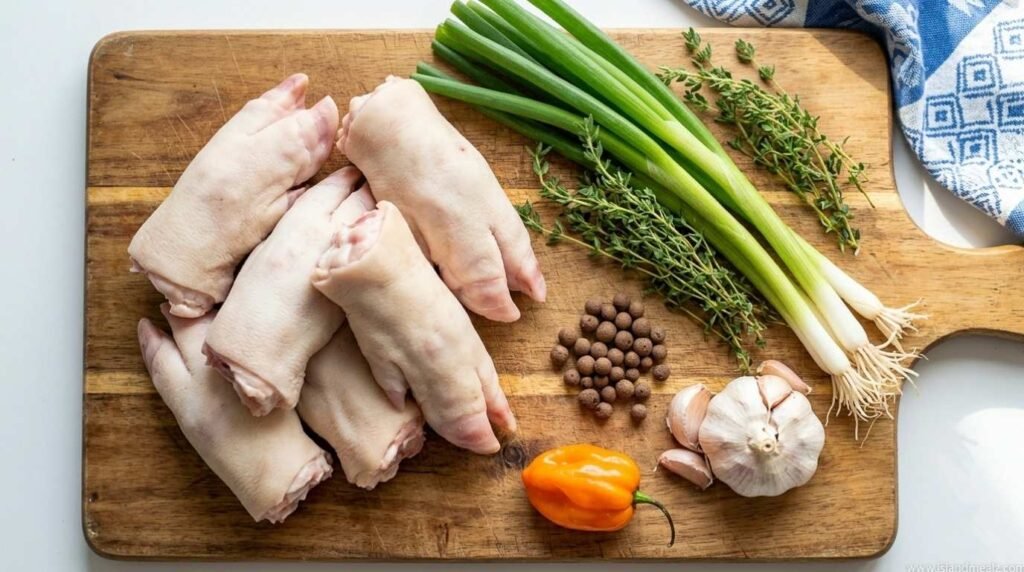
Jamaican cow foot is made from the feet of cattle. It is not a cut with a lot of meat, but it has plenty of skin, bones, and connective tissue. That is what gives the dish its familiar soft and slightly sticky texture after cooking.
Jamaican cooks often season cow foot with garlic, scallion, thyme, pimento, ginger, and Scotch bonnet pepper. Butter beans are also a common addition. As everything simmers, the seasonings work into the cooking liquid and turn it into a thick, flavorful gravy.
What Does Cow Foot Taste Like?
Cow foot has a mild beef flavor, but the texture is what makes it different from other beef cuts. After it cooks for several hours, the skin and connective tissue become very soft. Some pieces may have a slightly gelatinous feel, especially when the stew cools.
The gravy carries most of the seasoning. Thyme and pimento give it a warm, savory base, while garlic, scallion, and ginger add more depth. Scotch bonnet brings the heat, so you can use it according to your spice preference.
Jamaican Cow Foot vs. Cow Foot Soup
Jamaican cow foot stew and cow foot soup start with the same main ingredient, but they end up quite different. The stew has a thick gravy and often includes butter beans. It is usually served with rice or other filling sides.
Cow foot soup has more liquid and usually includes vegetables and ground provisions. Pumpkin, carrots, chocho, yam, green banana, and dumplings are common choices. It feels more like a complete one-pot meal.
If you want a thick, savory gravy, go with cow foot stew. If you prefer broth with vegetables and dumplings, cow foot soup is the better choice.
Ingredients for Jamaican Cow Foot
A good Jamaican cow foot starts with simple ingredients that build flavor as the dish cooks. The cow foot provides the rich base, while Jamaican herbs and spices give the gravy its signature taste.
| Ingredient | What It Adds |
| Cow foot | Rich flavor and tender texture |
| Butter beans | Creamy texture and body |
| Onion | Sweet, savory flavor |
| Garlic | Deep aroma |
| Scallions | Fresh Jamaican flavor |
| Fresh thyme | Earthy herbal taste |
| Pimento (allspice) | Warm spice flavor |
| Scotch bonnet pepper | Heat and flavor |
| Ginger | A mild, fresh kick |
| Browning sauce | Dark color and richer flavor |
| Black pepper | Gentle spice |
| Salt | Balances the flavors |
| Water or beef stock | Helps cook the cow foot |
| Cooking oil | Used for browning |
Fresh thyme, scallions, garlic, and ginger give the stew a much brighter flavor than dried seasonings alone. If you cannot find fresh pimento berries, ground allspice can work as a substitute. Start with a small amount of Scotch bonnet and add more next time if you want extra heat.
How to Prepare Cow Foot Before Cooking
Before seasoning the cow foot, give the pieces a good rinse and check for any remaining hair or debris. If you use lime juice or vinegar during cleaning, rinse the pieces well afterward.
Blanch the Cow Foot
Place the cleaned pieces in a pot, cover them with water, and bring the water to a boil. Let them boil for a few minutes, then drain and rinse them.
Once the cow foot is ready, pat the pieces dry and season them well. Garlic, scallion, thyme, pimento, ginger, black pepper, and salt give the meat a solid flavor base. Add the browning sauce at this stage if you want a darker stew.
How to Make Jamaican Cow Foot
Start with the seasoned cow foot and a heavy pot. Once the oil is hot, brown the pieces in batches if needed. Give them enough space to color properly instead of piling everything into the pot at once.
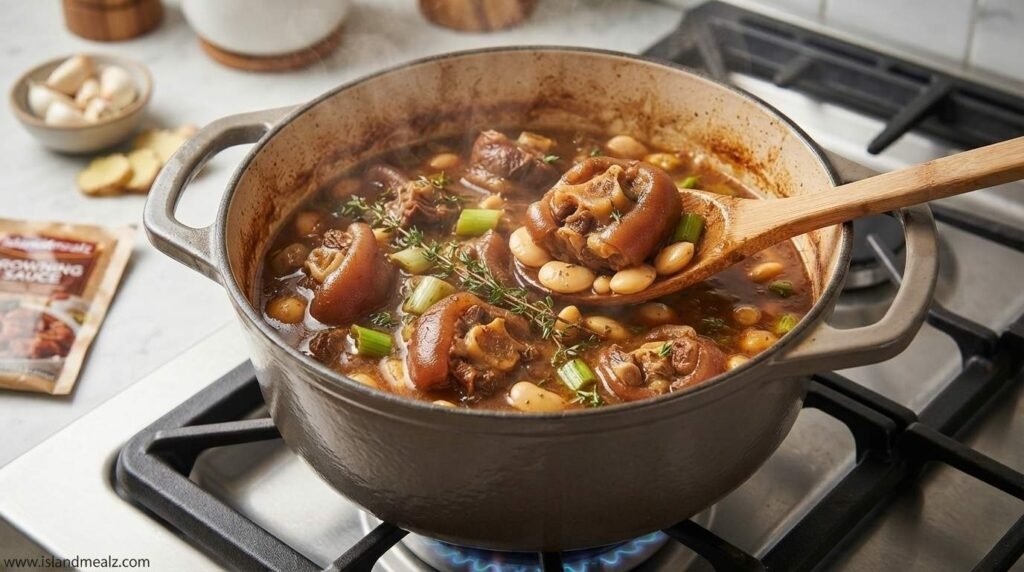
Brown the Cow Foot
Heat the oil over medium heat and add the cow foot. Turn the pieces as they cook so they brown on different sides. This step gives the stew a deeper flavor and helps build the dark color of the finished gravy.
Cook Until Tender
Add water or beef stock and bring it to a boil. Lower the heat, cover the pot, and let the cow foot simmer. Check the liquid from time to time. If the pot starts looking dry before the cow foot is tender, add a little more hot water or stock.
If you are using a pressure cooker, follow your appliance’s instructions and cook until the pieces are tender. The exact time can vary with the size of the pieces and the pressure cooker you use.
Add the Butter Beans
Once the cow foot is nearly tender, add the butter beans, thyme, and Scotch bonnet pepper. Let the stew simmer so the beans warm through and the flavors come together.
Finish the Gravy
Remove the lid and let the stew simmer for a few minutes if the gravy needs to thicken. Taste before adding more salt. You want a gravy that is rich enough to coat the cow foot without being overly salty or watery.
How Long Does Jamaican Cow Foot Take to Cook?
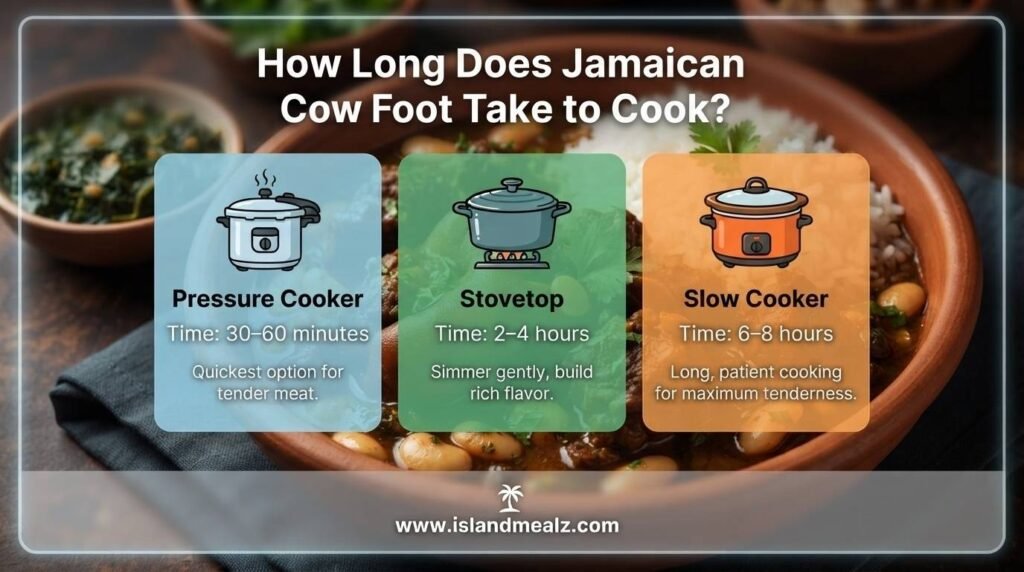
Jamaican cow foot needs enough time to become soft and tender. Don’t judge cow foot by the clock alone. One batch may soften faster than another, especially when the pieces are different sizes. Start checking for tenderness toward the end of the suggested cooking time. If a fork still meets a lot of resistance, keep cooking.
| Cooking Method | Approximate Time |
| Pressure cooker | 30–60 minutes |
| Stovetop | 2–4 hours |
| Slow cooker | 6–8 hours |
A pressure cooker is the quickest option. It helps soften the cow foot in much less time. For stovetop cooking, keep the heat low and let the pieces simmer until they are fork-tender.
How Do You Know Cow Foot Is Done?
The cow foot is ready when the skin and connective tissue become very soft. A fork should slide into the pieces easily. The meat should also pull away from the bone without much effort.
Don’t rely only on the clock. Check the texture as it cooks. If the pieces still feel tough, give them more time.
How to Make Jamaican Cow Foot Without a Pressure Cooker
You do not need a pressure cooker to make tender Jamaican cow foot. A heavy pot with a tight-fitting lid works well. The important part is keeping the heat low and giving the cow foot enough time to soften.
Brown the seasoned pieces in a little oil, then add enough water or beef stock to keep them cooking. Bring the liquid to a boil, reduce the heat, and cover the pot.
Let the cow foot simmer gently for about 2 to 4 hours. Check the pot occasionally and add more liquid if necessary. Once the pieces are tender, add the butter beans and let the stew cook uncovered for a few minutes so the gravy can reduce.
This method takes longer, but it gives you good control over the texture and thickness of the gravy.
What to Serve With Jamaican Cow Foot
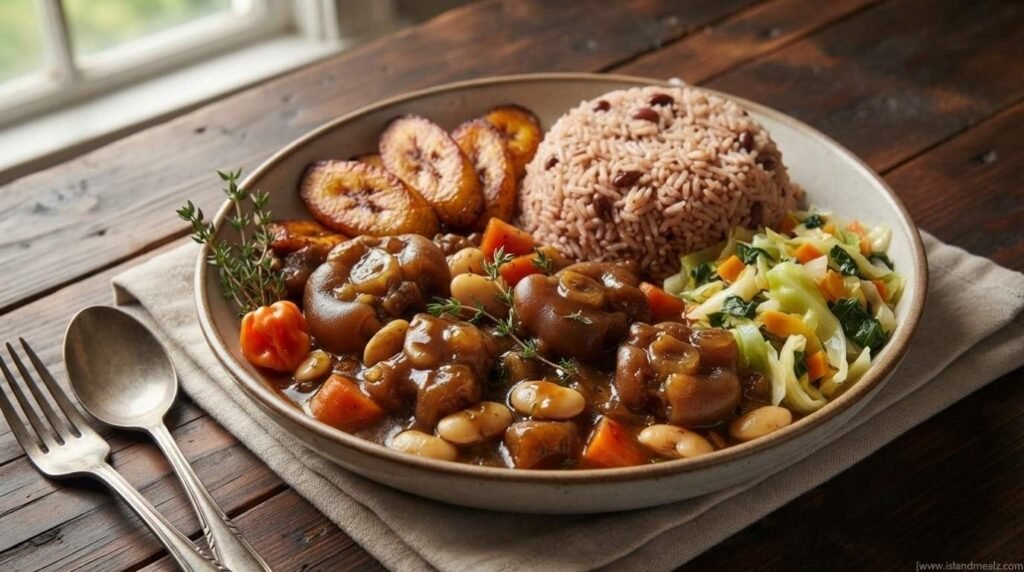
Jamaican cow foot has a rich gravy, so simple sides work best. Rice and peas is a natural pairing because the rice absorbs some of the sauce without taking attention away from the main dish.
White rice is another easy choice, especially when you want the cow foot and gravy to be the focus. Boiled dumplings, yellow yam, and green bananas can make the meal more filling.
For vegetables, try steamed cabbage or callaloo. A lightly seasoned vegetable side helps balance the richness of the stew.
Tips for Tender and Flavorful Jamaican Cow Foot
Cooking cow foot takes patience, but a few simple tips can make a big difference. Use fresh Jamaican seasonings and give the cow foot enough time to become tender.
- Give it time: Cow foot will not become tender in a hurry. Keep the heat gentle and let the cooking do its job.
- Brown it first: A few minutes of browning gives the stew a deeper base.
- Watch the liquid: Check the pot while it cooks. You want enough liquid to keep the cow foot simmering, but not so much that the finished gravy stays thin.
- Add beans near the end: This helps the butter beans keep their shape.
- Go easy on the pepper: Scotch bonnet can quickly take over the dish. Start small.
- Taste before serving: The gravy changes as it reduces, so check the seasoning near the end.
- Let the gravy reduce: If the cow foot is already tender but the sauce looks thin, simmer it uncovered for a few minutes.
The best Jamaican cow foot should be tender, well-seasoned, and covered in a thick, flavorful gravy.
Common Mistakes to Avoid When Making Jamaican Cow Foot
Making Jamaican cow foot is simple, but a few mistakes can affect the final texture and flavor. Small changes in the cooking process can make the dish much better.
Not Cooking It Long Enough
This is probably the easiest mistake to make. If the cow foot still feels tough, it simply needs more time. Keep it simmering until the skin and connective tissue soften.
Adding Too Much Water
Too much liquid can leave you with a thin gravy. Start with enough liquid to cook the cow foot, then add more only when needed.
Adding Butter Beans Too Early
Butter beans can become mushy if they cook for too long. Add them after the cow foot is nearly tender so they can keep their shape.
Skipping the Browning Step
Browning the cow foot before simmering adds a deeper flavor and darker color. It is worth taking a few extra minutes for this step.
Using Too Much Scotch Bonnet
Scotch bonnet peppers are very hot. Start with a small amount and add more only if you want extra heat.
Jamaican Cow Foot Recipe Variations
Jamaican cow foot can be prepared in a few different ways. The seasonings and cooking method may change, but the goal stays the same: tender cow foot with plenty of flavor.
Jamaican Cow Foot and Butter Beans
This is the version to choose if you want a thick, filling stew. The butter beans soak up some of the gravy and add a soft, creamy bite.
Jamaican Brown Stew Cow Foot
Brown stew focuses on the dark, savory gravy. Browning sauce, herbs, aromatics, and slow cooking give the dish its deep color and flavor.
Jamaican Curry Cow Foot
Curry powder changes the whole character of the dish. It brings a warmer spice profile and works especially well with rice.
Jamaican Cow Foot Soup
For soup, use more liquid and add vegetables or ground provisions. Pumpkin, yam, dumplings, and green bananas can turn cow feet into a hearty soup meal.
Read more: Jamaican Red Peas Soup Recipe
FAQ Section:
How do you make cow foot tender?
The main trick is time. Cook cow foot slowly until the skin and connective tissue become soft. A pressure cooker can shorten the cooking process, while stovetop cooking takes longer.
Can I cook Jamaican cow foot without a pressure cooker?
Yes. Use a heavy pot with a lid and simmer the cow foot over low heat. It usually takes longer than pressure cooking, but you can still get very tender results.
What do you serve with Jamaican cow foot?
Rice and peas and white rice are two easy choices. Boiled dumplings, yellow yam, green banana, cabbage, and callaloo also pair well with the rich gravy.
How to Store and Reheat Jamaican Cow Foot
Jamaican cow foot often tastes even better after it sits because the gravy has time to settle and the flavors blend. Once the leftovers have cooled, place them in an airtight container and refrigerate them.
When reheating, use a saucepan over low to medium heat. The gravy may become quite thick in the refrigerator, so add a small splash of water or beef stock if needed. Stir gently and heat until the dish is hot throughout.
You can also freeze leftovers in a freezer-safe container. Thaw them safely before reheating and avoid overheating the cow foot, as the texture can become less pleasant.
Final Thoughts
Jamaican cow foot takes more time than many everyday beef dishes, but that slow cooking is what makes it special. Once the pieces become tender and the gravy thickens, you have a meal with plenty of flavor and texture.
Keep the seasoning balanced, don’t rush the cooking, and add the butter beans near the end. Serve the finished cow foot with rice and peas or white rice, spoon some of that gravy over the top, and enjoy it while it’s hot.