
Cooking fish at home can be easier than you might think. The first time you prepare it, you may worry about overcooking it or having it stick to the pan. But once you understand the basics, making a good fish dinner becomes much less stressful.
Different types of fish need slightly different cooking methods. Salmon is great for baking or grilling, while mild fish like cod and tilapia work well in a skillet or oven. Below, you’ll find simple cooking methods, helpful timing tips, and ways to keep your cook fish moist and flavorful.
How to Prepare Fish Before Cooking
A little preparation makes cooking fish much easier. Before you turn on the stove or oven, choose the right fish, check for bones, and get your seasonings ready.
Choose the Right Type of Fish
If you’re new to cooking fish, start with a mild variety. Cod and tilapia have a light flavor and work well in the oven or a skillet. Salmon has a richer taste and is a good choice for baking or grilling.
You can also try haddock, snapper, or trout. When buying fresh fish, look for flesh that feels firm and has a mild, fresh smell. Avoid fish with a strong unpleasant odor.
Check, Dry, and Prepare the Fish
Check the fillets for small bones and remove any you find with clean kitchen tweezers. Pat the fish dry with paper towels, especially if you plan to pan-fry it. Removing surface moisture helps the fish brown instead of steaming.
There is no need to rinse raw fish under the tap. Keep it refrigerated until you’re ready to cook, and use separate utensils and cutting boards for raw fish and other ingredients.
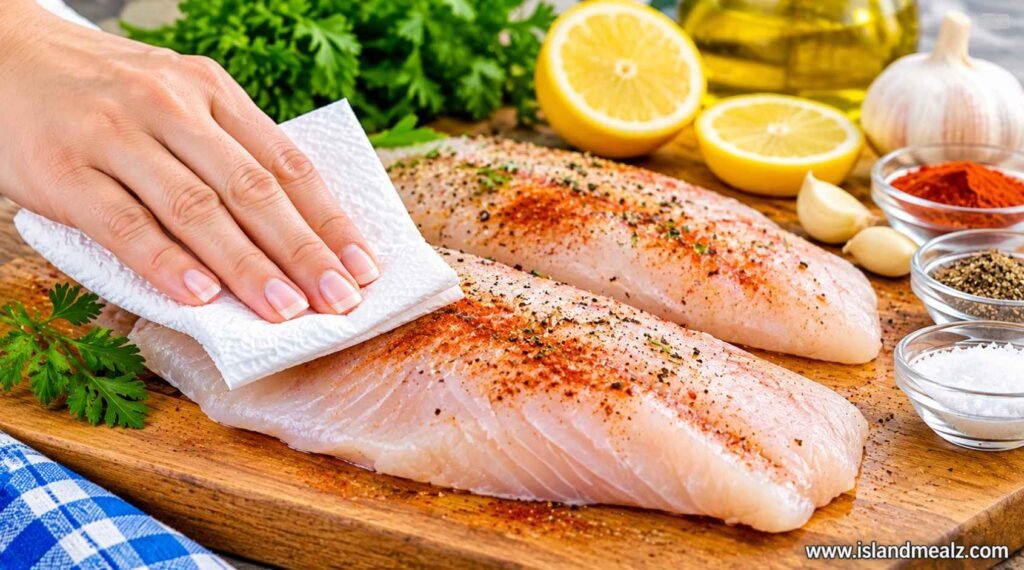
Season the Fish
You don’t need a long list of ingredients to make fish taste good. Salt, black pepper, garlic powder, and paprika are enough for a simple seasoning. A little olive oil or melted butter adds flavor and helps keep the surface from drying out.
For a fresh finish, add lemon juice and chopped parsley. Season both sides evenly, but avoid adding too much salt. If you’re not cooking the fish right away, keep it covered in the refrigerator.
5 Best Ways to Cook Fish
There isn’t just one way to cook fish. Some people enjoy a lightly browned fillet from a skillet, while others prefer the softer texture of oven-baked fish. The best method depends on the type of fish you have and the result you want.
1. How to Bake Fish in the Oven
Baking is one of the easiest ways to prepare fish, especially when you’re making dinner for the family. Preheat your oven to 400°F and lightly grease a baking dish. Place the seasoned fillets inside and add a little olive oil or butter.
Bake for about 10–15 minutes, depending on the thickness of the fish. Thicker pieces may need extra time. Baking works especially well with cod, salmon, and tilapia.
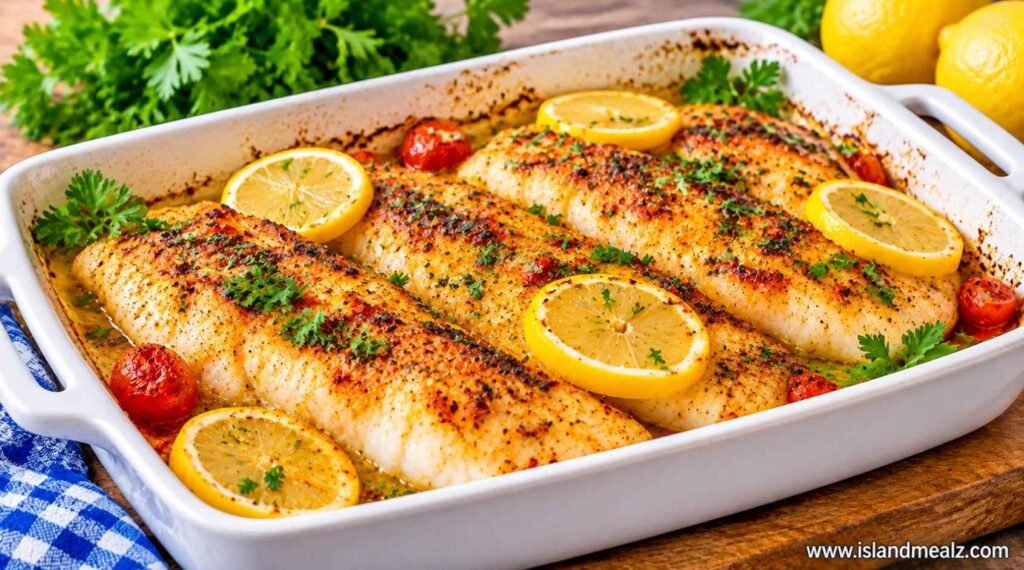
Helpful tip: Add lemon slices or a little minced garlic before baking for extra flavor without much effort.
2. How to Pan-Fry Fish
Pan-frying gives fish a lightly crisp outside while keeping the inside tender. Start by patting the fillets dry and seasoning both sides. Heat a little olive oil or butter in a skillet over medium heat.
Place the fish in the hot pan and cook for about 3–5 minutes per side. The exact time depends on the thickness. Turn the fillet carefully with a thin spatula so it doesn’t break apart.
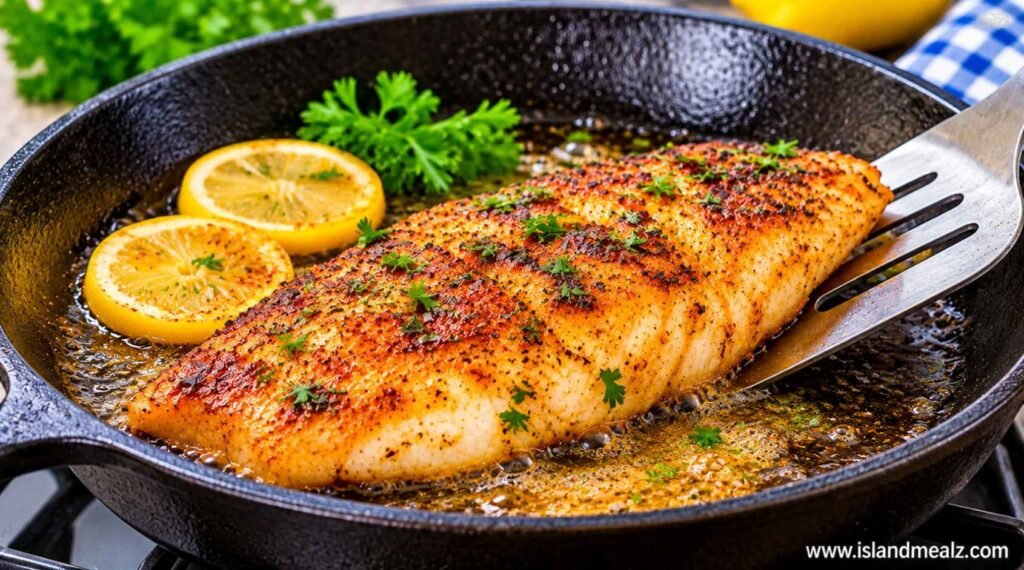
Helpful tip: Don’t crowd the skillet. Cooking a few pieces at a time gives them more room to brown.
3. How to Grill Fish
Grilling adds a pleasant smoky flavor and works particularly well with salmon, snapper, and other firm fish. Preheat the grill to medium-high heat and clean the grates. Lightly oil the grates and brush the fish with olive oil before adding your seasoning.
Cook the fillets for roughly 3–5 minutes per side, depending on their thickness. Let the first side cook before trying to turn it. If the fish sticks, give it a little more time rather than pulling it away too early.
Helpful tip: Use a fish spatula or a grill basket when handling delicate fillets.
4. How to Broil Fish
Broiling is a useful option when you want fish with a lightly browned top but don’t have time to heat the grill. Set your oven to broil and place the seasoned fish in a broiler-safe dish.
Broil for approximately 5–8 minutes, adjusting the time for the thickness of the fillet and the distance from the heating element. Keep an eye on it because the top can brown quickly.
Helpful tip: Check the center before removing the fish. A browned surface doesn’t always mean the middle is fully cooked.
5. How to Steam or Poach Fish
Steaming and poaching are good choices when you want a gentle cooking method without a crispy crust.
For steaming, place the seasoned fish in a steamer basket over simmering water. Cover and cook for about 8–10 minutes, depending on thickness.
For poaching, place the fish in a shallow pan with enough water or broth to partially cover it. Keep the liquid at a gentle simmer rather than a rapid boil. Cook until the fish reaches a safe internal temperature.
Helpful tip: Add lemon slices, garlic, or fresh herbs to the water or broth for a little extra flavor.
Fish Cooking Times and Temperatures
Fish doesn’t take long to cook, but the exact time depends on the thickness of the fillet and the method you’re using. A thin piece of tilapia may be ready sooner than a thick salmon fillet, even when both are cooked at the same temperature.
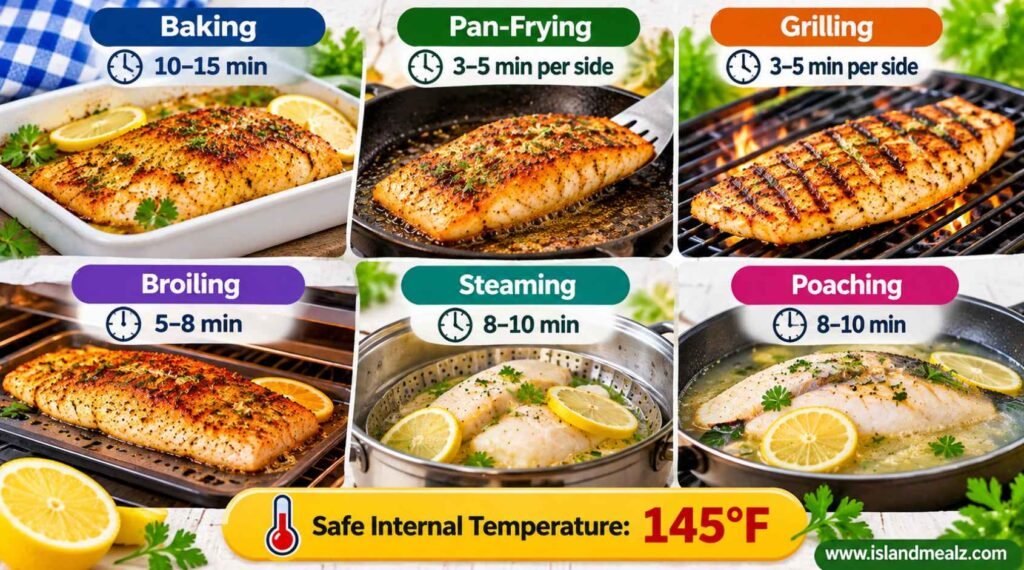
Use this table as a starting point when planning your meal.
| Cooking Method | Approximate Cooking Time | Heat Setting |
| Baking | 10–15 minutes | 400°F oven |
| Pan-frying | 3–5 minutes per side | Medium heat |
| Grilling | 3–5 minutes per side | Medium-high heat |
| Broiling | 5–8 minutes | High broil |
| Steaming | 8–10 minutes | Gentle steam |
| Poaching | 8–10 minutes | Gentle simmer |
These are general estimates for typical fish fillets, not fixed cooking times. Thin pieces may cook faster, while thicker cuts need longer.
For food safety, fish should reach an internal temperature of 145°F. Check the thickest part with an instant-read food thermometer rather than relying on the clock alone.
How to Tell When Fish Is Fully Cooked
One of the most common mistakes when cooking fish is taking it off the heat too early or leaving it there for too long. Fish is delicate, so checking it near the end of the cooking time helps you get a better result.
Here are a few signs to look for:
- Check the temperature: Insert an instant-read thermometer into the thickest part. Fish should reach 145°F.
- Look at the flesh: Cooked fish usually changes from translucent to opaque.
- Test the texture: Gently press the fish with a fork. It should separate into flakes without much effort.
- Check the center: If the middle still looks raw or translucent, continue cooking and check again.
The thermometer is the most reliable way to confirm that fish has reached a safe temperature. Once it is cooked, take it off the heat promptly so it doesn’t become dry.
Tips for Cooking Fish Without Drying It Out
Fish can go from tender to dry in just a few extra minutes. The good news is that you don’t need special equipment or complicated techniques to avoid that problem.
- Watch the cooking time: Start checking the fish a little before the suggested time ends. Thinner fillets cook quickly.
- Dry the surface first: Pat the fish with paper towels before seasoning. This helps it brown when you pan-fry or grill it.
- Use a little oil or butter: A light coating adds flavor and helps prevent the surface from becoming too dry.
- Choose the right method: Baking and steaming are easy options for delicate fillets. Grilling and pan-frying work well when you want more color on the outside.
- Handle the fish gently: Turn it only when needed, using a thin spatula to keep the fillet in one piece.
- Thaw frozen fish safely: If you have time, thaw it in the refrigerator before cooking and pat away excess moisture.
- Remove it from the heat promptly: Once the fish reaches 145°F, take it off the heat instead of leaving it in a hot pan or baking dish.
A little preparation also helps. Measure your seasonings and get your lemon, butter, or herbs ready before cooking. Since fish cooks quickly, having everything nearby makes the process easier.
Frequently Asked Questions
What Is the Healthiest Way to Cook Fish?
Baking, steaming, and poaching are good choices if you want to use little or no added oil. They let the natural flavor of the fish come through without needing a heavy coating or deep frying. Try lemon, garlic, and fresh herbs for extra flavor.
Can You Cook Fish From Frozen?
Yes, some fish can be cooked directly from frozen, especially when baking or steaming. It will usually take longer than thawed fish. Follow the package directions and check that the thickest part reaches 145°F. If you prefer to thaw it first, place it in the refrigerator rather than leaving it on the counter.
How Long Does Fish Take to Cook?
Most average-sized fillets take about 10–15 minutes in a 400°F oven. Pan-frying and grilling often take around 3–5 minutes per side. These times vary with the type and thickness of the fish, so check the center before serving.
What Is the Best Fish for Beginners?
Cod and tilapia are good starting choices because they have mild flavors and are easy to prepare. Both can be baked or pan-fried without much preparation. If you enjoy a richer flavor, salmon is another option worth trying.
Final Thoughts
Cooking fish at home doesn’t have to feel like a complicated task. Start with a simple fillet of cod or tilapia, add a few seasonings, and choose a method that suits your meal. Baking is a good place to begin, while pan-frying is worth trying when you want a lightly browned outside.
Pay attention to the thickness of the fish and check its internal temperature before serving. Once you get comfortable with the timing, you’ll have an easy way to prepare a fresh fish dinner whenever it suits your family.