
Basmati rice is a favorite in many kitchens because of its long grains, delicate aroma, and light texture. But getting it just right can take a little practice. Sometimes the rice turns sticky, while other times the grains remain too firm. The good news is that a few simple steps can help you get better results.
If you have ever wondered how to cook basmati rice without making it mushy, this recipe will help. I’ll walk you through rinsing the rice, measuring the water, and cooking it on the stove. You’ll also learn a few simple tips to help the grains turn out tender and fluffy.
What Is Basmati Rice?
Basmati rice is a fragrant, long-grain rice traditionally grown in parts of India and Pakistan. It is known for its slender shape, delicate aroma, and slightly nutty flavor. When cooked properly, the grains become tender and stay separate instead of clumping together.
Basmati rice is commonly served with curries, grilled meats, vegetables, and other flavorful dishes. Its light texture makes it a useful choice for both everyday meals and special occasions.
Why Basmati Rice Has a Unique Aroma
One thing that makes basmati rice different is its natural smell. It contains an aroma compound called 2-acetyl-1-pyrroline, which gives it a pleasant, popcorn-like scent.
You can notice this fragrance even more when the rice is cooking. It pairs nicely with garlic, spices, herbs, and rich sauces.
White Basmati vs. Brown Basmati Rice
White and brown basmati rice come from the same type of rice, but they are processed differently. White basmati has its outer bran layer removed, while brown basmati keeps that layer.
| Feature | White Basmati Rice | Brown Basmati Rice |
| Texture | Soft and fluffy | Firm and chewy |
| Cooking time | About 12–15 minutes | About 35–45 minutes |
| Flavor | Mild and fragrant | Nutty and earthy |
| Fiber | Lower | Higher |
| Bran layer | Removed | Retained |
White basmati rice cooks faster and has a lighter texture. Brown basmati takes longer but provides more fiber. For this recipe, we’ll focus on white basmati rice cooked on the stovetop.
Ingredients for Cooking Basmati Rice
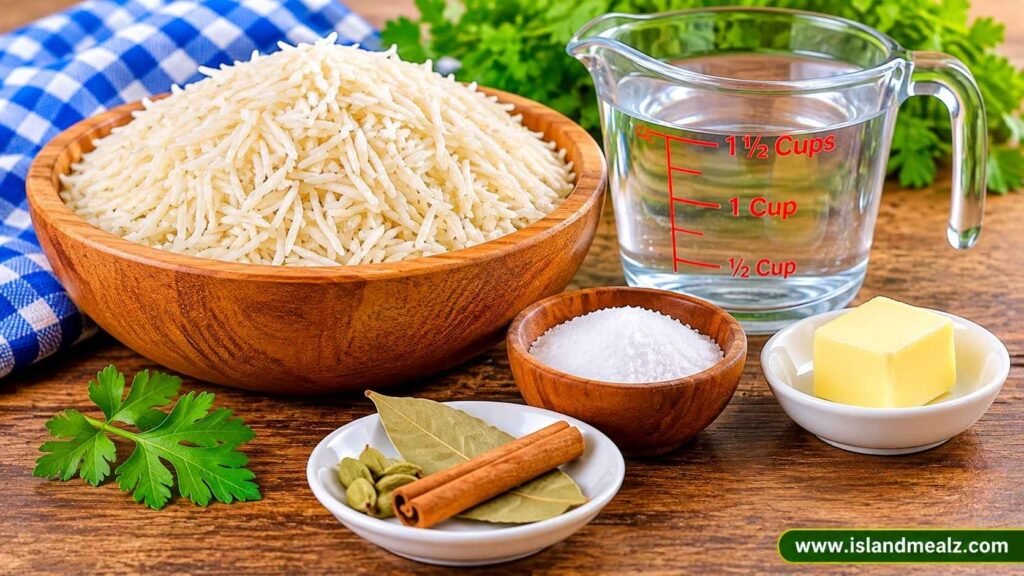
You don’t need a long list of ingredients to make good basmati rice. A few kitchen basics are enough to prepare a simple, flavorful side dish. The most important things are good-quality rice and the correct amount of water.
Essential Ingredients
For this recipe, you’ll need:
| Ingredient | Amount |
| White basmati rice | 1 cup |
| Water | 1½ cups |
| Salt | ¼ teaspoon |
Use a measuring cup for both the rice and water. This makes it easier to get consistent results each time you prepare the recipe.
Optional Ingredients for Extra Flavor
Plain basmati rice has a pleasant aroma on its own, but you can add a little extra flavor if you like.
- Butter: Adds a mild, rich taste.
- Olive oil: Gives the rice a slightly richer finish.
- Bay leaf: Adds a gentle herbal flavor.
- Cardamom: Provides a warm, fragrant aroma.
- Cinnamon stick: Adds a subtle sweetness.
You don’t need to use all these ingredients. For a basic everyday rice recipe, salt and water are enough.
Basmati Rice Water Ratio
Getting the water measurement right can make a big difference in how your rice turns out. Too much water may leave the grains soft and mushy, while too little can make them dry or undercooked.
For this stovetop recipe, start with 1½ cups of water for every cup of uncooked white basmati rice. This is a useful starting ratio for the absorption method, although some rice brands may need a little adjustment.
How Much Water for 1 Cup of Basmati Rice?
For one cup of uncooked white basmati rice, use 1½ cups of water. This amount works well for many varieties when the rice is rinsed but not soaked.
If you soak the rice for 20–30 minutes, it will already absorb some water. You may need to reduce the cooking water slightly. Check your rice package instructions if available.
Water Ratio for Different Amounts of Rice
Use this chart to measure larger portions:
| Uncooked Rice | Water |
| 1 cup | 1½ cups |
| 2 cups | 3 cups |
| 3 cups | 4½ cups |
| 4 cups | 6 cups |
Use the same measuring cup for both ingredients. If you’re trying a new brand of basmati rice, start with the package recommendation and adjust after your first batch.
How to Prepare Basmati Rice Before Cooking
Before putting the rice on the stove, take a few minutes to prepare it. Rinsing and soaking are simple steps, but they can affect the final texture. You don’t need any special equipment for either one.
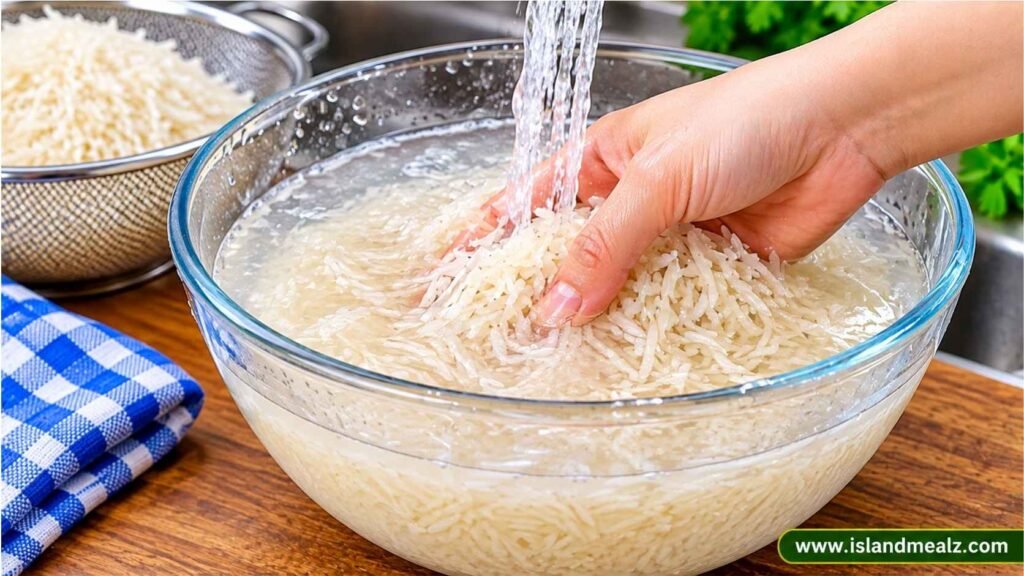
How to Rinse Basmati Rice
Place the uncooked rice in a bowl and cover it with cool water. Gently move the grains around with your fingers, then pour out the cloudy water.
Repeat this process two or three times until the water looks much clearer. Rinsing removes excess surface starch and helps reduce stickiness after cooking.
Should You Soak Basmati Rice?
Soaking is optional, but it can help the grains cook more evenly and become longer when cooked. After rinsing, cover the rice with fresh water and let it sit for 20–30 minutes.
Drain the rice thoroughly before cooking. If you don’t have time to soak it, simply rinse and drain the rice before adding it to your saucepan. You may need to follow a slightly different cooking time depending on the rice brand.
How to Cook Basmati Rice on the Stove
You can make fluffy basmati rice with a regular saucepan and a few basic ingredients. The key is to let the rice cook gently without disturbing it too much. Follow these steps for a simple stovetop method.
Step 1: Measure and Rinse the Rice
Measure 1 cup of white basmati rice and place it in a bowl. Rinse it two or three times with cool water, gently moving the grains with your fingers.
You can soak the rice for 20–30 minutes if you have extra time. Drain it well before cooking.
Step 2: Add Rice, Water, and Salt
Transfer the rinsed rice to a medium saucepan. Add 1½ cups of water and ¼ teaspoon of salt.
If you like, add 1 teaspoon of butter or oil. Give the ingredients one gentle stir to distribute the salt.
Step 3: Bring the Water to a Boil
Place the saucepan over medium-high heat. Let the water come to a gentle boil.
Stay nearby and watch the pot. Once the water starts bubbling, reduce the heat immediately.
Step 4: Cover and Simmer on Low Heat
Cover the saucepan with a tight-fitting lid and reduce the heat to low. Let the rice simmer for about 12–15 minutes.
Try not to lift the lid or stir the rice during this time. The trapped steam helps the grains cook evenly.
Step 5: Let the Rice Rest
After the cooking time, check whether the water has been absorbed and the grains are tender. If the rice is still slightly firm and the water is gone, add 1–2 tablespoons of hot water, cover the pot, and cook for a few more minutes.
Turn off the heat once the rice is cooked. Keep the lid on and let it rest for 10 minutes. This allows the moisture to settle throughout the grains.
Step 6: Fluff the Rice and Serve
Remove the lid and gently separate the grains with a fork. Avoid pressing down too hard because this can break the rice.
Serve the rice warm with your favorite curry, grilled chicken, vegetables, or meat dish. The finished grains should feel tender and look light rather than wet or clumped together.
Tips for Making Perfectly Fluffy Basmati Rice
Good basmati rice should feel tender without turning wet or sticky. You don’t need any special tricks to get that result. A few small adjustments can make your cooking more consistent.
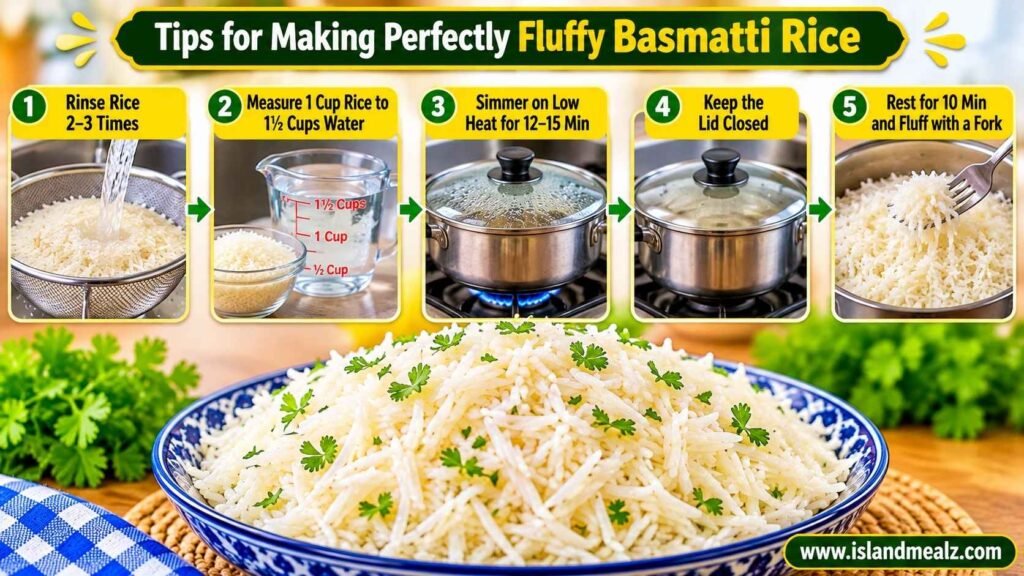
Measure the Water Carefully
Too much water can make the grains heavy and mushy. Start with the recommended amount for your rice brand and measure both ingredients carefully.
Keep the Lid Closed
Once the rice starts simmering, leave the lid in place. Steam plays an important role in cooking the grains evenly, so avoid checking the rice every few minutes.
Don’t Stir During Cooking
Stirring can break the grains and make the rice release more starch. Once the ingredients are mixed, leave the saucepan alone until the cooking time is complete.
Let the Rice Rest Before Serving
Give the cooked rice about 10 minutes to rest with the lid on. Then use a fork to gently separate the grains. This small step makes the rice easier to serve and improves its texture.
Different Ways to Cook Basmati Rice
A saucepan isn’t the only way to prepare basmati rice. If you use a rice cooker or Instant Pot regularly, you can make rice with either appliance. The basic preparation is similar, but water measurements and cooking times may differ.
Rice Cooker Method
Rinse the basmati rice under cool water and drain it well. Add it to the rice cooker with water according to the appliance instructions.
Add a little salt if desired, close the lid, and select the white rice setting. Once the cooking cycle finishes, let the rice rest for 5–10 minutes before fluffing it with a fork.
Instant Pot Method
Rinse and drain the rice before adding it to the Instant Pot. Add the water and salt according to your appliance’s instructions and the rice manufacturer’s recommendations.
Close the lid, set the pressure valve to sealing, and select the appropriate pressure-cooking setting. Cooking time and pressure release instructions can vary, so follow a tested recipe for your particular model.
After cooking, gently fluff the grains with a fork and serve warm.
Common Mistakes When Cooking Basmati Rice
Even when you follow a recipe, small mistakes can affect the final texture of basmati rice. If your rice turns sticky, mushy, or undercooked, one of these common problems may be the reason.
Adding Too Much Water
Too much water can leave basmati rice soft and mushy. Measure the water before cooking and follow the recommended ratio for your particular rice brand.
Skipping the Rinsing Step
Unrinsed rice has extra starch on its surface, which can make the cooked grains stick together. Rinse the rice a few times with cool water before adding it to the saucepan.
Cooking Over High Heat
High heat can cause water to evaporate too quickly. The outside of the rice may cook before the center becomes tender. Once the water boils, reduce the heat to low.
Opening the Lid Too Often
Every time you lift the lid, steam escapes from the saucepan. This can interrupt the cooking process. Keep the lid closed while the rice simmers and check it only after the recommended cooking time.
What to Serve with Basmati Rice
Basmati rice works well with many different meals because its flavor is mild and its texture is light. You can pair it with spicy dishes, creamy sauces, grilled foods, or simple vegetables.
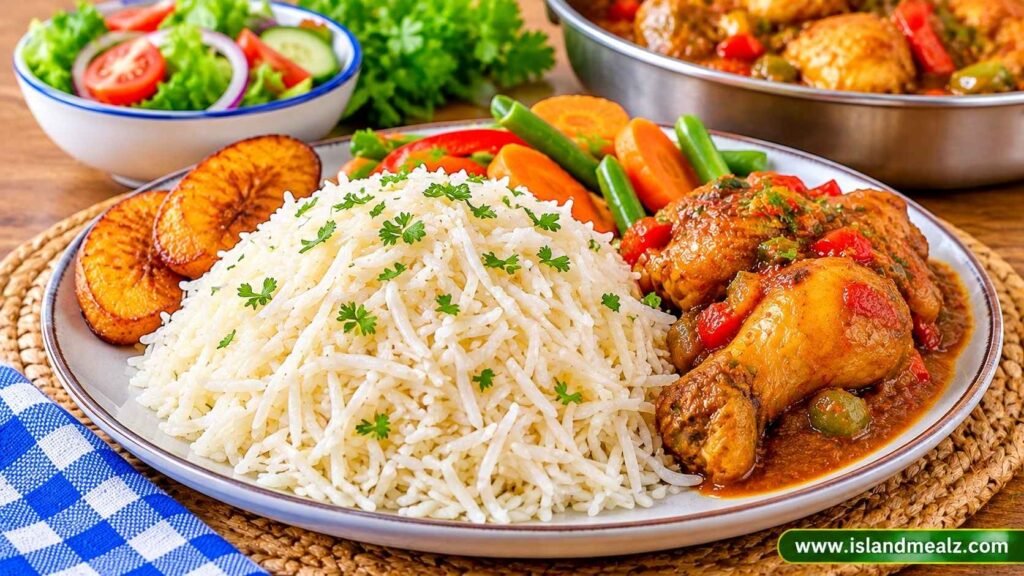
Curries and Sauces
Fluffy basmati rice is especially good with dishes that have a rich sauce. The grains soak up some of the flavor without becoming too heavy.
Try serving it with chicken curry, butter chicken, beef curry, chickpea curry, or lentil dal. Vegetable curry is another simple option for a meat-free meal.
Chicken, Meat, and Vegetable Dishes
For an easy dinner, serve basmati rice with grilled chicken, roasted beef, or baked fish. You can also add sautéed vegetables or roasted cauliflower for a lighter meal.
If you want a little extra flavor, finish the rice with fresh herbs or a small squeeze of lemon juice. These simple combinations make it easy to use basmati rice in everyday cooking.
How to Store and Reheat Basmati Rice
If you have leftover basmati rice, you can save it for another meal. The important thing is to cool and store it properly. Cooked rice should not sit at room temperature for long because bacteria can grow in it.
Refrigerating Leftover Rice
Divide leftover rice into shallow, airtight containers so it cools quickly. Refrigerate it within one hour of cooking, rather than leaving it on the counter.
For the best quality, use refrigerated rice within 3–4 days. Keep the refrigerator at 40°F or below.
Freezing Cooked Rice
Basmati rice can also be frozen in individual portions. Let the rice cool briefly, place it in freezer-safe containers or bags, and remove as much excess air as possible.
Label each portion with the date. For the best texture, try to use frozen rice within one month.
Best Way to Reheat Rice
You can reheat leftover rice in the microwave or on the stovetop.
- Microwave: Add a little water, cover the rice loosely, and heat until steaming hot throughout.
- Stovetop: Add a splash of water to a saucepan, cover it, and warm the rice over low heat.
Stir the rice as needed and make sure it reaches 165°F throughout before serving. Reheat only the portion you plan to eat, and discard rice that has been left at room temperature for more than two hours.
Frequently Asked Questions
How Long Does Basmati Rice Take to Cook?
White basmati rice usually takes around 12–15 minutes to simmer on the stovetop after the water boils. After cooking, leave it covered for another 10 minutes. Brown basmati rice takes longer because it still has its outer bran layer.
Do You Need to Soak Basmati Rice Before Cooking?
No, soaking is optional. However, soaking rinsed rice for 20–30 minutes can help the grains cook more evenly. If you’re in a hurry, rinse the rice well, drain it, and cook it without soaking.
Why Is My Basmati Rice Sticky?
Sticky rice usually means there is too much moisture or excess starch on the grains. Rinsing the rice before cooking and measuring the water carefully can help. Also, avoid stirring the rice while it simmers.
How Much Water Do I Need for 2 Cups of Basmati Rice?
For this recipe, start with 3 cups of water for 2 cups of uncooked white basmati rice. This measurement works as a starting point for the stovetop absorption method. Your rice brand may require a slight adjustment.
Should You Rinse Basmati Rice Before Cooking?
Yes, rinsing is a good idea. It removes loose starch from the surface and helps the grains stay separate after cooking. Rinse the rice two or three times with cool water before preparing it.
Can You Cook Basmati Rice Without a Rice Cooker?
Absolutely. A regular saucepan works well for cooking basmati rice. Add the rinsed rice, water, and salt, bring everything to a boil, and then simmer over low heat with the lid on. Let the rice rest before fluffing and serving.
Final Thoughts
Once you get the water measurement and cooking time right, making basmati rice becomes much easier. Rinse the grains, keep the heat low, and give the rice enough time to rest before serving. These small steps can make a big difference. Serve it with your favorite homemade curry, chicken, or vegetables, and enjoy a simple side dishes.
Recipe Note: Rice brands can absorb water differently, so the first batch may need a little adjustment. If your rice turns out too soft, reduce the water slightly next time. If the grains remain firm, add a small amount of hot water and cook for a few more minutes.

One Response