
Every traditional Jamaican dish has a story behind it. The island’s cuisine did not develop overnight. It evolved over centuries as different cultures shared ingredients, cooking methods, and family recipes. Today, Jamaican food reflects the history of the people who helped shape Jamaica itself.
Today, Jamaican food is known around the world for its fresh ingredients, aromatic herbs, and famous dishes like jerk chicken, ackee and saltfish, curry goat, and rice and peas. However, these popular meals did not develop overnight. They are the result of centuries of cultural exchange, local farming, and traditional cooking techniques that have been passed down from one generation to the next. Understanding the history of Jamaican cuisine helps us appreciate not only its incredible flavors but also the people and traditions behind every dish.
In this guide, you will discover how Jamaican cuisine evolved over time, which cultures influenced its development, and how traditional ingredients became an essential part of everyday cooking. You will also learn about the origins of Jamaica’s most famous dishes, the cooking methods that define authentic Jamaican food, and why Jamaican cuisine continues to inspire food lovers across the globe. Whether you are interested in Caribbean history, exploring new cuisines, or learning more about Jamaican food, this article will give you a complete understanding of its remarkable culinary journey.
What Is the History of Jamaican Cuisine?
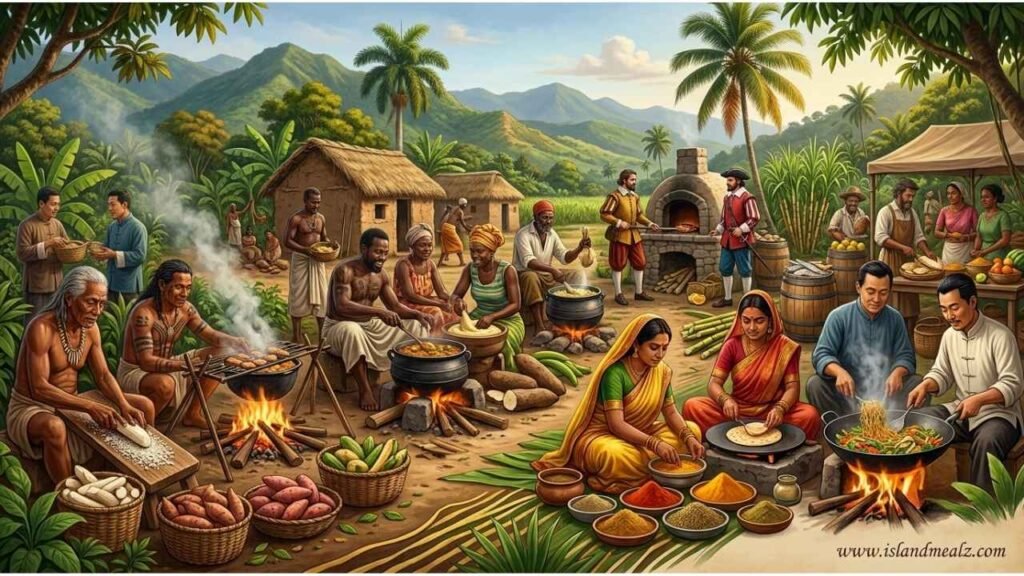
Jamaican cuisine is the result of hundreds of years of cultural exchange. Instead of being influenced by one civilization, it developed as different communities settled on the island and introduced new foods, spices, and cooking traditions. Each generation added something unique, creating the flavorful cuisine we know today.
The journey began with the Indigenous Taíno people, the first known inhabitants of Jamaica. They lived off the land and the sea, growing crops such as cassava, maize, sweet potatoes, and peppers while catching fresh fish and shellfish. They also introduced simple cooking methods like roasting food over an open fire. One of their most important contributions is bammy, a cassava flatbread that is still enjoyed across Jamaica today.
The arrival of the Spanish in the late 15th century brought new animals, crops, and farming practices to the island. Later, British colonial rule introduced additional foods and ingredients that became part of everyday life. During this period, saltfish became widely available and was eventually combined with ackee to create ackee and saltfish, which is now Jamaica’s national dish.
African communities had the greatest influence on Jamaican cuisine. Enslaved Africans brought valuable farming knowledge, cooking techniques, and traditional recipes that transformed the island’s food culture. They introduced ingredients such as callaloo, okra, and yams, while also developing flavorful one-pot meals, slow-cooked stews, and rich seasoning methods. Their culinary traditions played a major role in shaping many of the dishes that define Jamaican cuisine today.
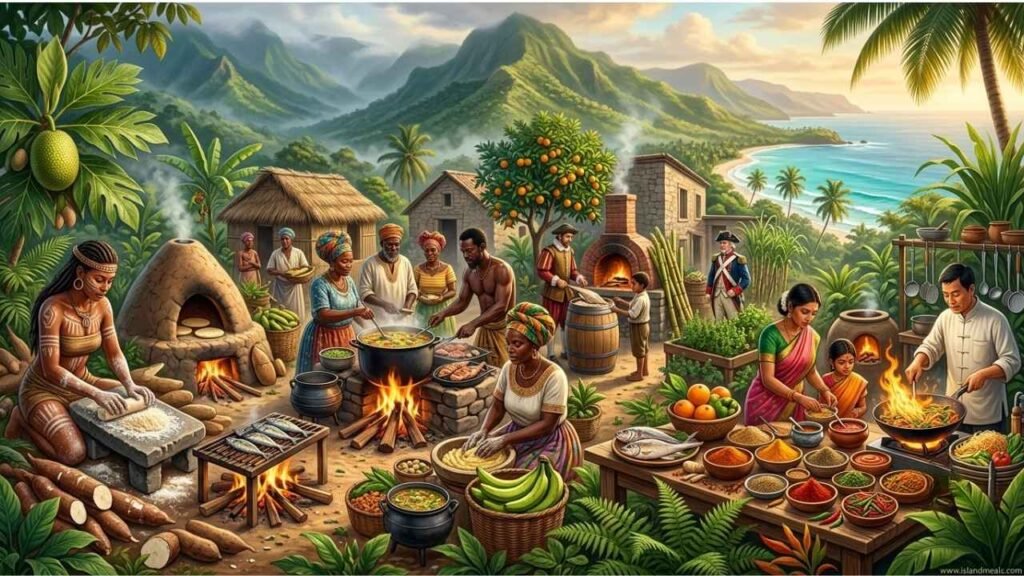
Key Milestones in the History of Jamaican Cuisine
| Historical Period | Major Influence | Lasting Contribution |
| Indigenous Taíno Era | Native farming and fishing | Cassava, bammy, roasting techniques |
| Spanish Colonization | New livestock and crops | Citrus fruits, cattle, pigs, sugarcane |
| British Colonial Period | Imported foods and trade | Saltfish, baking traditions, tea culture |
| African Heritage | Traditional cooking methods | Callaloo, one-pot meals, rich seasoning, jerk traditions |
| Indian Immigration | Aromatic spices | Curry dishes and spice blends |
| Chinese Immigration | New cooking techniques | Stir-frying, soy-based cooking, noodle dishes |
The Indigenous Taíno: The First Influence on Jamaican Food
The story of Jamaican cuisine begins with the Indigenous Taíno people, who were the first known inhabitants of Jamaica. Long before European explorers arrived, the Taíno had developed a way of life that depended on farming, fishing, and using the island’s natural resources. Their knowledge of local plants, seafood, and cooking methods laid the foundation for many traditions that are still part of Jamaican cuisine today.
Who Were the Taíno?
The Taíno were Indigenous people who lived throughout the Caribbean, including Jamaica, before the arrival of the Spanish in 1494. They built farming communities, fished in coastal waters, and hunted local wildlife to provide food for their families.
Their diet was based on fresh and natural ingredients that were available on the island. Instead of processed foods, they relied on crops they grew themselves and seafood they caught from nearby rivers and the Caribbean Sea.
Traditional Taíno Cooking Methods
The Taíno prepared food using simple but effective cooking techniques. One of their most common methods was roasting meat and fish over an open fire. This allowed food to cook slowly while developing a rich smoky flavor.
They also used wooden racks to cook meat above a fire. This early cooking method is believed to have influenced what later became jerk cooking, one of Jamaica’s most famous culinary traditions.
Boiling and baking were also common. Clay pots and natural materials were used to prepare soups, vegetables, and root crops.
The Taíno Legacy in Modern Jamaican Cuisine
Although the Taíno population declined after European colonization, their food traditions did not disappear. Many of the ingredients they cultivated remain essential to Jamaican cooking.
Bammy, made from cassava, continues to be a popular side dish with seafood. Roasting and grilling techniques are still widely used, especially for preparing fish and meat. Fresh produce, root vegetables, and locally grown crops also remain central to authentic Jamaican cuisine.
The Taíno also demonstrated the importance of cooking with fresh, locally available ingredients. This philosophy continues to define Jamaican food today, where seasonal produce, herbs, seafood, and natural flavors are valued over heavily processed foods.
Lasting Contributions of the Taíno to Jamaican Cuisine
| Taíno Contribution | How It Is Used Today |
| Cassava | Used to make traditional bammy |
| Roasting over open fire | Influenced modern grilling and jerk cooking |
| Fresh seafood | Still a key part of Jamaican meals |
| Sweet potatoes | Used in soups, side dishes, and desserts |
| Maize (Corn) | Included in soups and traditional recipes |
| Peppers | Used in seasoning and local cooking |
| Farming techniques | Influenced traditional agriculture and local food production |
The Taíno were the first people to shape Jamaica’s food culture. Their knowledge of farming, fishing, and cooking created the earliest foundation of Jamaican cuisine. Even after centuries of cultural change, their influence can still be seen in the ingredients, recipes, and cooking methods that define authentic Jamaican food today.
Spanish Colonization and Its Impact on Jamaican Cuisine
The arrival of the Spanish in 1494, led by Christopher Columbus, marked the beginning of a new chapter in Jamaica’s history. Although the Spanish ruled the island for only about 150 years, they introduced new crops, animals, and farming practices that changed the local food culture. Many of these ingredients later became an important part of traditional Jamaican cuisine.
The Spanish also interacted with the Indigenous Taíno people, which led to the exchange of foods, farming knowledge, and cooking techniques. Over time, local ingredients were combined with foods brought from Europe, creating new recipes that influenced future generations.
New Livestock and Farming Practices
Before the Spanish arrived, the Taíno mainly relied on farming, fishing, and hunting for food. The Spanish introduced domesticated animals that became valuable sources of meat and dairy.
Some of the most important livestock they brought included:
- Cattle
- Pigs
- Goats
- Chickens
- Horses
Goat meat and pork later became key ingredients in popular Jamaican dishes such as curry goat and jerk pork. These animals also supported farming communities by providing food and helping with agricultural work.
Crops Introduced by the Spanish
The Spanish introduced several crops that adapted well to Jamaica’s tropical climate. Many of these foods are still widely grown across the island today.
Important crops included:
- Sugarcane
- Citrus fruits
- Bananas
- Plantains
- Coconut
- Coffee (introduced later and expanded under British rule)
These crops increased food production and expanded the variety of ingredients available to local cooks. Fruits such as oranges, limes, and lemons became popular for marinades, sauces, and refreshing drinks.
Changes in Cooking and Food Preparation
Spanish settlers brought European cooking traditions that slowly blended with local practices. They encouraged the use of livestock, introduced new preservation methods, and expanded the use of herbs and seasonings in meat dishes.
As different cultures lived together on the island, recipes began to evolve. Local ingredients such as cassava, peppers, and seafood were combined with Spanish-introduced meats and crops. This blending of traditions helped shape the early identity of Jamaican cuisine.
The Lasting Influence of the Spanish
When Britain took control of Jamaica in 1655, everyday life changed in many ways, including the food people ate. Imported ingredients such as saltfish became widely available, while British baking traditions gradually blended with local cooking styles.
Today, ingredients like plantains, citrus fruits, goat meat, pork, and coconut continue to appear in many Jamaican dishes. These contributions, combined with later African, British, Indian, and Chinese influences, helped create the diverse and flavorful cuisine that Jamaica is known for today.
Spanish Contributions to Jamaican Cuisine
| Spanish Introduction | Impact on Jamaican Cuisine |
| Cattle | Expanded the use of beef in local cooking |
| Pigs | Inspired traditional pork dishes, including jerk pork |
| Goats | Became the main ingredient in curry goat |
| Chickens | Increased poultry-based recipes |
| Sugarcane | Supported the sugar industry and influenced local sweets |
| Citrus Fruits | Added fresh flavors to marinades, sauces, and drinks |
| Plantains | Became a popular side dish in Jamaican meals |
| Coconut | Used in rice and peas, desserts, soups, and curries |
The Spanish period was an important stage in the evolution of Jamaican cuisine. By introducing new ingredients, livestock, and farming techniques, they expanded the island’s food resources and laid the groundwork for the multicultural cuisine that would continue to develop over the centuries.
African Influence on Jamaican Cuisine
The arrival of Africans in Jamaica had the greatest and most lasting impact on the island’s food culture. During the transatlantic slave trade, thousands of Africans were brought to Jamaica to work on sugar plantations. Although they faced extremely difficult conditions, they preserved many of their cooking traditions, farming skills, and food knowledge. Over time, these traditions blended with local ingredients and helped shape the foundation of modern Jamaican cuisine.
Today, many of Jamaica’s most popular dishes, cooking methods, and ingredients reflect African culinary heritage. From flavorful one-pot meals to slow-cooked stews and bold seasonings, African influence can be seen in kitchens across the island.
Arrival of Enslaved Africans
Enslaved Africans came from different regions of West and Central Africa, bringing with them a deep understanding of farming and cooking. They adapted their traditional recipes using ingredients available in Jamaica and created meals that were both nourishing and flavorful.
Many of these recipes were passed down through generations. Over time, they became an important part of Jamaican family traditions and local food culture.
Ingredients Introduced by African Communities
African communities did far more than introduce new ingredients. They transformed the way food was prepared in Jamaica. Their knowledge of slow cooking, seasoning, and one-pot meals helped create recipes that are still enjoyed in Jamaican homes today.
Some of the most important ingredients include:
- Callaloo
- Okra
- Yams
- Black-eyed peas
- Guinea corn
- Leafy green vegetables
- Various beans and legumes
These ingredients are still widely used in soups, stews, side dishes, and vegetarian meals throughout Jamaica.
Traditional African Cooking Techniques
African cooking methods became deeply rooted in Jamaican cuisine. Instead of preparing food quickly, many dishes were cooked slowly to allow herbs, spices, and natural flavors to blend together.
Common cooking techniques included:
- Slow cooking
- Stewing
- One-pot cooking
- Grilling over an open fire
- Roasting
- Smoking
These methods are still used to prepare famous Jamaican dishes such as oxtail, brown stew chicken, curry goat, and pepper pot soup.
The Origins of Jerk Cooking
One of Jamaica’s most famous cooking traditions has strong African roots. Enslaved Africans who escaped from plantations joined the Maroons, communities of free Africans living in Jamaica’s mountains. Together, they developed a method of seasoning and slowly cooking meat over pimento wood to preserve food and avoid producing large amounts of smoke.
This technique eventually became known as jerk cooking. Today, jerk seasoning is made with ingredients such as allspice (pimento), Scotch Bonnet peppers, thyme, garlic, ginger, and green onions. Jerk chicken and jerk pork are now among the most recognized Jamaican dishes around the world.
One-Pot Meals and Family Traditions
African culinary traditions also influenced the development of hearty one-pot meals. These dishes combined meat, vegetables, beans, herbs, and spices in a single pot, creating filling and flavorful meals for families.
This style of cooking remains popular because it is practical, economical, and allows ingredients to absorb rich flavors during slow cooking. Many traditional Jamaican stews and soups continue to follow this approach.
African Heritage in Modern Jamaican Cuisine
The influence of African culture goes far beyond individual recipes. It shaped the way Jamaicans season food, prepare meals, and celebrate family gatherings. Many dishes enjoyed today are based on recipes that have been preserved for generations.
Popular foods such as jerk chicken, oxtail, callaloo, pepper pot soup, rice and peas, and brown stew chicken all reflect African culinary traditions. These meals continue to represent the resilience, creativity, and cultural heritage of the African communities that helped define Jamaican cuisine.
African Contributions to Jamaican Cuisine
| African Contribution | Lasting Impact on Jamaican Food |
| Callaloo | A staple vegetable used in breakfasts, soups, and side dishes |
| Okra | Common ingredient in soups and stews |
| Yams | Popular root vegetable served boiled or roasted |
| One-pot cooking | Inspired hearty stews and traditional family meals |
| Slow cooking | Creates rich flavors in dishes like oxtail and curry goat |
| Open-fire grilling | Influenced modern jerk cooking techniques |
| Bold seasoning | Laid the foundation for Jamaica’s famous spice blends |
| Maroon cooking traditions | Helped develop authentic jerk cooking over pimento wood |
African influence is the heart of Jamaican cuisine. The ingredients, cooking methods, and traditions introduced by African communities continue to define the island’s food culture. Their legacy lives on in every bowl of soup, every slow-cooked stew, and every serving of authentic jerk chicken enjoyed in Jamaica and around the world.
Indian and Chinese Contributions to Jamaican Cuisine
The history of Jamaican cuisine continued to evolve after the end of slavery in 1838. To meet the growing demand for labor, many workers from India and China came to Jamaica as indentured laborers. They brought their own food traditions, spices, ingredients, and cooking techniques, which gradually became part of everyday Jamaican cooking.
Although Indian and Chinese communities kept many of their traditional recipes, they also adapted to local ingredients. Over time, their culinary practices blended with African, British, Spanish, and Indigenous influences, making Jamaican cuisine even more diverse and flavorful.
Indian Influence on Jamaican Cuisine
The arrival of Indian and Chinese workers added another layer to Jamaica’s culinary identity. Rather than replacing traditional recipes, these communities introduced new spices, sauces, and cooking methods that blended naturally with local ingredients.
Unlike Indian curry, Jamaican curry developed its own unique flavor by combining curry powder with local ingredients such as Scotch Bonnet peppers, allspice (pimento), thyme, garlic, ginger, and green onions. This created rich, fragrant dishes that are now considered Jamaican classics.
Popular dishes influenced by Indian cuisine include:
- Curry goat
- Curried chicken
- Curried shrimp
- Curried vegetables
- Curried chickpeas
Today, curry dishes are served in homes, restaurants, and at celebrations throughout Jamaica.
Chinese Influence on Jamaican Cuisine
Chinese immigrants also made valuable contributions to Jamaican food culture. They introduced new cooking techniques, especially stir-frying, which allowed vegetables, meat, and seafood to cook quickly while keeping their natural texture and flavor.
Chinese communities also introduced ingredients such as:
- Soy sauce
- Noodles
- Bok choy
- Ginger
- Sesame oil
These ingredients blended naturally with Jamaican herbs and spices, creating unique fusion dishes that remain popular today.
The Rise of Jamaican-Chinese Fusion
As cultures mixed over time, Jamaican cooks began combining Chinese techniques with local ingredients. Stir-fried vegetables were seasoned with Jamaican herbs, while chicken, beef, and seafood were cooked using both soy sauce and traditional Caribbean spices.
This fusion of flavors created a new style of cooking that is commonly found in Jamaican restaurants today. Many takeaway restaurants across Jamaica serve dishes that combine Chinese cooking methods with authentic Jamaican seasonings.
A More Diverse Food Culture
The arrival of Indian and Chinese communities expanded the variety of foods available across the island. New spices, vegetables, sauces, and cooking techniques added depth to Jamaican cuisine while preserving its traditional identity.
Rather than replacing existing food traditions, these influences blended with local recipes to create meals that are both familiar and unique. This ability to embrace different cultures is one of the reasons Jamaican cuisine has become so rich and diverse.
Indian and Chinese Contributions at a Glance
| Culture | Major Contributions | Popular Jamaican Dishes |
| Indian | Curry powder, aromatic spices, spice blends | Curry goat, curried chicken, curried shrimp |
| Chinese | Stir-frying, soy sauce, noodles, ginger | Stir-fried chicken, vegetable dishes, fusion recipes |
Lasting Influence on Modern Jamaican Cuisine
Today, the influence of Indian and Chinese communities can still be seen in homes, restaurants, and street food across Jamaica. Curry dishes remain some of the island’s most popular meals, while stir-fried recipes and soy-based seasonings are widely enjoyed.
These culinary traditions demonstrate how Jamaican cuisine has continued to grow by welcoming new ideas while staying true to its roots. The combination of Indigenous, African, Spanish, British, Indian, and Chinese influences has created a food culture that is both diverse and uniquely Jamaican.
How Jamaica’s National Dishes Evolved
Jamaica’s national dishes are more than just popular meals. They tell the story of the island’s history, cultural diversity, and creativity. Over centuries, local cooks combined ingredients and cooking techniques from different cultures to create dishes that are now recognized around the world.
Today, meals such as ackee and saltfish, jerk chicken, curry goat, and rice and peas are symbols of Jamaican identity. Each dish has its own unique history and reflects the cultural influences that helped shape Jamaican cuisine.
Jamaica’s best-known dishes are more than popular recipes—they are living examples of the island’s multicultural history. Each meal tells the story of people who brought their own traditions and adapted them to local ingredients.
The History of Ackee and Saltfish
Ackee and saltfish is Jamaica’s national dish and one of the best examples of cultural fusion. Ackee is a fruit that was brought to Jamaica from West Africa during the 18th century. Saltfish, or salted cod, was imported by the British because it could be stored for long periods and was an affordable source of protein.
Jamaican cooks combined these two ingredients with onions, tomatoes, sweet peppers, thyme, and spices to create a flavorful meal. Over time, ackee and saltfish became a favorite breakfast dish and an important part of Jamaican culture. Today, it is served with fried dumplings, boiled green bananas, breadfruit, or bammy.
The History of Jerk Chicken
Jerk chicken is one of Jamaica’s most famous dishes and has become a global symbol of Jamaican cuisine. Its origins can be traced to the Maroons, who developed a way of preserving and cooking meat in Jamaica’s mountainous regions.
The Maroons seasoned meat with allspice (pimento), Scotch Bonnet peppers, thyme, garlic, ginger, and green onions before slowly cooking it over pimento wood. This method created a smoky flavor while helping preserve the meat.
Today, jerk chicken is enjoyed in homes, restaurants, and street food stalls across Jamaica. The same traditional cooking method is also used for jerk pork, seafood, and vegetables.
The History of Curry Goat
Curry goat reflects the influence of Indian immigrants who arrived in Jamaica during the 19th century. They introduced curry powder and aromatic spices, which Jamaican cooks adapted using local herbs and seasonings.
Instead of copying traditional Indian recipes, Jamaicans created their own version by adding Scotch Bonnet peppers, thyme, garlic, and other local ingredients. The goat meat is slowly cooked until tender, creating a rich and flavorful dish that is commonly served at weddings, festivals, and family celebrations.
The History of Rice and Peas
Despite its name, Jamaican rice and peas is traditionally made with red kidney beans, not green peas. The dish combines rice, kidney beans, coconut milk, thyme, garlic, green onions, and spices to create a creamy and aromatic side dish.
Rice and peas became popular because it was affordable, filling, and easy to prepare with locally available ingredients. Today, it is served alongside jerk chicken, curry goat, brown stew chicken, oxtail, and many other traditional Jamaican meals.
More Than Just Food
These iconic dishes represent the blending of Indigenous, African, British, Indian, and other cultural traditions. Each recipe reflects the creativity of Jamaican cooks, who transformed simple ingredients into flavorful meals that are now enjoyed around the world.
Whether served at a family dinner, a community celebration, or a local restaurant, these dishes continue to preserve Jamaica’s culinary heritage and connect people with the island’s rich history.
Evolution of Jamaica’s Most Famous Dishes
| Traditional Dish | Cultural Origin | Why It Is Important Today |
| Ackee and Saltfish | West African ackee + British saltfish | Jamaica’s national dish and a symbol of cultural fusion |
| Jerk Chicken | Maroon and African cooking traditions | Jamaica’s most famous dish worldwide |
| Curry Goat | Indian spices adapted with Jamaican flavors | Popular at celebrations and family gatherings |
| Rice and Peas | African and Caribbean influences | The classic side dish served with most Jamaican meals |
| Bammy | Indigenous Taíno | Traditional cassava flatbread still enjoyed with seafood |
| Escovitch Fish | Spanish preservation methods with Jamaican seasoning | A popular seafood dish known for its tangy flavor |
These national dishes show how Jamaican cuisine has evolved through centuries of cultural exchange. They continue to celebrate the island’s history, traditions, and passion for bold, authentic flavors while introducing people around the world to the true taste of Jamaica.
Traditional Ingredients That Shaped Jamaican Cuisine
The rich history of Jamaican cuisine would not be complete without the ingredients that give it its unique flavor. Over the centuries, Indigenous communities, African traditions, European settlers, and Asian immigrants introduced foods that became essential to Jamaican cooking. Many of these ingredients are still used in homes, restaurants, and street food stalls across the island.
Fresh herbs, tropical fruits, root vegetables, and aromatic spices are the foundation of authentic Jamaican cuisine. Together, they create the bold and balanced flavors that make Jamaican food famous around the world.
Allspice (Pimento)
Allspice, also known as pimento, is one of Jamaica’s most important spices. It comes from the dried berries of the pimento tree and has a warm flavor that combines hints of cinnamon, cloves, nutmeg, and black pepper.
Allspice is the key ingredient in traditional jerk seasoning. It is also used in marinades, soups, stews, baked goods, and sauces. Its rich aroma has become a signature flavor of Jamaican cuisine.
Scotch Bonnet Pepper
The Scotch Bonnet pepper is another ingredient closely associated with Jamaican food. It is known for its bright color, fruity taste, and intense heat.
This pepper is commonly used in jerk seasoning, curries, sauces, soups, and stews. While it adds spice, it also provides a slightly sweet flavor that makes many Jamaican dishes more complex and enjoyable.
Ackee
Ackee is Jamaica’s national fruit and one of the country’s most recognizable ingredients. Originally brought from West Africa, it became an important part of Jamaican cooking and is now best known as the main ingredient in ackee and saltfish.
When fully ripe and properly prepared, ackee has a soft, creamy texture that pairs well with salted cod, vegetables, and herbs.
Cassava
Cassava has been part of Jamaican cuisine since the time of the Indigenous Taíno people. This starchy root vegetable is used to make bammy, a traditional flatbread that is often served with fried or steamed fish.
Cassava is naturally gluten-free and remains an important ingredient in both traditional and modern Jamaican recipes.
Breadfruit
Breadfruit was introduced to Jamaica in the late 18th century and quickly became a valuable food crop. It is rich in carbohydrates and has a soft, starchy texture when cooked.
Breadfruit can be roasted, boiled, baked, or fried. It is commonly served with jerk chicken, escovitch fish, curry goat, and other traditional meals.
Callaloo
Callaloo is a leafy green vegetable that has strong African roots and is widely eaten throughout Jamaica. It is packed with vitamins, minerals, and fiber, making it one of the healthiest ingredients in Jamaican cuisine.
Callaloo is often served for breakfast with saltfish or used in soups, side dishes, and vegetarian meals.
Coconut Milk
Coconut milk adds richness and a mild tropical flavor to many Jamaican recipes. It is commonly used in rice and peas, curries, soups, desserts, and beverages.
Its creamy texture also helps balance the heat of spicy ingredients like Scotch Bonnet peppers.
Plantains
Plantains are a staple food in Jamaica and are enjoyed at every stage of ripeness. Green plantains are often boiled or roasted, while ripe plantains are fried until golden and naturally sweet.
They are commonly served as a side dish with jerk chicken, brown stew chicken, oxtail, and seafood.
Traditional Ingredients at a Glance
| Ingredient | Origin | Common Uses |
| Allspice (Pimento) | Native to Jamaica and the Caribbean | Jerk seasoning, marinades, soups, baked goods |
| Scotch Bonnet Pepper | Caribbean | Sauces, jerk dishes, curries, stews |
| Ackee | West Africa | Ackee and saltfish, breakfast dishes |
| Cassava | Indigenous Taíno | Bammy, puddings, snacks |
| Breadfruit | Introduced from the Pacific | Roasted, fried, boiled, baked |
| Callaloo | African influence | Breakfast, soups, side dishes |
| Coconut Milk | Tropical Caribbean | Rice and peas, curries, desserts |
| Plantains | Tropical regions | Fried, boiled, roasted, baked |
Why These Ingredients Matter
These traditional ingredients have shaped Jamaican cuisine for centuries. They represent the island’s diverse cultural heritage and its connection to local farming and fresh produce. Whether it is the warmth of allspice, the heat of Scotch Bonnet peppers, the creaminess of ackee, or the versatility of cassava and breadfruit, each ingredient adds something special to Jamaican cooking.
Together, they create the authentic flavors that have made Jamaican cuisine one of the most celebrated food cultures in the Caribbean and around the world.
Traditional Jamaican Cooking Methods Through History
Long before modern kitchens existed, Jamaican families relied on simple cooking techniques that made the most of fresh ingredients and open fires. Many of these methods are still used today because they create rich flavors that modern equipment cannot easily replicate.
Many of these cooking methods are still used today because they bring out the natural taste of fresh ingredients. They also help preserve the authentic flavors that make Jamaican cuisine unique.
Jerking
Jerking is the most famous cooking method in Jamaica. Its origins are linked to the Maroons, who seasoned meat with herbs and spices before slowly cooking it over pimento wood.
Traditional jerk seasoning includes allspice (pimento), Scotch Bonnet peppers, thyme, garlic, ginger, green onions, and other local spices. The slow cooking process allows the meat to absorb smoky flavors while staying tender and juicy.
Today, jerk cooking is used for chicken, pork, fish, shrimp, and even vegetables, making it one of Jamaica’s best-known culinary traditions.
Smoking
Smoking has been used in Jamaica for centuries to preserve food and improve its flavor. Before refrigeration, meat and fish were smoked over natural wood to extend their shelf life.
Pimento wood became the preferred choice because it gives food a distinctive aroma that cannot easily be recreated with other types of wood. This method remains an important part of authentic jerk cooking.
Stewing
Stewing is one of the most common cooking methods in Jamaican homes. Meat, vegetables, herbs, and spices are slowly cooked together until they become tender and flavorful.
This technique is used to prepare many classic dishes, including:
- Brown stew chicken
- Oxtail
- Curry goat
- Pepper pot soup
Slow cooking allows the ingredients to blend naturally, creating rich gravies and deep flavors.
Roasting
Roasting has been part of Jamaican cooking since the time of the Indigenous Taíno people. Root vegetables, breadfruit, corn, and meat were traditionally roasted over open fires.
Even today, roasted breadfruit, yams, and sweet potatoes are popular side dishes served with jerk meats, seafood, and stews.
Grilling
Grilling is another cooking method that has remained popular throughout Jamaica’s history. Fresh fish, chicken, pork, and vegetables are grilled over charcoal or wood after being seasoned with herbs and spices.
This method enhances the natural flavor of the ingredients while adding a light smoky taste. It is especially popular for preparing jerk chicken and seafood.
Why These Cooking Methods Have Lasted
| Cooking Method | Historical Origin | Popular Dishes |
| Jerking | Maroon and African traditions | Jerk chicken, jerk pork, jerk fish |
| Smoking | Early food preservation | Jerk meats, smoked fish |
| Stewing | African culinary heritage | Oxtail, brown stew chicken, curry goat |
| Roasting | Indigenous Taíno traditions | Breadfruit, yams, roasted corn |
| Grilling | Indigenous and African influence | Chicken, seafood, vegetables |
Traditional Jamaican cooking methods are more than ways to prepare food—they are an important part of the island’s history and identity. By preserving these techniques, Jamaicans continue to celebrate the flavors, traditions, and cultural influences that have shaped their cuisine for generations.
How Jamaican Cuisine Became Famous Around the World
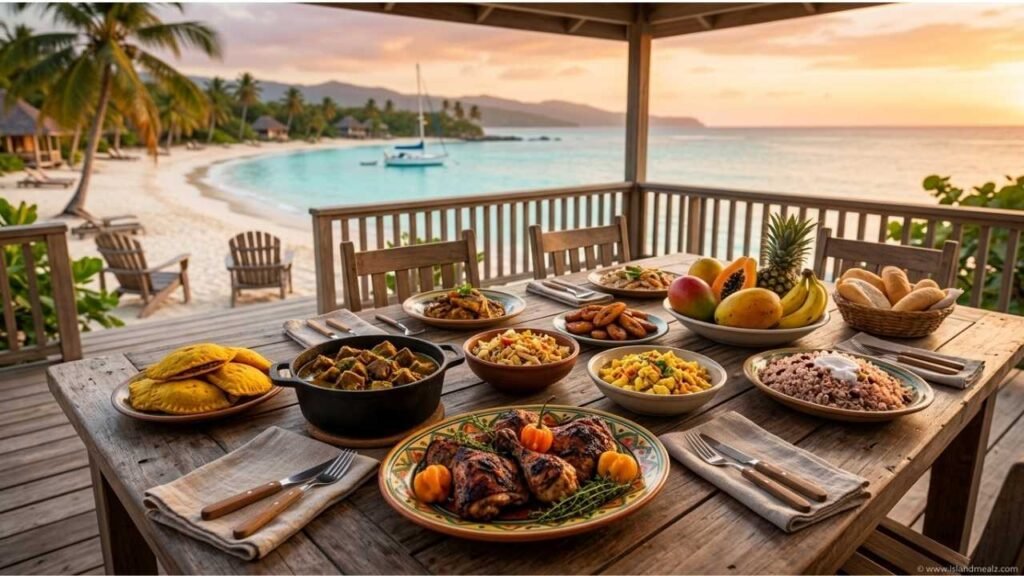
What began as local island cooking has become a global favorite. Today, Jamaican restaurants can be found in cities around the world, introducing millions of people to dishes such as jerk chicken, curry goat, and Jamaican patties.
The global success of Jamaican food did not happen overnight. It grew through migration, tourism, cultural exchange, and the worldwide popularity of signature dishes like jerk chicken, ackee and saltfish, and curry goat.
Migration Helped Spread Jamaican Food
One of the biggest reasons Jamaican cuisine became internationally known is migration. Throughout the 20th century, many Jamaicans moved to countries such as the United States, Canada, and the United Kingdom. As they settled in new communities, they opened restaurants, bakeries, and food businesses that introduced authentic Jamaican flavors to local people.
These restaurants became gathering places for Jamaican communities while also attracting customers who wanted to experience Caribbean cuisine. As demand grew, Jamaican food became more widely available and appreciated by people from different backgrounds.
Tourism Introduced Visitors to Authentic Flavors
Jamaica is one of the Caribbean’s most popular travel destinations. Every year, millions of visitors come to the island to enjoy its beaches, music, and culture. Food is an important part of that experience.
Many tourists try traditional dishes such as jerk chicken, escovitch fish, rice and peas, and festival during their visit. After returning home, they often look for Jamaican restaurants or recreate these recipes in their own kitchens. This has helped increase global interest in Jamaican cuisine.
Jamaican Restaurants Around the World
Today, authentic Jamaican restaurants can be found in many major cities. These restaurants serve both traditional recipes and modern interpretations of classic dishes. Popular menu items often include:
- Jerk chicken
- Curry goat
- Oxtail
- Ackee and saltfish
- Rice and peas
- Jamaican patties
- Fried plantains
Many restaurants also offer tropical drinks and desserts, giving customers a complete Jamaican dining experience.
International Recognition of Jerk Cuisine
Among all Jamaican dishes, jerk chicken has become the country’s most recognized food. Its combination of jerk seasoning, Scotch Bonnet peppers, allspice (pimento), and smoky cooking over pimento wood has attracted food lovers around the world.
Today, jerk-inspired recipes are found in restaurants, food trucks, supermarkets, and home kitchens. Although many versions exist, authentic Jamaican jerk cooking remains closely connected to the island’s history and traditions.
Jamaican Cuisine in the Modern Food Industry
The rise of social media, food television, travel blogs, and online recipes has introduced Jamaican cuisine to an even larger audience. Home cooks can now learn traditional recipes, discover Jamaican ingredients, and prepare authentic meals from almost anywhere in the world.
International food festivals, cooking competitions, and Caribbean cultural events have also helped showcase Jamaica’s rich culinary heritage. As a result, Jamaican cuisine continues to gain recognition as one of the world’s most exciting and flavorful food traditions.
Why Jamaican Cuisine Is Loved Worldwide
Several factors have contributed to the worldwide popularity of Jamaican food:
- Bold and unforgettable flavors
- Fresh herbs and natural ingredients
- Unique jerk cooking tradition
- Rich multicultural history
- Wide variety of meat, seafood, and vegetarian dishes
- Strong connection to Jamaican culture and hospitality
How Jamaican Cuisine Reached the World
| Factor | Contribution to Global Popularity |
| Migration | Jamaican communities opened restaurants abroad |
| Tourism | Visitors discovered authentic Jamaican food |
| Signature Dishes | Jerk chicken and ackee & saltfish gained worldwide recognition |
| Media and Internet | Recipes, videos, and food blogs introduced Jamaican cuisine to global audiences |
| Food Festivals | Caribbean events promoted Jamaican culinary traditions internationally |
Today, Jamaican cuisine is celebrated far beyond the Caribbean. Its journey from local family kitchens to international restaurants shows how food can bring cultures together. By preserving traditional recipes while welcoming new audiences, Jamaica has successfully shared its culinary heritage with the world, making its cuisine a lasting symbol of flavor, history, and cultural pride.
Jamaican Cuisine Today
Jamaican cuisine continues to grow while staying true to its rich traditions. Although many recipes have been passed down through generations, modern Jamaican cooking also welcomes new ideas and techniques. Today, people enjoy both classic homemade meals and creative dishes that combine traditional flavors with international cooking styles.
Across Jamaica, families still prepare recipes using fresh ingredients, local herbs, and time-tested cooking methods. At the same time, chefs and restaurants are introducing modern presentations and healthier options without losing the authentic taste that makes Jamaican food unique.
A Blend of Tradition and Innovation
Traditional dishes such as jerk chicken, ackee and saltfish, curry goat, rice and peas, and oxtail remain favorites in Jamaican homes. These meals continue to be prepared using recipes that have been shared from one generation to the next.
Modern chefs, however, are experimenting with these classics by adding new ingredients, improving presentation, and creating lighter versions to suit changing lifestyles. This balance between tradition and innovation keeps Jamaican cuisine exciting while respecting its cultural roots.
Growing Focus on Healthy Eating
As more people choose healthier diets, Jamaican cuisine has adapted by highlighting fresh, natural ingredients. Many traditional foods are already rich in vegetables, fruits, beans, seafood, and lean proteins.
Today, restaurants and home cooks often:
- Grill instead of deep-fry meats.
- Use fresh herbs instead of processed seasonings.
- Include more vegetables in daily meals.
- Prepare lighter versions of traditional recipes.
- Offer vegetarian and vegan Jamaican dishes.
These changes allow people to enjoy authentic flavors while maintaining a balanced diet.
Jamaican Cuisine Around the World
Jamaican food has become an important part of the global culinary scene. Authentic Jamaican restaurants can now be found in many countries, introducing millions of people to the island’s unique flavors.
Popular dishes served internationally include:
- Jerk chicken
- Curry goat
- Ackee and saltfish
- Oxtail
- Jamaican patties
- Rice and peas
Many supermarkets also sell Jamaican sauces, spices, seasonings, and marinades, making it easier for home cooks to prepare traditional meals.
Preserving Culinary Heritage
Despite its worldwide popularity, preserving authentic Jamaican cuisine remains a priority. Families, local chefs, and cultural organizations continue to protect traditional recipes, cooking methods, and locally grown ingredients.
Food festivals, cooking classes, and cultural events also help educate younger generations about Jamaica’s rich culinary history. By keeping these traditions alive, Jamaicans ensure that their food culture remains an important part of the nation’s identity.
Modern Trends in Jamaican Cuisine
| Traditional Approach | Modern Trend |
| Family recipes passed through generations | Creative fusion recipes |
| Slow-cooked meals | Healthier cooking techniques |
| Fresh local ingredients | Farm-to-table cooking |
| Homemade spice blends | Premium jerk seasonings and sauces |
| Traditional restaurants | International Jamaican fusion restaurants |
The Future of Jamaican Cuisine
The future of Jamaican cuisine looks bright. As global interest in Caribbean food continues to grow, more people are discovering the island’s rich history and authentic flavors. Chefs are finding new ways to present traditional dishes while staying true to the ingredients and cooking methods that define Jamaican food.
Whether enjoyed in a family kitchen, a local restaurant, or an international food festival, Jamaican cuisine continues to celebrate the island’s cultural diversity, creativity, and love for fresh, flavorful cooking. Its ability to honor tradition while embracing innovation ensures that Jamaican food will remain popular for generations to come.
1. Ackee and Saltfish Is Jamaica’s National Dish
Ackee and saltfish is the national dish of Jamaica. It combines ackee, a fruit originally from West Africa, with salted cod introduced through British trade. This dish perfectly represents the blending of different cultures that shaped Jamaican cuisine.
2. Jerk Cooking Has Centuries of History
The famous jerk cooking method dates back hundreds of years. It was developed by the Maroons, who seasoned meat with herbs and spices before slowly cooking it over pimento wood. This traditional technique is still used today to prepare authentic jerk chicken and jerk pork.
3. Allspice Is Native to Jamaica
Allspice, also called pimento, is one of Jamaica’s most valuable spices. Unlike many seasonings that were introduced from other countries, allspice is native to the Caribbean and plays a key role in jerk seasoning, soups, marinades, and baked goods.
4. Jamaican Cuisine Reflects Many Cultures
Jamaican food is a blend of influences from the Indigenous Taíno, African, Spanish, British, Indian, and Chinese communities. Each culture introduced new ingredients, recipes, or cooking techniques that helped create the diverse cuisine enjoyed today.
5. Rice and Peas Is Made with Beans
Although the name suggests otherwise, traditional rice and peas is usually prepared with red kidney beans, coconut milk, thyme, and spices rather than green peas. It remains one of the most popular side dishes in Jamaica.
6. Scotch Bonnet Peppers Add More Than Heat
The Scotch Bonnet pepper is famous for its intense spice, but it also has a naturally sweet and fruity flavor. It adds depth and aroma to jerk seasoning, curries, sauces, and stews, making it an essential ingredient in authentic Jamaican cooking.
7. Jamaican Food Is Known Worldwide
Today, Jamaican cuisine is enjoyed far beyond the Caribbean. Restaurants serving jerk chicken, curry goat, oxtail, ackee and saltfish, and Jamaican patties can be found in many countries, introducing people around the world to the island’s rich culinary traditions.
Frequently Asked Questions (FAQs)
What is the history of Jamaican cuisine?
The history of Jamaican cuisine began with the Indigenous Taíno people, who introduced ingredients such as cassava and simple cooking methods like roasting over an open fire. Over time, African, Spanish, British, Indian, and Chinese communities added their own ingredients, spices, and cooking traditions. The result is a rich and diverse cuisine that reflects Jamaica’s multicultural heritage.
Who had the greatest influence on Jamaican food?
Many cultures have shaped Jamaican cuisine, but African communities had the greatest influence. They introduced ingredients like callaloo, okra, and yams, along with slow cooking, one-pot meals, and bold seasoning techniques. Their traditions also played a major role in the development of jerk cooking, which is now one of Jamaica’s most famous culinary practices.
Why is jerk cooking so famous?
Jerk cooking is famous because of its unique combination of spices, smoky flavor, and traditional preparation method. Meat is seasoned with allspice (pimento), Scotch Bonnet peppers, thyme, garlic, ginger, and other herbs before being slowly cooked over pimento wood. This centuries-old technique creates the distinctive taste that has made jerk chicken and jerk pork popular around the world.
What is Jamaica’s national dish?
Jamaica’s national dish is ackee and saltfish. Ackee is a fruit originally brought from West Africa, while saltfish was introduced through British trade. Combined with onions, tomatoes, sweet peppers, and herbs, these ingredients create one of Jamaica’s most iconic and traditional meals.
What ingredients define Jamaican cuisine?
Several ingredients are considered essential to authentic Jamaican cooking. These include:
- Allspice (pimento)
- Scotch Bonnet peppers
- Ackee
- Cassava
- Callaloo
- Breadfruit
- Plantains
- Coconut milk
- Thyme
- Green onions
These ingredients provide the bold flavors and fresh taste that Jamaican cuisine is known for.
How has Jamaican cuisine changed over time?
Jamaican cuisine has evolved through centuries of cultural exchange. New ingredients and cooking techniques were introduced by different communities, but traditional recipes have remained an important part of everyday life. Today, modern chefs continue to create new versions of classic dishes while preserving the authentic flavors and cooking methods that define Jamaican food.
Why is Jamaican cuisine popular around the world?
Jamaican cuisine is popular because of its bold flavors, fresh ingredients, and rich cultural history. Signature dishes like jerk chicken, curry goat, ackee and saltfish, and rice and peas are enjoyed in many countries. Migration, tourism, international restaurants, and social media have also helped introduce Jamaican food to a global audience.
Final Thoughts
Jamaican cuisine is much more than a collection of traditional recipes. It reflects centuries of history, cultural exchange, and the creativity of the people who called Jamaica home. Every dish, from jerk chicken to ackee and saltfish, carries a piece of that history. As Jamaican food continues to gain popularity around the world, its authentic flavors and traditions remain at the heart of its identity.