
Cornish hens are small enough to serve whole, which makes them a fun choice when you want something different from a regular roast chicken. The skin can turn golden and crisp in the oven, while the meat stays tender when you cook it carefully.
You do not need complicated ingredients to make a good Cornish hen. A little butter or olive oil, garlic, herbs, lemon, salt, and pepper are enough to build great flavor. This recipe walks you through the preparation, roasting time, and temperature so you know exactly what to do.
What Is a Cornish Hen?
A Cornish hen is a young chicken that is usually sold as a small whole bird. You may also see it labeled as a Cornish game hen or Rock Cornish game hen. Its mild taste makes it easy to pair with herbs, spices, garlic, and other seasonings.
What makes it different at the dinner table is its size. Instead of carving one large chicken for everyone, you can serve a whole Cornish hen to each guest or split one between two people. It works especially well for smaller dinners and special occasions.
Why You’ll Love This Cornish Hen Recipe
This recipe keeps the preparation straightforward. You season the hens, place them in the oven, and let them roast until they are cooked through.
The best part is that you can change the seasoning to suit the meal. Garlic and herbs give you a classic roasted flavor, while jerk seasoning, Cajun seasoning, or lemon pepper can give the hens a completely different taste.
Ingredients for Cornish Hen
You only need a few simple ingredients to make a flavorful Cornish hen. Most of them are common pantry items, so you may already have some at home.
| Ingredient | Amount |
| Cornish hens | 2 |
| Olive oil or melted butter | 2 tablespoons |
| Garlic | 3 cloves, minced |
| Fresh rosemary | 1 teaspoon |
| Fresh thyme | 1 teaspoon |
| Paprika | 1 teaspoon |
| Salt | 1 teaspoon |
| Black pepper | ½ teaspoon |
| Lemon | 1, sliced |
| Onion | 1 small, sliced |
You can use either olive oil or melted butter. Butter gives the skin a richer taste, while olive oil keeps the seasoning light. Fresh herbs are great if you have them, but dried herbs will also work.
How to Prepare Cornish Hens for Roasting
Before roasting, make sure the hens are fully thawed. If they are frozen, let them thaw in the refrigerator rather than leaving them on the counter.
Check the cavity for the packet of giblets and remove it before cooking. Then pat the hens dry with paper towels. This small step matters because excess moisture can prevent the skin from browning well.
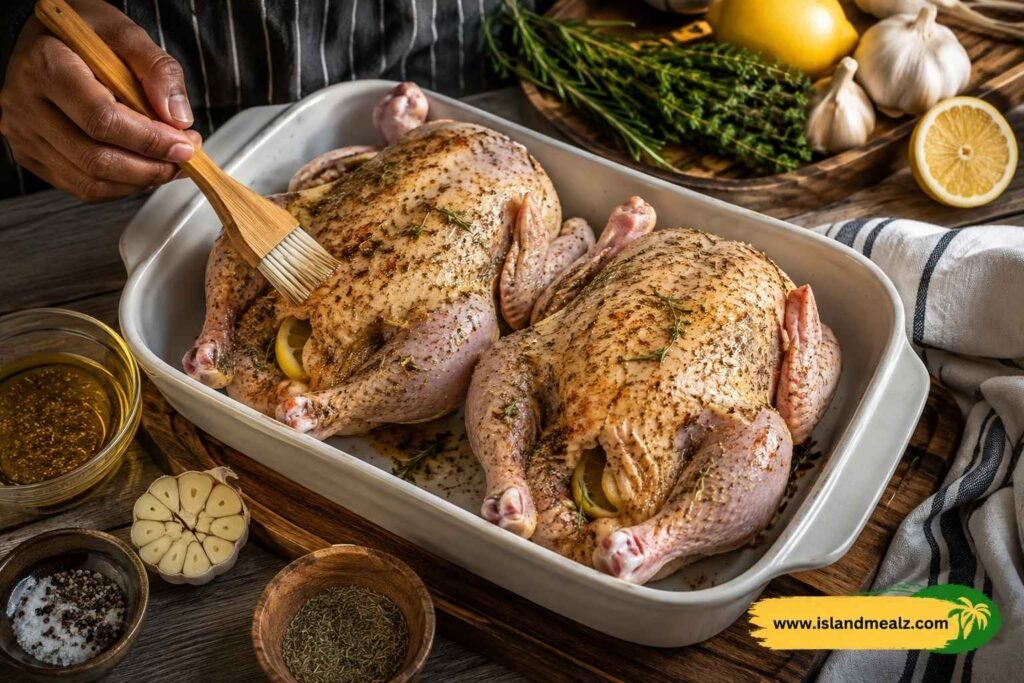
Rub the outside with olive oil or melted butter, then season with salt, pepper, garlic, paprika, and herbs. You can also place lemon, garlic, or fresh herbs inside the cavity for extra aroma.
Thaw the Hens Safely
If the hens are frozen, thaw them in the refrigerator before cooking. Place them on a plate or in a shallow dish to catch any liquid. Avoid leaving raw poultry on the counter to thaw.
Remove the Giblets
Check inside the cavity of each hen for a small packet of giblets. Remove it before seasoning. You can save the giblets for stock or discard them if you do not need them.
Pat the Skin Dry
Use paper towels to gently pat the hens dry. Dry skin helps the oil or butter coat the surface evenly and gives you better browning in the oven.
Season the Hens
Rub the hens with olive oil or melted butter. Then season them all over with salt, black pepper, paprika, garlic, rosemary, and thyme. Add lemon slices or a little onion inside the cavity for extra flavor.
How to Cook Cornish Hen in the Oven
Roasting Cornish hens in the oven is simple and does not require much hands-on work. Once the hens are seasoned, place them in the oven and let them roast until the skin is golden and the meat is fully cooked.
Step 1: Preheat the Oven
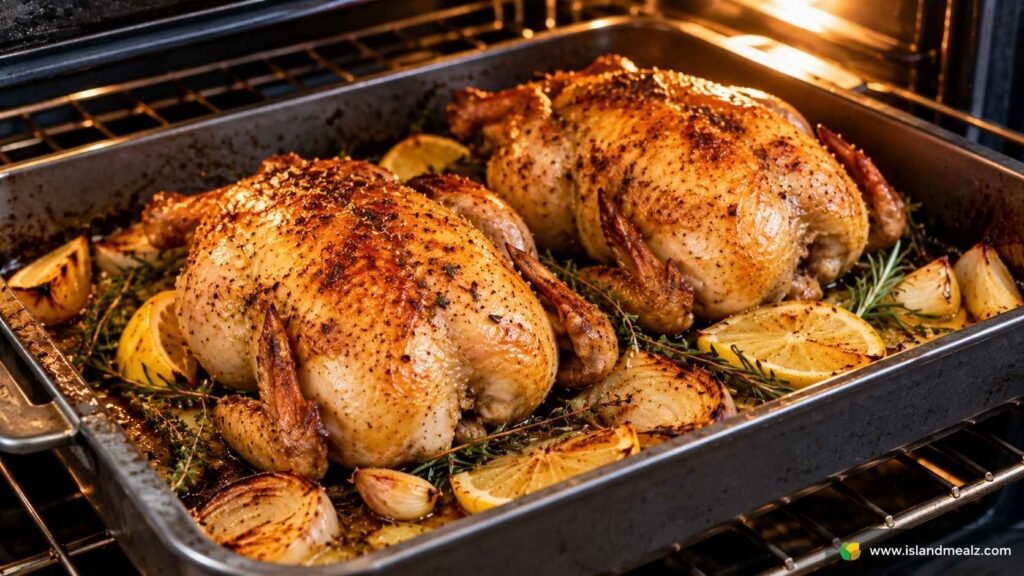
Preheat your oven to 350°F (175°C). Let the oven heat fully before placing the hens inside. This helps them cook more evenly.
Step 2: Season the Cornish Hens
Place the prepared hens in a roasting pan. Rub them with olive oil or melted butter, then add your seasonings. Make sure you season all sides for better flavor.
Step 3: Add Lemon, Garlic, and Herbs
Place a few lemon slices, garlic cloves, rosemary, or thyme inside each cavity. These ingredients add a light, fresh flavor as the hens roast.
Step 4: Roast the Hens
Place the hens breast-side up in a roasting pan. Leave a little space between them so the hot air can move around the birds. You do not need to cover them while they roast. The uncovered skin will brown better in the oven.
Step 5: Check the Internal Temperature
Insert a food thermometer into the thickest part of the meat without touching the bone. The Cornish hen should reach 165°F (74°C) for safe eating.
Step 6: Let the Hens Rest
Remove the hens from the oven and let them rest for about 5 to 10 minutes before serving. This gives the juices time to settle and helps keep the meat tender.
How Long to Cook Cornish Hen?
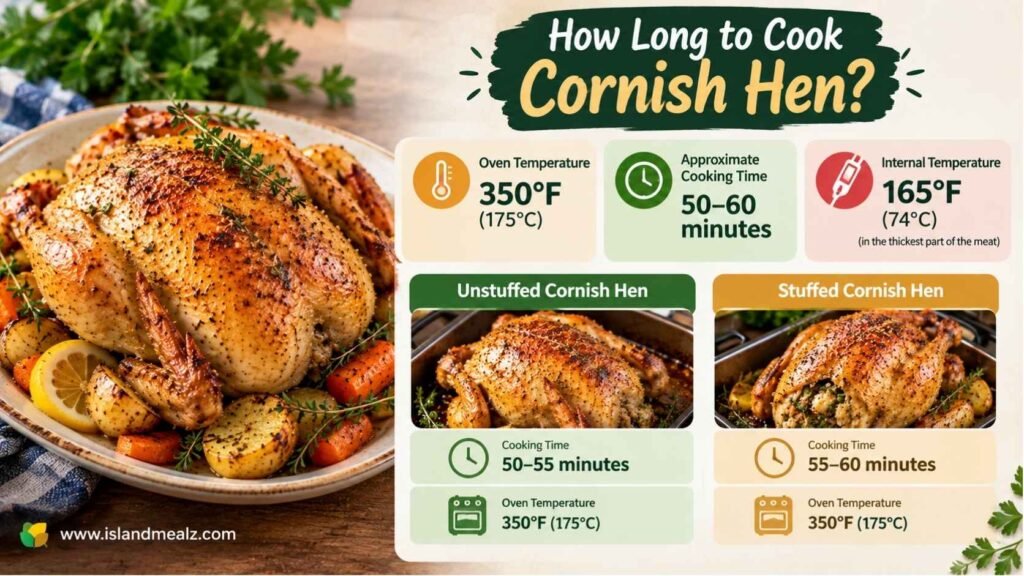
Most small Cornish hens take about 50 to 60 minutes at 350°F when they are unstuffed. However, do not treat the cooking time as an exact rule. Hens can vary in size, and ovens do not all heat the same way.
Start checking the temperature near the end of the estimated cooking time. The thickest part of the meat should reach 165°F before you take the hens out of the oven.
| Cornish Hen | Oven Temperature | Approx. Time |
| 18–24 oz, unstuffed | 350°F | 50–60 minutes |
| 18–24 oz, stuffed | 350°F | 60–80 minutes |
If the skin becomes brown before the meat is fully cooked, loosely cover the hens with foil. Once they reach the safe temperature, remove them from the oven and let them rest for a few minutes before serving.
What Temperature Should Cornish Hen Be Cooked To?
The safest way to tell when a Cornish hen is done is to check its internal temperature. Insert a food thermometer into the thickest part of the breast or thigh without touching the bone.
The temperature should reach 165°F (74°C). Do not judge doneness by the color of the skin alone. A beautifully browned hen can still need more time inside.
How to Get Crispy Skin on Cornish Hen
For crisp skin, start with dry hens. Pat them well with paper towels before adding oil or butter. A light coating is enough; too much can make the skin greasy.
Roast the hens uncovered and leave some space around them. This allows the hot air to circulate and helps the skin brown evenly. If the meat is already cooked but the skin needs more color, you can place the hens under the broiler for a short time. Watch them closely because the skin can darken quickly.
Pat the Skin Dry
Use paper towels to remove extra moisture from the skin. This helps the skin brown better as it roasts.
Use Oil or Butter
Rub a thin layer of olive oil or melted butter over the skin. It helps the seasonings stick and gives the skin a golden finish.
Don’t Crowd the Pan
Leave some space between the hens. Good airflow helps the heat reach all sides and keeps the skin from becoming soft.
Roast Uncovered
Roast the hens uncovered so the skin stays exposed to the oven’s dry heat. If you cover them too early, the steam can make the skin less crispy.
Should You Stuff a Cornish Hen?
You can roast Cornish hens without stuffing, and that is usually the easiest option. Lemon, garlic, onion, or fresh herbs can go inside the cavity to add aroma while the hens cook.
If you want a fuller meal, you can add cornbread stuffing, rice, wild rice, or bread stuffing. Do not pack the cavity tightly. Stuffed hens also take longer to cook, so check the temperature of both the meat and the stuffing before serving.
Unstuffed Cornish Hen
Cooking the hen without stuffing is the simplest option. You can place lemon, garlic, onion, or fresh herbs inside the cavity for extra flavor. These ingredients add aroma without adding much cooking time.
Stuffed Cornish Hen
Stuffing can make the meal more filling and flavorful. You can use cornbread stuffing, rice, wild rice, or a simple bread stuffing. Do not pack the cavity too tightly, as this can slow down cooking.
If you stuff the hens, make sure the stuffing also reaches 165°F (74°C). Use a food thermometer to check both the meat and stuffing before serving.
Best Seasonings for Cornish Hen
Cornish hen has a mild taste, so you can take the seasoning in several directions. For a classic roast, use garlic, rosemary, thyme, salt, and black pepper.
Lemon pepper works well when you want something fresh and bright. Cajun seasoning adds more heat, while paprika gives the skin a deeper color.
For a Jamaican-style version, use jerk seasoning with thyme, garlic, ginger, allspice, and Scotch bonnet pepper. The spices work especially well with the mild meat of the hen.
Garlic and Herb
Garlic, rosemary, thyme, salt, and black pepper create a classic roasted flavor. This combination works well for a simple family dinner.
Lemon Pepper
Lemon zest, black pepper, garlic, and a little olive oil give the hen a fresh and slightly tangy taste. Add lemon slices to the cavity while roasting for extra flavor.
Cajun Seasoning
Cajun seasoning adds a warm, spicy flavor and a nice color to the skin. Use it on its own or mix it with a little garlic and olive oil.
Jamaican Jerk Seasoning
For a Caribbean-style twist, try Jamaican jerk seasoning. Allspice, thyme, garlic, ginger, and Scotch bonnet pepper can give the Cornish hen a bold and spicy flavor.
What to Serve With Cornish Hen
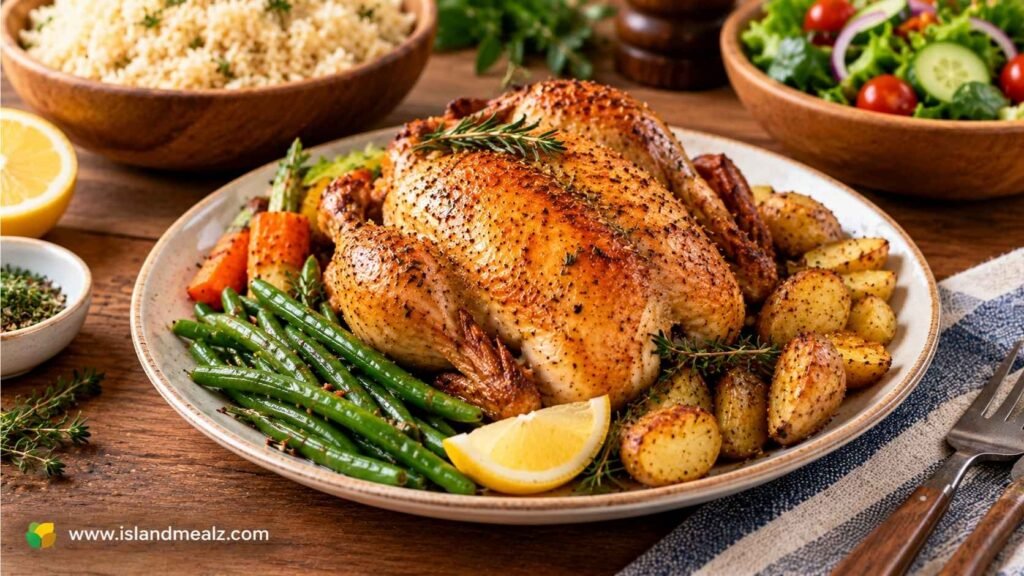
Cornish hen is rich enough to pair well with both hearty and fresh sides. Mashed potatoes or roasted potatoes are good choices if you want a traditional dinner.
For something lighter, serve the hens with green beans, roasted carrots, asparagus, or a simple salad. Rice pilaf and wild rice also work well because they can soak up some of the juices from the roasted bird.
If you want a Caribbean-style plate, try seasoned rice and peas with the hen. The combination gives the meal a completely different feel from a traditional roast dinner.
Potato Sides
Mashed potatoes, roasted potatoes, and sweet potatoes are easy choices. They also work well with the juices and seasonings from the roasted hen.
Vegetable Sides
Green beans, roasted carrots, asparagus, and Brussels sprouts add color and freshness to the plate. You can roast the vegetables separately or prepare them while the hens are cooking.
Rice and Grain Sides
Rice pilaf, wild rice, or couscous can make the meal more filling. For a Caribbean-style meal, you can also serve the hen with seasoned rice and peas.
Fresh Salad
A simple green salad can add a light and fresh touch. Try lettuce, cucumber, tomatoes, and a simple lemon dressing for an easy side.
Cornish Hen vs. Chicken
Cornish hen and regular chicken are both poultry, but they are different in size and how they are usually served. A Cornish hen is much smaller, so it often works well as an individual serving.
| Feature | Cornish Hen | Regular Chicken |
| Size | Small | Larger |
| Serving | Often one per person | Usually serves several people |
| Cooking time | Usually shorter | Usually longer |
| Flavor | Mild and tender | Mild and familiar |
| Presentation | Great for special meals | Better for everyday meals |
The main difference is how you plan to serve the meal. A regular chicken makes more sense when you are feeding several people. Cornish hens are a better choice when you want individual portions and a more polished presentation.
Common Mistakes to Avoid When Cooking Cornish Hen
A few small mistakes can make Cornish hen dry or prevent the skin from becoming crisp.
Overcooking: Start checking the temperature before the expected cooking time is over. Once the meat reaches 165°F, it is time to take the hens out.
Skipping the thermometer: Color is not a reliable way to judge doneness. A thermometer gives you a much better answer.
Leaving the skin wet: Pat the hens dry before seasoning. Extra moisture can make browning harder.
Crowding the pan: Give the hens some room. Too much food in one pan can reduce airflow and slow browning.
Cutting too soon: Let the hens rest for about 5 to 10 minutes after roasting. This gives the juices a chance to settle before you carve or serve them.
How to Store and Reheat Leftover Cornish Hen
Leftover Cornish hen can make an easy second meal. Remove the meat from the bones and store it in an airtight container in the refrigerator.
When reheating, add a small splash of broth or water to the baking dish and cover it loosely with foil. This helps keep the meat from drying out. You can also use the leftover meat in sandwiches, salads, soups, or rice dishes.
How to Reheat Cornish Hen
The oven is a good way to reheat the meat without drying it out. Place the hen in a baking dish and add a small amount of broth or water. Cover it loosely with foil and heat until warmed through.
You can also remove the meat from the bones and use it in salads, sandwiches, rice dishes, or soups. This is an easy way to turn leftovers into another meal.
Frequently Asked Questions About Cornish Hen
Is a Cornish hen just a small chicken?
A Cornish hen is a small type of chicken that is usually served whole. It has a mild flavor and tender meat.
How long does it take to cook a Cornish hen?
At 350°F, a small unstuffed Cornish hen usually takes about 50 to 60 minutes. The exact time depends on its size and your oven.
What temperature should a Cornish hen reach?
The thickest part of the meat should reach 165°F (74°C). A food thermometer is the best way to check if it is done.
Do you need to wash a Cornish hen before cooking?
No. You do not need to wash raw poultry before cooking it. Washing can spread raw poultry juices around your sink and kitchen. Instead, remove the giblets if needed and pat the hen dry with paper towels before seasoning.
Should Cornish hens be covered when roasting?
It is usually best to roast them uncovered. This helps the skin become crisp. If the skin browns too quickly, you can loosely cover the hens with foil.
Can you stuff a Cornish hen?
Yes, you can stuff a Cornish hen with bread stuffing, cornbread, rice, or wild rice. Make sure the stuffing reaches 165°F before serving.
How many people does one Cornish hen feed?
A small Cornish hen can often serve one person. For smaller appetites, you can also cut one hen in half and serve it with several side dishes.
What sides go well with Cornish hen?
Mashed potatoes, roasted vegetables, rice, green beans, sweet potatoes, and fresh salads all pair well with Cornish hen.
How do you keep Cornish hen from drying out?
Avoid overcooking the hen and check its temperature with a food thermometer. Letting it rest for a few minutes after cooking can also help keep the meat juicy.
Final Thoughts
Cornish hen is a great choice when you want a roast dinner without cooking a large chicken. A few seasonings, a hot oven, and a food thermometer are all you need to get started.
Serve the hens with potatoes, vegetables, rice, or a fresh salad. Once you know how to check the temperature and avoid overcooking, you can easily change the seasonings and make the recipe your own.

One Response