
Kitchari is a traditional Indian one-pot meal made with rice, yellow mung dal, and a blend of warm spices. It has a soft texture and a mild, savory flavor that makes it a good choice for lunch or dinner. Fresh ginger, cumin, and turmeric give the dish its familiar taste without making it too spicy.
This homemade kitchari recipe uses simple ingredients and a straightforward stovetop method. You can prepare it with basic pantry staples and adjust the thickness to your liking. Add vegetables for extra flavor, or keep it traditional with rice, lentils, and spices.
What Is Kitchari ?
Kitchari is a traditional Indian dish made by cooking rice and mung dal together with spices. It is especially popular in Ayurvedic cooking, where different versions are prepared with ingredients such as ginger, cumin, turmeric, and ghee.
The texture is usually soft and slightly thick, almost like a savory rice porridge. Some people prefer it with less liquid, while others enjoy a looser consistency. Families also make their own versions by adding vegetables or changing the spices. This flexibility makes kitchari a dish you can easily adjust to your taste.
What Does Kitchari Taste Like
Kitchari has a mild, savory flavor with warm notes from cumin, ginger, and turmeric. The rice and mung dal cook together until soft, giving the dish a thick texture similar to a loose rice porridge. It is not naturally very spicy, so you can enjoy it without adding hot peppers.
Ghee gives kitchari a rich, buttery taste, while fresh lemon juice adds a little brightness. If you like stronger flavors, you can add black pepper, green chilies, or extra ginger. The final taste depends on the spices and toppings you choose.
Ingredients for Homemade Kitchari
You do not need a long list of ingredients to make kitchari. Rice, yellow mung dal, and a few everyday spices create the base of this dish. You can find most ingredients at regular grocery stores or Indian markets.
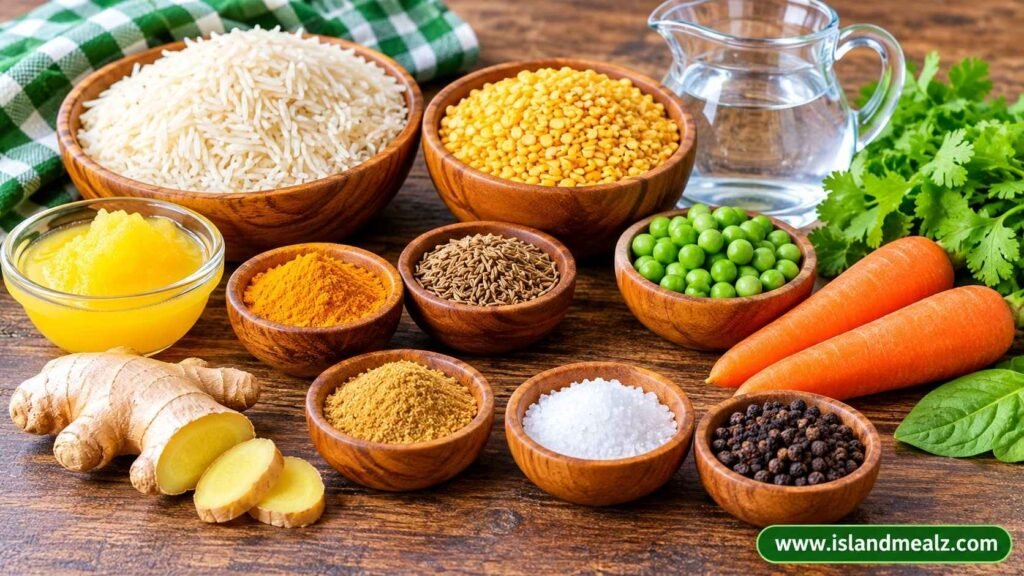
Main Ingredients
- Basmati Rice: Gives kitchari a mild aroma and tender texture. Long-grain white rice also works.
- Yellow Mung Dal: Split and hulled mung beans cook until soft and give the dish its creamy consistency.
- Ghee: Adds a rich, buttery flavor. Use olive oil or coconut oil for a dairy-free version.
- Water or Vegetable Broth: Provides the liquid needed to cook the rice and lentils.
Spices and Seasonings
- Cumin Seeds: Add a warm, earthy flavor.
- Turmeric: Gives the rice and lentils their golden color.
- Fresh Ginger: Adds a little sharpness and warmth.
- Ground Coriander: Brings a mild, citrus-like note.
- Salt and Black Pepper: Help balance the other flavors.
Optional Vegetables and Garnishes
Carrots, spinach, green peas, and cauliflower are useful additions if you want more vegetables in your meal. Cut them into small, even pieces so they cook properly.
For serving, keep fresh cilantro and lemon wedges nearby. A little extra ghee also works well as a finishing touch.
How to Make Kitchari (Step-by-Step)
Making kitchari does not require complicated cooking techniques. You prepare the rice and lentils, cook the spices, and let everything simmer in one pot. Here is how to make it on the stovetop.
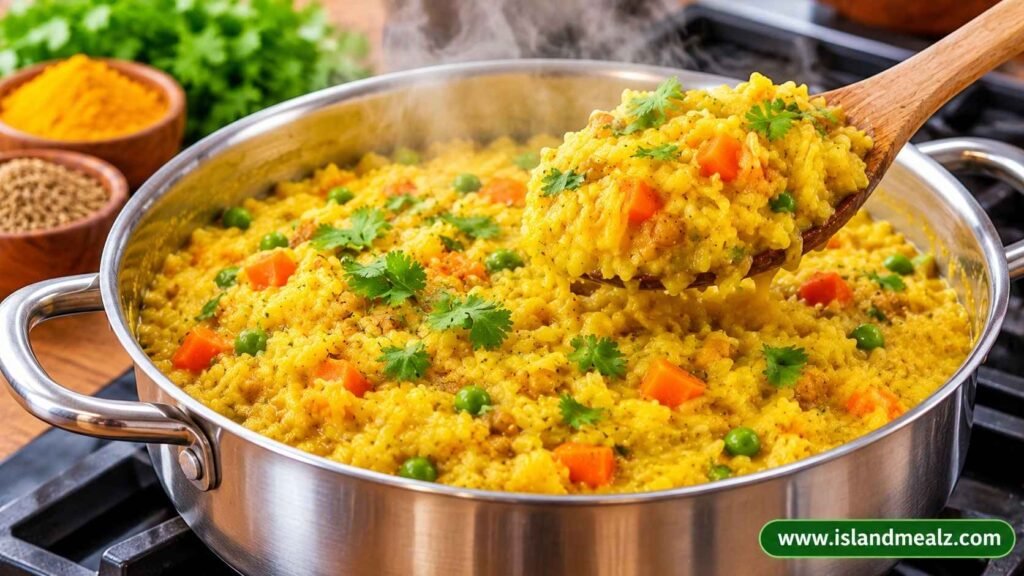
Step 1: Rinse the Rice and Mung Dal
Place the basmati rice and yellow mung dal in a bowl. Rinse them under cold water two or three times, then drain. This removes excess starch and loose particles. You can soak the mung dal for about 15 minutes if you want to give it a head start.
Step 2: Heat Ghee and Cook the Spices
Place a large, heavy-bottomed pot over medium heat. Add the ghee and cumin seeds. Once the seeds become fragrant, stir in the fresh ginger, turmeric, and ground coriander. Cook for about 30 seconds, keeping the spices moving so they do not burn.
Step 3: Add the Rice, Dal, and Liquid
Add the drained rice and mung dal to the pot. Stir until the grains are coated with the spice mixture. Pour in the measured water or vegetable broth and add salt. Give everything a gentle stir.
Step 4: Simmer Until Tender
Bring the mixture to a gentle boil. Lower the heat, cover the pot, and simmer for about 25 to 30 minutes. Stir occasionally and check the texture. If the mixture gets too thick before the rice and lentils are tender, add a little hot water.
Step 5: Finish and Serve
Check that the rice and mung dal are completely soft. Stir gently to bring everything together. Taste and adjust the salt or black pepper. Let the kitchari rest for a few minutes before serving with fresh cilantro or lemon juice.
Best Rice-to-Dal Ratio for Kitchari
The amount of rice and mung dal you use will affect the final texture of your kitchari. A 2:1 ratio of rice to dal is a useful starting point. For example, you can use 1 cup of rice with 1/2 cup of yellow mung dal.
Liquid also makes a difference. More water creates a softer, porridge-like dish, while less water gives you a thicker consistency. Start with the amount listed in your recipe and add a little more hot water if needed.
If you prefer a stronger lentil flavor, you can slightly increase the amount of mung dal. The important thing is to cook both ingredients until they are completely tender.
Tips for Making Perfect Kitchari
A few small details can make a difference when cooking kitchari. Keep these tips in mind, especially if you are preparing it for the first time.
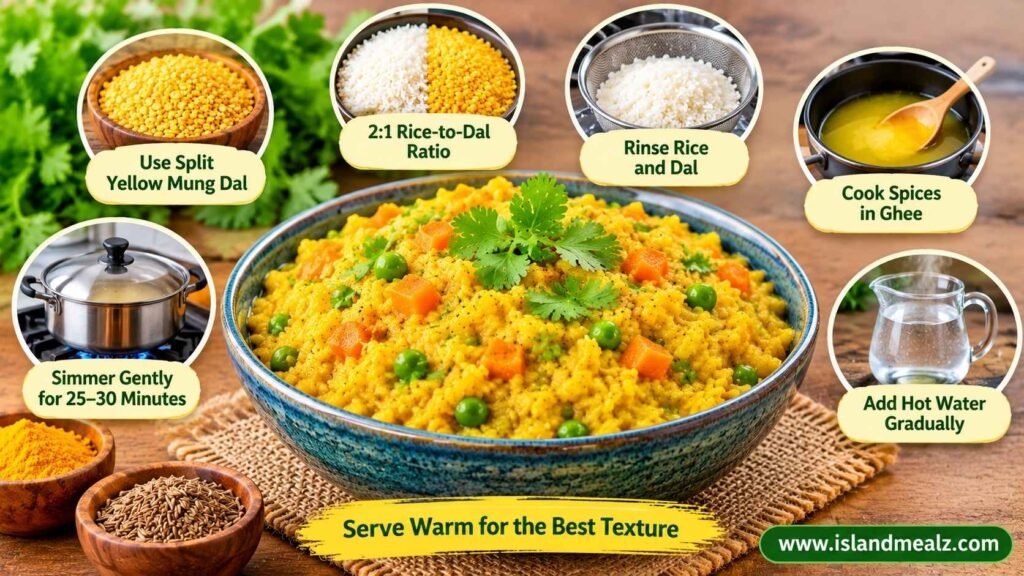
- Choose the Right Dal: Use split and hulled yellow mung dal rather than whole green mung beans for the soft texture of traditional kitchari.
- Watch the Heat: After bringing the mixture to a boil, lower the heat and let it simmer gently.
- Use a Heavy Pot: A heavy-bottomed pot helps distribute heat and reduces the chance of sticking.
- Check Before Adding Water: Rice and lentils absorb liquid at different rates. Add hot water gradually instead of pouring in too much at once.
- Taste Before Serving: Adjust the salt, ginger, and pepper after the ingredients become tender.
- Serve at the Right Time: Kitchari thickens as it cools, so serve it warm if you prefer a softer consistency.
Kitchari Variations You Can Try
Kitchari does not have to taste the same every time you make it. You can change the vegetables, cooking fat, or spices while keeping the rice and mung dal as the main ingredients.
Vegetable Kitchari
Add chopped carrots, peas, spinach, or cauliflower to the pot for a vegetable-filled version. Firmer vegetables can go in with the rice and lentils, while spinach is best added near the end of cooking.
Vegan Kitchari
To make vegan kitchari, replace ghee with olive oil or coconut oil. Use vegetable broth or water as the cooking liquid. Check your broth label to make sure it does not contain animal-based ingredients.
Spicy Kitchari
For more heat, add chopped green chilies, red pepper flakes, or extra black pepper. Add a small amount first, taste the mixture, and increase the spice if needed.
Brown Rice Kitchari
Brown rice gives the dish a nuttier flavor and a firmer bite. It needs more cooking time and liquid than white rice. For better results, cook the brown rice separately until partly tender before combining it with the mung dal and spices.
What to Serve with Kitchari
Kitchari is filling on its own, but a few simple sides can make the meal more interesting. Since the dish has a mild flavor, it pairs well with toppings and sides that add freshness, crunch, or a little tang.
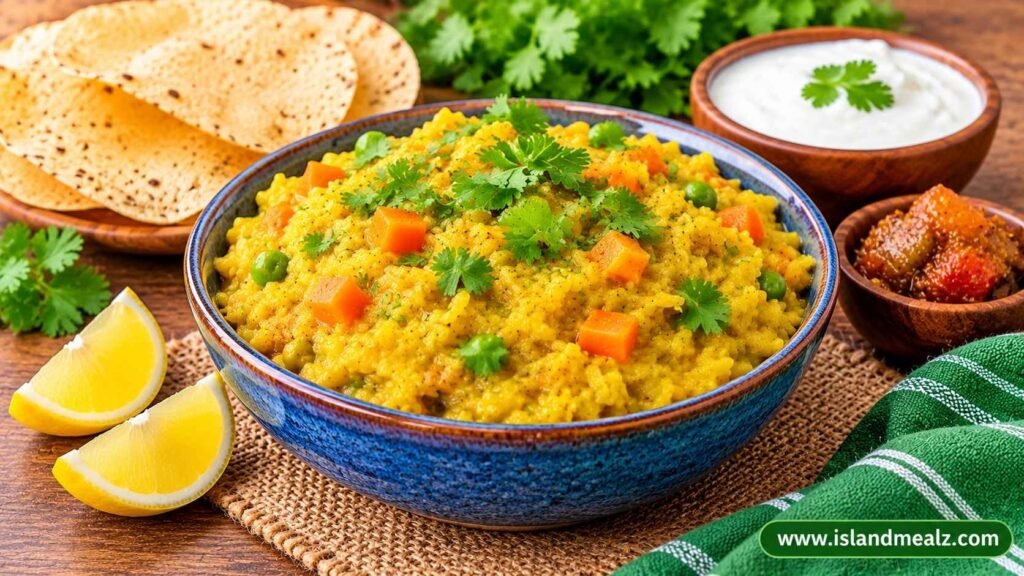
- Plain Yogurt: Adds a cool, creamy contrast to the warm spices.
- Indian Pickle: Brings a tangy and spicy flavor.
- Papadum: Adds a crispy bite alongside the soft rice and lentils.
- Fresh Cilantro: Gives each serving a fresh, herbal finish.
- Lemon Wedges: Add a bright, citrusy taste.
For an easy lunch or dinner, serve a bowl of kitchari with plain yogurt and a lemon wedge. You can also add papadum when you want something crunchy on the side.
Is Kitchari Healthy ?
Kitchari provides a combination of carbohydrates and plant-based protein because it contains rice and mung dal. Mung dal also contributes dietary fiber and several important nutrients. Adding vegetables such as spinach, carrots, and cauliflower can increase the variety of vitamins and minerals in the meal.
You can adjust the recipe to match your eating preferences. Use less ghee if you want to reduce the added fat, or include more vegetables for variety. The nutritional value will depend on the ingredients, quantities, and serving size.
Kitchari is also used in traditional Ayurvedic food practices. Some people associate it with cleansing diets, but there is not enough strong scientific evidence to claim that it removes toxins or treats medical conditions. It is best enjoyed as one part of a balanced diet.
How to Store and Reheat Kitchari
Kitchari is best when served fresh, but you can save leftovers for another meal. Store it properly to maintain its flavor and texture.
Refrigerating Leftovers
Let the kitchari cool slightly and transfer it to an airtight container. Refrigerate it within two hours of cooking. For the best quality and safety, use refrigerated leftovers within 3 to 4 days.
Reheating Without Drying It Out
Kitchari becomes thicker in the refrigerator because the rice and lentils continue to absorb moisture. Add a splash of water or vegetable broth before reheating it in a saucepan over medium-low heat.
You can also use a microwave-safe bowl to reheat individual portions. Cover loosely and stir halfway through. Reheat leftovers to an internal temperature of 165°F before serving.
Frequently Asked Questions
Is kitchari the same as khichdi?
Kitchari and khichdi are closely related dishes made with rice and lentils. Both are popular in Indian cooking, but their ingredients, spices, and textures can vary by region and household. Ayurvedic-style kitchari commonly uses yellow mung dal and warming spices.
Do you need to soak mung dal before cooking?
No, soaking split yellow mung dal is not required. Rinse it thoroughly before adding it to the pot. If you have extra time, soaking it for 15 to 20 minutes can help it cook more evenly.
Can you make kitchari without ghee?
Yes. You can replace ghee with olive oil or coconut oil. Both work well for cooking the spices and make it easy to prepare a dairy-free version.
Can you freeze kitchari?
Yes, you can freeze kitchari in airtight, freezer-safe containers. Divide it into individual portions and allow space for expansion. Thaw it in the refrigerator before reheating. The texture may become softer after freezing.
How long does kitchari take to cook?
Kitchari generally takes around 25 to 30 minutes of cooking time after the liquid begins to simmer. Preparation and rinsing take a little extra time. The exact cooking time depends on the rice, mung dal, and amount of liquid you use.
Final Thoughts
Kitchari is a practical one-pot meal that brings rice, yellow mung dal, and everyday spices together. You can keep it simple or add vegetables to change the flavor and texture. Try this recipe for your next homemade lunch or dinner, and adjust the seasoning to suit your taste. Serve it warm with fresh cilantro, lemon, or a side of yogurt.