
Ackee and saltfish is a breakfast favorite in Jamaica and a dish many Jamaican families grew up eating. It brings together soft ackee fruit, salted cod, onions, tomatoes, and fresh seasonings. The ackee has a mild, buttery taste, while the saltfish adds a rich, savory flavor. Some families like to add Scotch bonnet pepper for a little heat, while others keep it mild.
You don’t need to live in Jamaica to enjoy this traditional meal. Canned ackee makes preparation easier for home cooks in the USA, and most of the other ingredients are easy to find. With a little preparation, you can make a flavorful Jamaican breakfast in your own kitchen.
What Is Ackee and Saltfish?
Ackee and saltfish is Jamaica’s national dish. It is made with ackee, a tropical fruit, and salted codfish. The two ingredients are cooked with onions, tomatoes, scallions, bell peppers, and herbs to create a savory meal that is especially popular at breakfast.
Ackee has a soft, buttery texture and a mild flavor. It does not taste like a strongly flavored fruit. Instead, it takes on the seasoning around it. Saltfish brings a salty, savory taste that balances the ackee.
Although many people enjoy it for breakfast, ackee and saltfish can be served at any time of the day. It is often paired with fried dumplings, boiled green bananas, roasted breadfruit, or fried plantains.
Ingredients for Jamaican Ackee and Saltfish
You don’t need a long list of ingredients to make this Jamaican favorite. The flavor comes from a good combination of ackee, saltfish, fresh vegetables, and a few simple seasonings. Here is what you need.
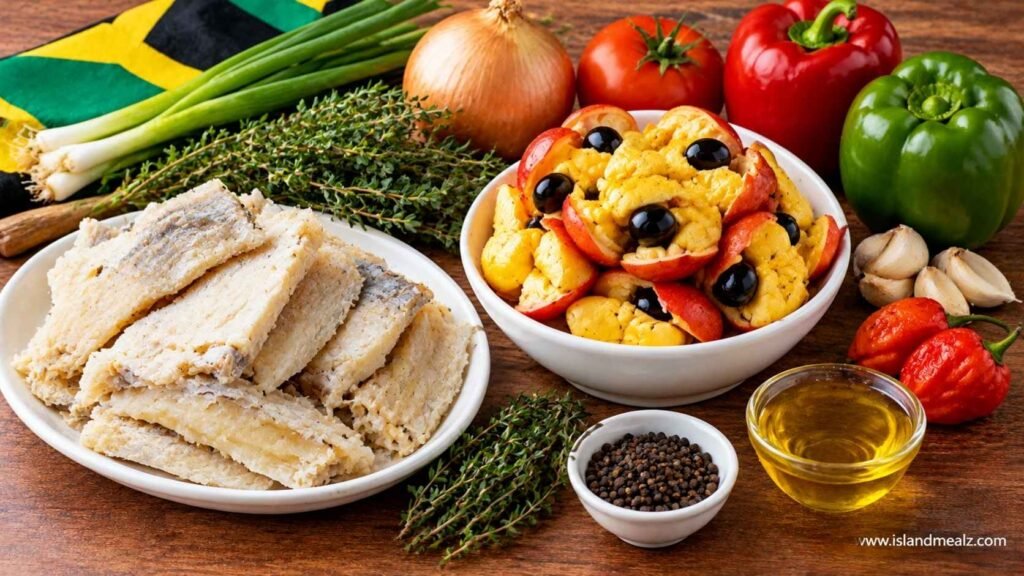
Main Ingredients
- 1 can (19 oz) ackee: Drain the liquid carefully before adding the ackee to the skillet.
- 8 oz salted codfish: Use boneless salted cod if available. Soak and prepare it before cooking.
- 1 small yellow onion: Slice it thinly.
- 1 medium tomato: Chop into small pieces.
- 1 small bell pepper: Red or green both work well.
- 2 scallions: Slice the white and green parts.
- 2 garlic cloves: Mince finely.
- 2 sprigs fresh thyme: Use fresh thyme for a traditional flavor.
- Scotch bonnet pepper: Add a small piece according to your heat preference.
- 2 tablespoons vegetable oil: For cooking the vegetables and fish.
- ¼ teaspoon black pepper: Adjust to taste.
Ingredient Substitutions
If you cannot find Scotch bonnet pepper, a small amount of habanero can provide similar heat. You can also leave out the hot pepper for a milder breakfast.
Red bell pepper gives the dish a slightly sweeter taste, while green bell pepper has a sharper flavor. Fresh scallions and thyme are worth using because they add much of the familiar Jamaican flavor.
For convenience, canned ackee is a good option. Choose a can from a reliable food brand and handle the fruit gently after draining.
How to Prepare Saltfish Before Cooking
Saltfish needs a little preparation before it goes into the skillet. Salted cod is preserved with a large amount of salt, so you need to remove some of it before cooking. The soaking time depends on how salty and thick the fish is.
Step 1: Rinse the Saltfish
Place the codfish under cold running water. Rinse both sides to remove the salt on its surface. If the fish has large pieces of salt attached, gently rub them away.
Step 2: Soak the Fish
Place the fish in a bowl and cover it with cold water. Refrigerate it while soaking. For heavily salted fish, soaking overnight can help. Change the water once or twice during this time.
Step 3: Boil the Saltfish
Drain the soaking water and place the fish in a saucepan with fresh water. Bring it to a boil and cook for about 10–15 minutes, depending on its thickness. Taste a small piece after cooling. If it is still too salty, drain and boil it again in fresh water.
Step 4: Remove Bones and Flake
Drain the fish and let it cool enough to handle. Remove the skin and any remaining bones. Break the flesh into small flakes using your fingers or a fork.
Your saltfish is now ready to use. Keep it refrigerated if you are not cooking immediately.
How to Make Ackee and Saltfish
Once the saltfish is prepared, the rest of the cooking process is straightforward. Use a wide skillet so the ingredients have enough room to cook without getting crowded.
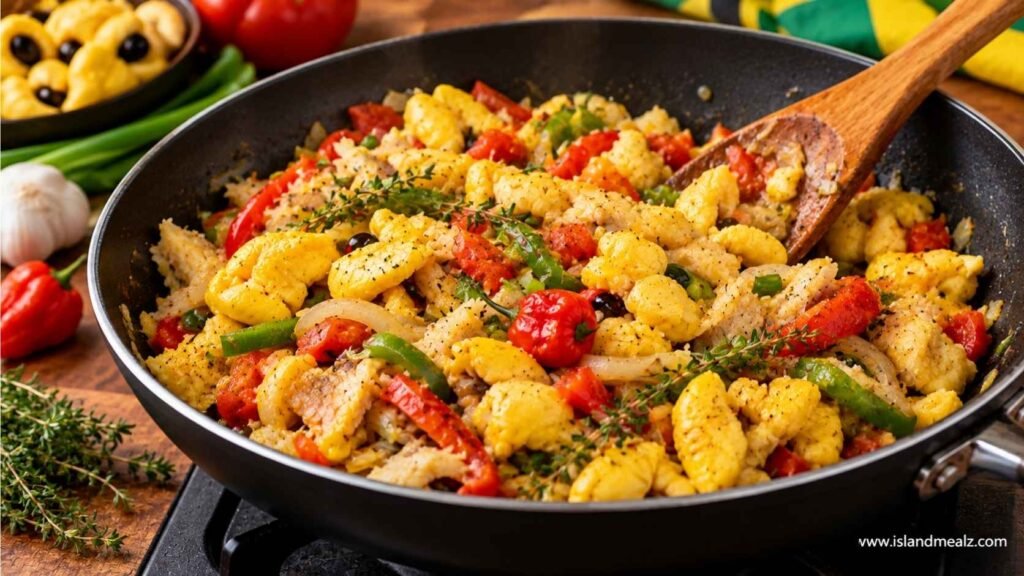
Step 1: Prepare the Ingredients
Drain the canned ackee and set it aside. Slice the onion, bell pepper, and scallions. Chop the tomato and mince the garlic. Remove the seeds from the Scotch bonnet if you want less heat.
Step 2: Cook the Saltfish
Heat the vegetable oil in a large skillet over medium heat. Add the flaked saltfish and cook for about 2–3 minutes. Stir gently to coat the fish with the oil. This gives the fish a little time to warm up before adding the vegetables.
Step 3: Add the Jamaican Seasonings
Add the onion, garlic, bell pepper, scallions, and thyme. Cook for about 2–3 minutes until the onion starts to soften. Add the chopped tomato and a small piece of Scotch bonnet pepper. Stir and let the vegetables cook until they release their aroma.
Step 4: Add the Ackee
Lower the heat before adding the drained ackee. Place the pieces into the skillet and gently fold them into the saltfish mixture. Sprinkle in the black pepper.
Avoid vigorous stirring. Ackee is naturally soft, and too much movement can turn the pieces into a mash. A few gentle folds are enough to combine everything.
Step 5: Finish and Serve
Let the mixture warm through for another 2–3 minutes over low heat. Taste a small portion before adding more seasoning. Saltfish can still contain enough salt to season the entire dish.
Remove the skillet from the heat and serve while warm. The finished dish should have visible pieces of ackee mixed with seasoned flakes of codfish, onions, and peppers.
Tips for Making the Best Jamaican Ackee and Saltfish
A good plate of ackee and saltfish comes down to a few small details. These tips can help you get the right flavor and texture, especially if this is your first time making the dish.
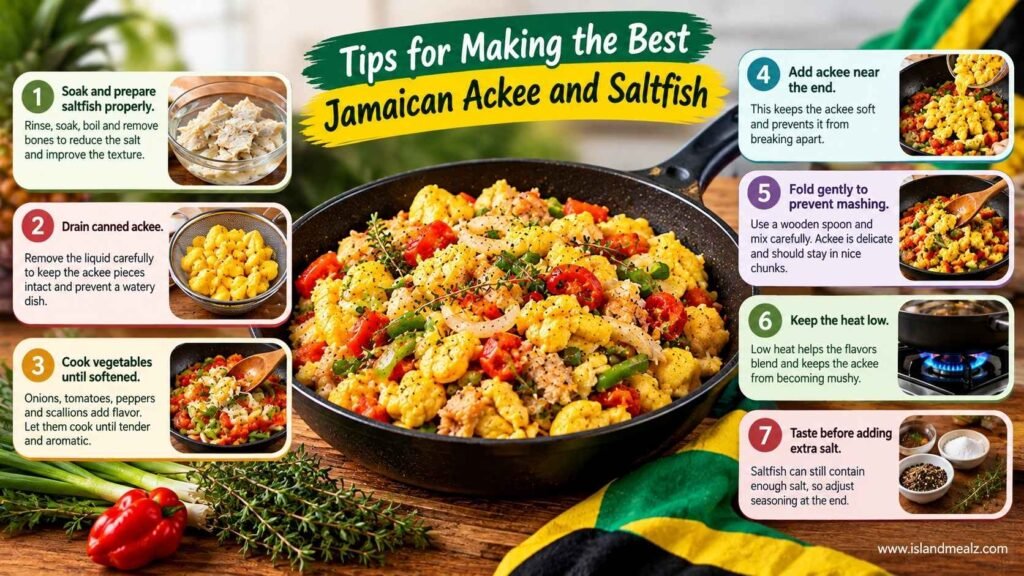
- Check the saltfish first: Salted cod can vary in saltiness. Taste it after soaking and boiling so you know whether it needs more preparation.
- Don’t rush the vegetables: Give the onions, garlic, tomatoes, and peppers enough time to soften. This helps build flavor before adding the ackee.
- Drain the canned ackee: Too much liquid can make the mixture watery. Let the ackee drain before using it.
- Add ackee near the end: It is already cooked when it comes from the can, so it only needs gentle heating.
- Keep the heat low: High heat can break apart the ackee and cause the mixture to stick.
- Use Scotch bonnet carefully: This pepper can be very hot. Start with a small piece and add more only if needed.
- Taste before adding salt: The salted cod usually provides plenty of seasoning.
The most important thing is to avoid rushing the final cooking stage. Gentle heat helps the ackee hold its shape and keeps the dish from becoming mushy.
What to Serve with Ackee and Saltfish
Ackee and saltfish is filling on its own, but traditional Jamaican sides make it a more complete breakfast. Some add a crispy texture, while others bring a little sweetness to balance the savory fish.
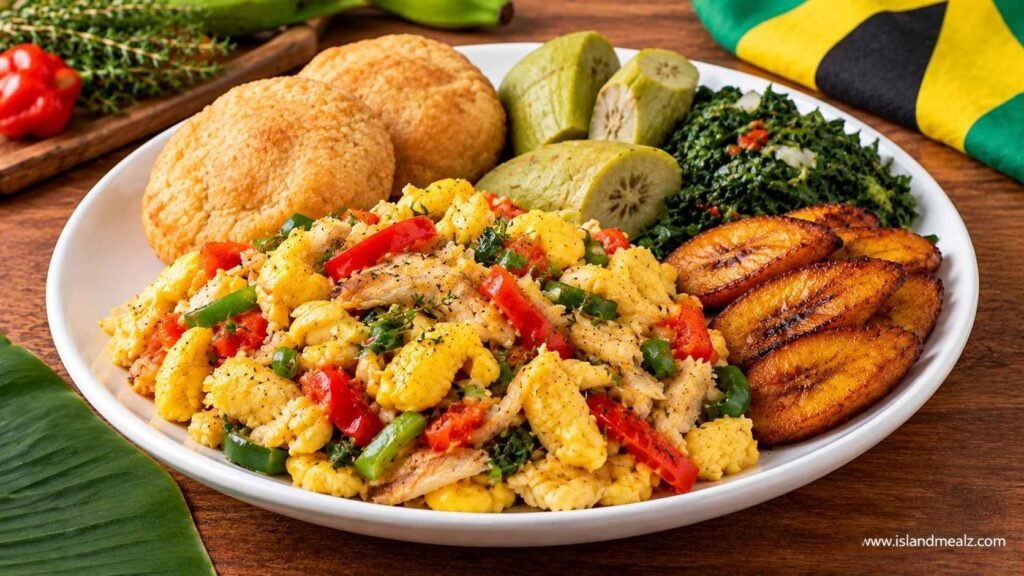
Here are a few popular choices:
- Jamaican fried dumplings: Crisp on the outside and soft inside, they are a classic breakfast pairing.
- Boiled green bananas: Their mild flavor works well with seasoned saltfish.
- Fried ripe plantains: These add natural sweetness to the plate.
- Jamaican callaloo: A flavorful vegetable side that adds color and freshness.
- Boiled yam: A hearty option that makes breakfast more filling.
- Roast breadfruit: Its mild, slightly nutty flavor pairs nicely with ackee.
- Jamaican hard dough bread: Use it to enjoy the savory mixture and its juices.
For a traditional breakfast plate, try serving ackee and saltfish with fried dumplings, boiled green bananas, and a few slices of ripe plantain. You can also choose just one side if you prefer a lighter meal.
Can You Use Fresh or Canned Ackee?
Yes, both fresh and canned ackee can be used to make this Jamaican dish. For most home cooks in the USA, canned ackee is the more convenient choice. You can often find it in Caribbean grocery stores and international food markets.
Canned ackee is already cooked, so you only need to drain it before adding it to the skillet. It works well in this recipe and saves you from preparing the fruit yourself.
Fresh ackee requires special care. Only use fruit that has naturally opened on the tree and has been properly prepared. Never eat unripe ackee, its seeds, or the pink tissue inside the fruit. Unripe ackee contains hypoglycin toxins that can cause serious illness.
If you are unfamiliar with preparing fresh ackee, choose commercially canned ackee from a reliable source. It is a practical option for making this traditional Jamaican breakfast at home.
How to Store and Reheat Leftovers
If you have leftover ackee and saltfish, store it properly so you can enjoy it with another meal. Transfer the food to a shallow, airtight container and refrigerate it within two hours of cooking.
Keep the leftovers in the refrigerator for 3–4 days. If you know you will not eat them within that time, freezing is an option, although the ackee may become softer after thawing.
To reheat, place the leftovers in a skillet over medium-low heat. Add a small splash of water if the mixture seems dry. Fold gently and heat until the food reaches 165°F (74°C).
You can also use a microwave. Cover the food loosely, heat it in short intervals, and stir carefully between intervals. Avoid reheating the same portion repeatedly.
Frequently Asked Questions
Is ackee and saltfish Jamaica’s national dish?
Yes. Ackee and saltfish is Jamaica’s national dish. It combines ackee fruit with salted cod and is commonly enjoyed as a traditional breakfast with dumplings, bananas, or plantains.
What does ackee taste like?
Ackee has a mild, buttery flavor and a soft texture. It does not taste strongly sweet like many other fruits. Instead, it takes on the savory flavors of saltfish, onions, tomatoes, and seasonings.
Can I use canned ackee for this recipe?
Yes. Canned ackee is a convenient choice for this recipe. It is already cooked, so drain it and add it near the end of cooking. Handle it gently to keep the pieces intact.
Is ackee and saltfish spicy?
It depends on how much Scotch bonnet pepper you use. A small piece adds traditional Jamaican heat, but you can leave it out if you prefer a mild dish.
Can I prepare saltfish the night before?
Yes. You can soak the salted cod overnight in the refrigerator. You can also boil it, remove the bones, and flake it ahead of time. Keep the prepared fish refrigerated until you are ready to cook.
Can I freeze ackee and saltfish?
Yes. Place cooled leftovers in a freezer-safe airtight container. The dish can be frozen, but the ackee may lose some of its original texture after thawing. Reheat leftovers thoroughly before serving.
Final Thoughts
Ackee and saltfish is a simple but memorable part of Jamaican cooking. The combination of buttery ackee, savory saltfish, and fresh seasonings makes it a breakfast worth trying. Prepare it with canned ackee, take your time with the saltfish, and serve it with fried dumplings or ripe plantains. Once you make it at home, you may find yourself coming back to this Jamaican favorite again.