
Jamaican gungo peas recipe is all about simple ingredients coming together. Gungo peas, also called pigeon peas, have a mild earthy flavor that works beautifully with coconut milk, thyme, scallion, garlic, and pimento. A whole Scotch bonnet adds another layer of flavor without making the dish too hot.
I like this recipe because you can make it with dried or canned gungo peas. Dried peas take more time, but canned peas are handy when you want dinner on the table faster. Serve the finished rice with jerk chicken, curry chicken, oxtail, or steamed vegetables for a satisfying Jamaican-style meal.
What Are Gungo Peas?
Gungo peas are the Jamaican name for pigeon peas. They are small legumes with a mild earthy taste and a firm texture. In Jamaican cooking, they often find their way into rice dishes, soups, and stews.
One of the most popular ways to use them is with rice and coconut milk. Add thyme, scallion, garlic, pimento, and Scotch bonnet, and the peas take on a warm, savory Jamaican flavor.
You can buy gungo peas dried, fresh, or canned. Dried peas need more preparation, while canned peas are already cooked and can save quite a bit of time.
Gungo Peas vs. Pigeon Peas
There is no difference between gungo peas and pigeon peas. They are the same legume. “Gungo peas” is the name you will commonly hear in Jamaica, while “pigeon peas” is more familiar in the United States.
Why You’ll Love This Gungo Peas Recipe
There is a lot to like about this dish without making it complicated. The gungo peas give the rice a hearty bite, while coconut milk adds a rich flavor without making the dish heavy.
The seasonings do most of the work. Fresh thyme, scallion, garlic, and pimento give the pot that familiar Jamaican taste. You can also adjust the Scotch bonnet to suit your preferred level of heat.
Another nice thing is the flexibility. Use dried peas when you have time to cook from scratch, or reach for canned peas when you need a quicker option.
Ingredients for Gungo Peas Recipe
Most of the ingredients for this recipe are easy to find. The Jamaican seasonings are what give the peas and rice their distinctive flavor, so try to use fresh thyme and scallion when you can.
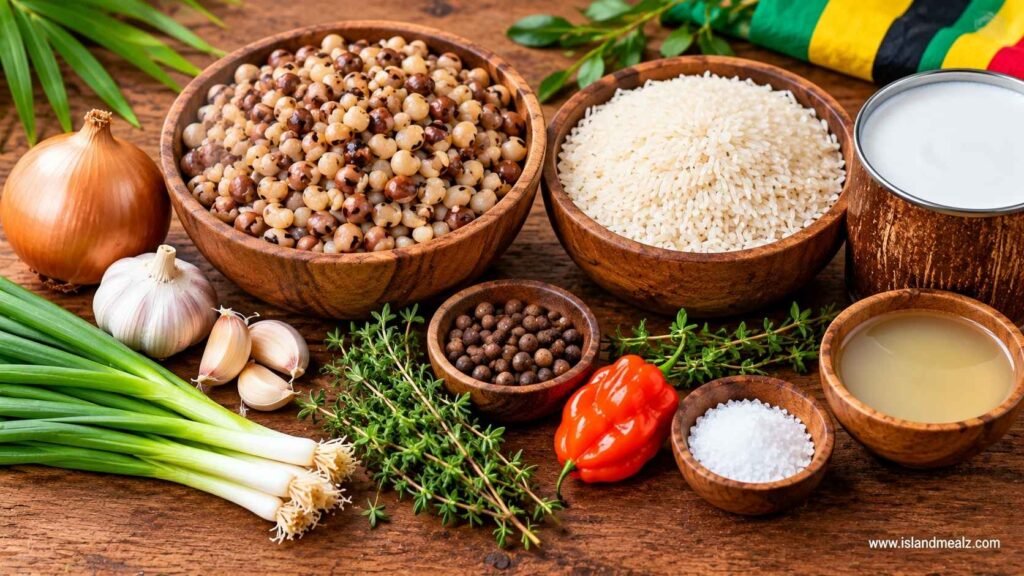
The ingredient amounts below are a good starting point. You can adjust the salt and Scotch bonnet to your taste.
| Ingredient | Amount | Purpose |
| Gungo peas | 1½ cups cooked | Main ingredient |
| Long-grain rice | 2 cups | Adds body to the dish |
| Coconut milk | 1 can | Gives a rich, creamy flavor |
| Onion | ½ medium | Adds mild sweetness |
| Garlic | 2 cloves | Adds savory flavor |
| Scallion | 2 stalks | Adds fresh Jamaican flavor |
| Fresh thyme | 2–3 sprigs | Adds an earthy aroma |
| Pimento berries | 4–5 | Adds warm, spicy flavor |
| Scotch bonnet pepper | 1 whole | Adds flavor and heat |
| Salt | To taste | Balances the flavors |
| Water or broth | As needed | Helps cook the rice |
Dried or Canned Gungo Peas?
You can use either dried or canned gungo peas for this recipe. Dried peas have a firm texture and are a good option when you have extra time. They usually need to be soaked and cooked until tender before you add them to the rice.
Canned gungo peas are easier when you want a quicker meal. Drain and rinse them before adding them to the pot. Since they are already cooked, you do not need to spend extra time boiling them.
How to Make Gungo Peas Recipe
The easiest way to get good results is to have the peas cooked and the rice rinsed before you start. Once the ingredients are ready, most of the work happens in one pot.
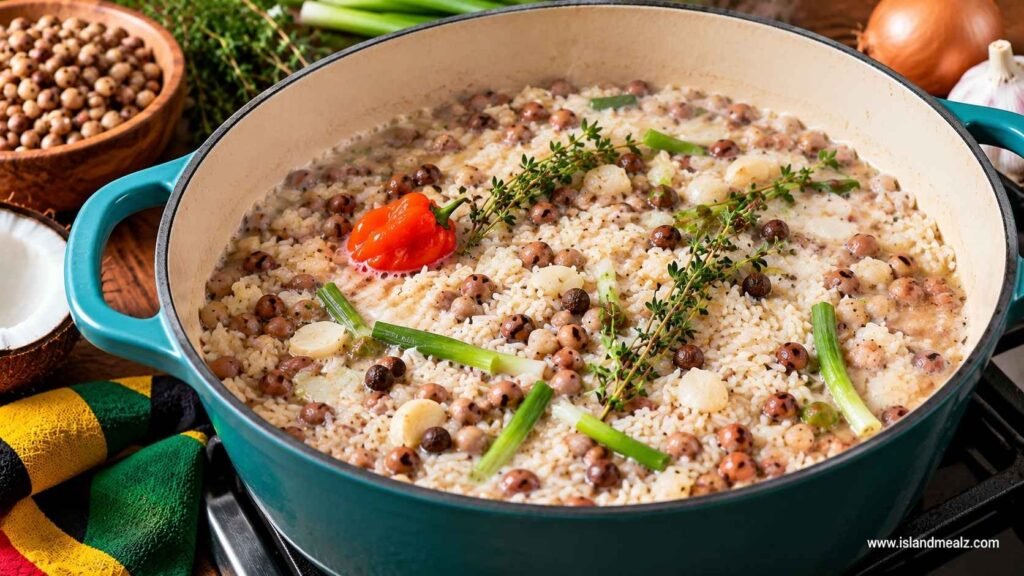
Step 1: Cook the Dried Gungo Peas
If you are using dried gungo peas, rinse them first and check for any small pieces of debris. Soak them overnight in plenty of water.
The next day, drain the peas and cover them with fresh water. Simmer until they are tender but still hold their shape. Drain them and set them aside.
Using canned peas? Simply drain and rinse them. You can skip this cooking step.
Step 2: Season the Coconut Milk
Pour the coconut milk and water or broth into a large pot. Add the onion, garlic, scallion, thyme, and pimento.
Place the Scotch bonnet in whole. This gives the cooking liquid a nice pepper flavor without releasing all of the pepper’s heat.
Bring everything to a gentle simmer and give the seasonings a few minutes to flavor the liquid.
Step 3: Add the Gungo Peas
Stir the cooked gungo peas into the seasoned liquid. Let them simmer for a few minutes so they can absorb some of those flavors.
Taste the liquid at this point. If it needs more salt, add a little before adding the rice.
Step 4: Add the Rice
Rinse the long-grain rice well, then add it to the pot. Give it one gentle stir so the rice and peas are spread evenly.
Check the liquid level before covering the pot. The rice needs enough liquid to cook, but adding too much can leave you with a soft, sticky dish.
Step 5: Cook the Rice
Bring the pot to a gentle boil, then reduce the heat to low. Cover it tightly and let the rice cook.
Try not to keep lifting the lid. The steam inside the pot helps the rice cook evenly.
When the rice is tender and most of the liquid has been absorbed, turn off the heat.
Step 6: Rest and Fluff
Leave the pot covered for about 5 to 10 minutes. This short rest gives the rice time to finish absorbing moisture.
Remove the Scotch bonnet, thyme stems, and pimento berries. Fluff the rice gently with a fork and serve it warm.
How to Cook Gungo Peas Without Soaking
Forgot to soak your dried gungo peas? You can still cook them. Just expect the process to take longer than soaked peas.
Rinse the peas and put them in a large pot with plenty of fresh water. Bring the water to a boil, then lower the heat and let the peas simmer until they are tender.
Check the pot occasionally and add more hot water if needed. Cooking time can vary, especially with older dried peas, so use tenderness as your main test rather than relying only on the clock.
Once the peas are soft, drain them and use them in the recipe. For a quicker option, canned gungo peas are much easier because they are already cooked.
How to Make Gungo Peas Recipe With Canned Peas
Canned gungo peas are a good shortcut when you do not have time to cook dried peas. Drain the peas well and give them a quick rinse before using them.
Prepare the coconut milk with onion, garlic, scallion, thyme, pimento, and Scotch bonnet. Let the mixture simmer for a few minutes so the flavors start to come together.
Add the canned peas and rinsed rice. Check the amount of liquid, cover the pot, and cook over low heat until the rice is tender.
Let the finished rice sit for a few minutes before fluffing it with a fork. The result will not require as much preparation as the dried-pea version, but it can still have plenty of Jamaican flavor.
Tips for Perfect Jamaican Gungo Peas and Rice
Small details can affect the texture of the finished rice. These tips can help you avoid the most common problems.
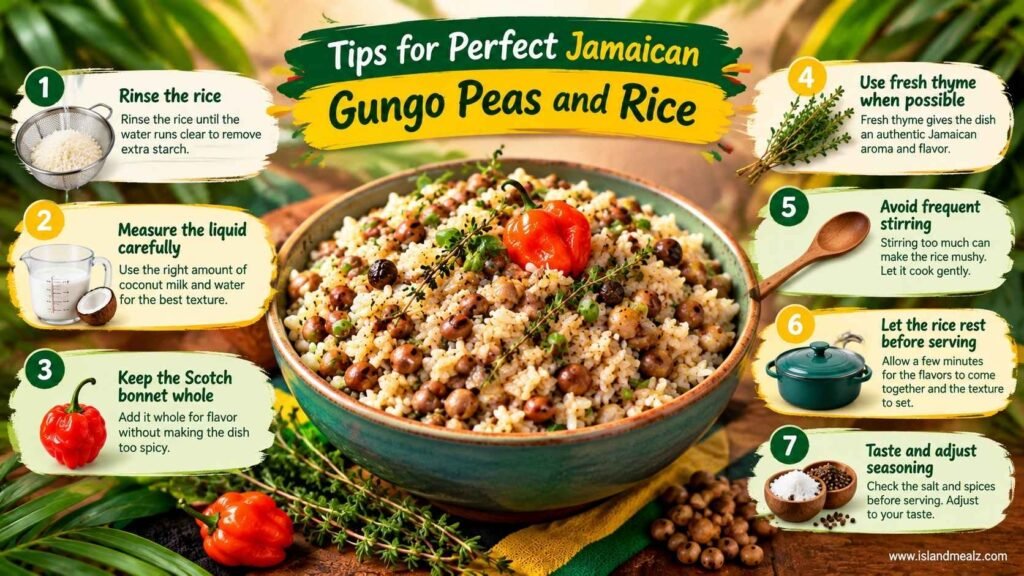
Rinse the Rice
Rinse the rice before cooking. This removes some of the surface starch and helps the grains stay more separate.
Measure the Liquid
Do not add extra water just because the pot looks dry at the beginning. Rice absorbs liquid as it cooks, and too much can make the finished dish mushy.
Keep the Scotch Bonnet Whole
A whole Scotch bonnet gives the dish its flavor without spreading as much heat through the rice. Remove it before serving if you want a milder plate.
Use Fresh Thyme When Possible
Fresh thyme gives the pot a clean, herbal aroma. Dried thyme works too, but use less because the flavor is more concentrated.
Do Not Keep Stirring
Once the rice starts cooking, leave it alone as much as possible. Frequent stirring can release more starch and affect the texture.
Let It Rest
Do not rush to serve the rice as soon as you turn off the stove. A short covered rest gives the grains time to finish absorbing moisture.
Taste Before Serving
Give the rice a taste before bringing it to the table. If it needs more salt, add a small amount while the dish is still warm.
What to Serve With Gungo Peas and Rice
Gungo peas and rice can easily become part of a larger Jamaican meal. The coconut flavor works especially well with dishes that have smoky, spicy, or savory flavors.
Jamaican Jerk Chicken
Jerk chicken adds smoky heat to the plate. The mild rice helps balance the stronger seasoning.
Jamaican Curry Chicken
Curry chicken comes with a flavorful sauce that works beautifully with the rice. A little sauce spooned over the rice adds even more flavor.
Oxtail
Oxtail is a richer option. Its gravy pairs well with the hearty peas and coconut rice.
Brown Stew Chicken
Brown stew chicken adds tender meat and a savory sauce. It is a comforting choice for a weekend dinner.
Steamed Vegetables
For something lighter, add steamed cabbage, carrots, or other vegetables. Fried plantains also make a nice addition when you want a touch of sweetness.
Gungo Peas Recipe Variations
You can make a few small changes to this recipe without losing the main Jamaican flavors.
Vegan Gungo Peas and Rice
Use vegetable broth or water instead of chicken broth. The coconut milk and Jamaican seasonings still give the rice plenty of flavor.
Spicy Gungo Peas and Rice
For more heat, chop some of the Scotch bonnet instead of adding it whole. Start with a small amount because the pepper can be very hot.
Gungo Peas Without Coconut Milk
You can cook the rice with seasoned broth instead of coconut milk. The finished dish will be lighter and less creamy.
Gungo Peas With Brown Rice
Brown rice can work, but it usually needs more cooking time and liquid than white rice. Check the package directions and adjust the cooking liquid as needed.
How to Store and Reheat Gungo Peas and Rice
If you have leftovers, let the gungo peas and rice cool before storing them. Place them in a clean, airtight container and keep them refrigerated.
Give a clear storage recommendation in the final article, but keep food-safety guidance accurate and conservative.
You can also reheat a portion in the microwave. Cover the container loosely and heat it in short intervals. Stir between intervals so the rice warms evenly.
If you want to freeze the leftovers, divide them into smaller portions before freezing. Thaw them in the refrigerator and reheat until hot throughout.
Avoid repeatedly cooling and reheating the same portion. Taking out only what you plan to eat can help keep the remaining food in better condition.
Frequently Asked Questions About Gungo Peas
Are gungo peas and pigeon peas the same thing?
Yes. They are the same legume. If you cannot find gungo peas at your local grocery store, check for pigeon peas instead.
What do gungo peas taste like?
Gungo peas have a mild, earthy flavor with a slightly nutty taste. They hold their shape well when cooked, which makes them a good match for rice and stews.
Do gungo peas need to be soaked?
Dried gungo peas do not have to be soaked, but soaking can shorten the cooking time. Canned gungo peas do not need soaking because they are already cooked.
Can I use canned gungo peas?
Yes. Canned peas are a convenient choice for this recipe. Drain and rinse them before adding them to the pot.
What is the difference between gungo peas and red peas?
Gungo peas are pigeon peas, while Jamaican red peas usually refer to red kidney beans. They have different flavors and textures, even though both are commonly used in Jamaican cooking.
Can I make gungo peas and rice without coconut milk?
Yes. You can use water or seasoned broth instead. The coconut milk gives the rice a richer flavor, but it is not the only way to cook the dish.
Why did my gungo peas and rice turn mushy?
Too much liquid is one common reason. Overcooking and stirring the rice too often can also affect the texture. Measure the liquid carefully and keep the heat low once the rice starts cooking.
Can I make this recipe less spicy?
Yes. Keep the Scotch bonnet whole rather than chopping it. You can also remove it before serving or leave it out if you do not want much heat.
Final Thoughts
Gungo peas and rice is one of those dishes that does not need complicated ingredients to taste good. The combination of tender peas, coconut milk, rice, and Jamaican seasonings creates a filling dish that works with many different meals.
Use dried gungo peas when you have time for a slower cook, or canned peas when you want something more convenient. Once you get comfortable with the basic recipe, you can adjust the heat and seasonings to suit your own table.