
Caribbean green seasoning is one of those simple blends that can make a big difference in the kitchen. Fresh herbs, scallions, garlic, peppers, and a few other ingredients come together to create a bright and savory flavor. You can use it with chicken, fish, seafood, meat, rice, soups, and stews.
I like making a batch when the herbs are fresh and keeping some ready for the week. It saves time when I need to season chicken or fish for dinner. You can make the blend mild or spicy, depending on the peppers you use, and freeze extra portions when you have more than you need.
What Is Caribbean Green Seasoning?
Caribbean green seasoning is a fresh herb and vegetable blend used to build flavor in many Caribbean dishes. It is not a dry spice mix. Instead, the ingredients are blended into a moist paste that can be rubbed onto food or added directly to a pot.
There is no single ingredient list that every cook follows. Scallions, garlic, thyme, peppers, cilantro, and culantro are common, but the amounts can change from one kitchen to another. Some people add onion, ginger, parsley, lime juice, or vinegar as well.
The seasoning is especially handy when you want flavor to reach the food before it starts cooking. Rub it over chicken before roasting, add it to fish before baking, or stir a spoonful into a stew. It can also give plain rice or beans a fresh herbal boost.
Culantro is worth knowing if you want a stronger Caribbean flavor. You may see it labeled chadon beni or shado beni at Caribbean or Latin grocery stores. Its flavor is stronger than cilantro, so a little can go a long way.
The nice thing about making it yourself is that you can adjust the batch as you go. If the first batch is too hot, use fewer Scotch bonnet peppers next time. If you want more herbal flavor, increase the cilantro, culantro, or thyme.
Why You’ll Love This Caribbean Green Seasoning Recipe
This recipe is useful because you do not need to cook anything. Once the ingredients are washed and chopped, the blender does most of the work. That makes it easy to prepare while you are already getting dinner ready.
This recipe is useful because you do not need to cook anything. Once the ingredients are washed and chopped, the blender does most of the work. That makes it easy to prepare while you are already getting dinner ready.
You can use the same batch in several ways. Marinate chicken with it one day, add some to a pot of rice the next day, and use another spoonful in a soup or stew.
You can use the same batch in several ways. Marinate chicken with it one day, add some to a pot of rice the next day, and use another spoonful in a soup or stew.
Homemade seasoning also lets you use the herbs you actually enjoy. If you do not have culantro, cilantro can fill in. If you dislike very spicy food, you can skip the Scotch bonnet altogether.
Caribbean Green Seasoning Ingredients
You only need a handful of fresh ingredients to make this seasoning. Fresh herbs are the main part of the recipe, while garlic, peppers, and scallions add more flavor.
| Ingredient | Amount | Purpose |
| Culantro or chadon beni | 1 cup | Adds a strong herbal flavor |
| Cilantro | 1 cup | Adds fresh, bright flavor |
| Scallions | 5–6 | Adds mild onion flavor |
| Fresh thyme | 4–5 sprigs | Adds an earthy taste |
| Fresh parsley | ½ cup | Adds freshness |
| Garlic | 6 cloves | Adds savory flavor |
| Onion | ½ medium | Adds sweetness and depth |
| Pimento or sweet peppers | 3–4 | Adds flavor without much heat |
| Scotch bonnet pepper | 1 | Adds Caribbean heat |
| Lime juice | 2 tablespoons | Adds brightness |
| Water | ¼ cup, as needed | Helps the ingredients blend |
| Salt | 1 teaspoon | Balances the flavors |
The herbs should make up most of the mixture, while the garlic, peppers, and onion support the flavor. You do not need to chop everything perfectly because it will all go into the blender.
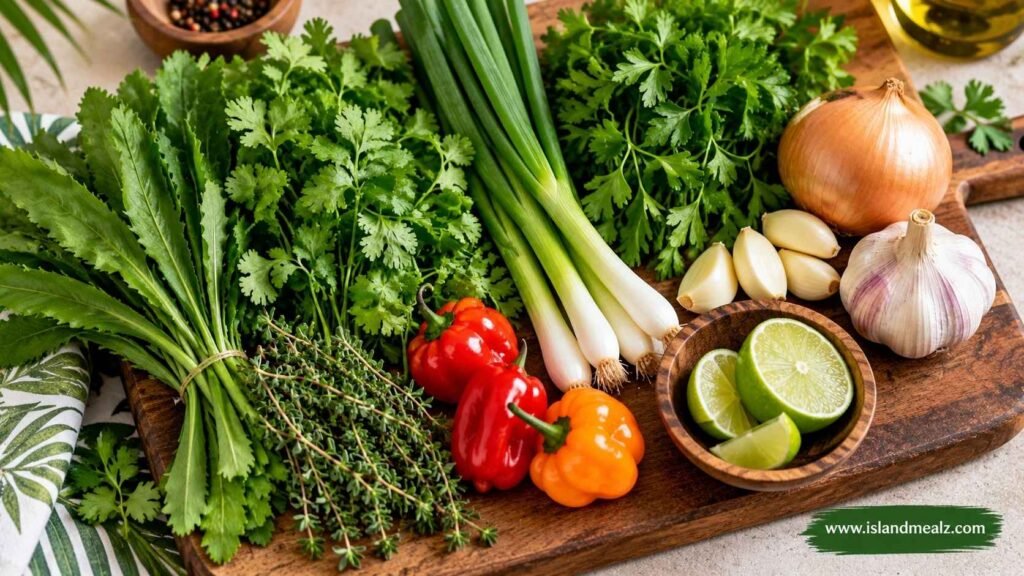
Culantro vs. Cilantro
Culantro and cilantro belong to the same plant family, but they do not taste exactly alike. Culantro has a stronger herbal flavor and is often used in Caribbean cooking. If your local grocery store does not carry it, cilantro is a practical substitute.
Choosing the Right Peppers
Scotch bonnet is where the heat can change quickly. One pepper may be enough for a batch, especially if you are not used to very spicy food. If you are making the seasoning for several people, start with less and add more later. You can always increase the heat, but it is difficult to take it back out.
Can You Add Ginger?
Fresh ginger is optional, but I would add it when using the seasoning for chicken, pork, or seafood. You only need a small piece. Too much ginger can take over the other herbs, so start with a little and add more the next time if you want a stronger ginger flavor.
How to Make Caribbean Green Seasoning
Once the ingredients are washed and chopped, the actual preparation is very quick. Most of the work is done by the blender or food processor, so focus on getting the right balance of herbs, peppers, and liquid.
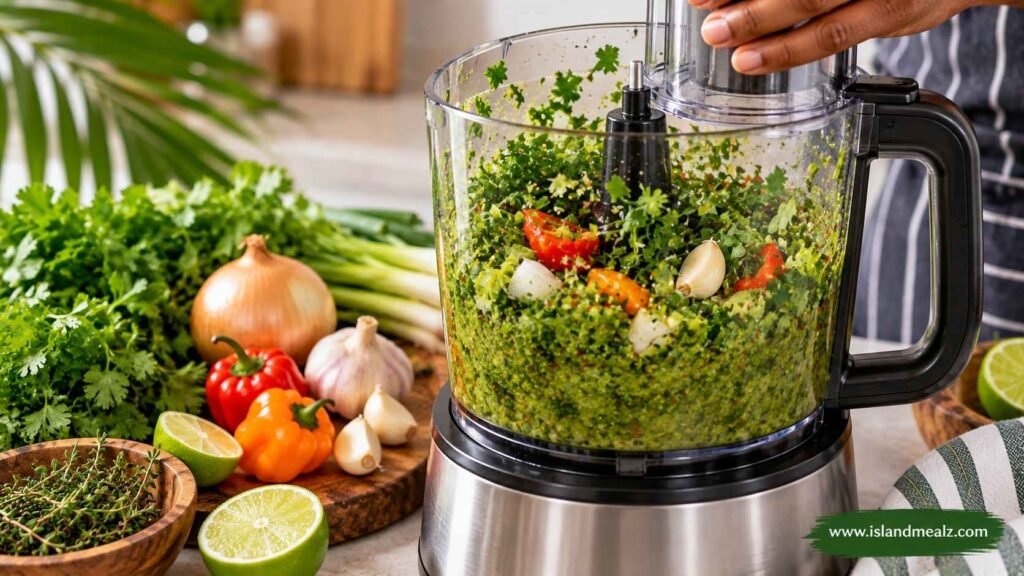
Step 1: Wash and Prepare the Ingredients
Once the ingredients are washed and chopped, the actual preparation is very quick. Most of the work is done by the blender or food processor, so focus on getting the right balance of herbs, peppers, and liquid.
Step 2: Add Everything to a Blender
Add the culantro, cilantro, parsley, thyme, scallions, garlic, onion, and peppers to a blender or food processor.
Pour in the lime juice and a small amount of water. Start with less liquid and add more only if needed.
Step 3: Blend the Seasoning
Blend the ingredients until they reach your preferred texture. A smooth paste works well as a marinade, while a slightly chunky mixture is great as a cooking base.
Stop the blender and scrape down the sides if needed. Blend until the herbs and vegetables are broken down, but do not keep adding water just to make the blender move. Stop once or twice and scrape the sides if needed. You want a thick, spoonable mixture rather than a watery green liquid.
Step 4: Taste and Adjust
Taste a small amount before storing it. Add more salt, lime juice, herbs, or pepper if needed.
If the seasoning is too spicy, add more herbs or sweet pepper to balance the heat.
Step 5: Store the Green Seasoning
Transfer the finished seasoning to a clean airtight glass jar. Keep it refrigerated and always use a clean spoon when taking some out.
For longer storage, you can freeze the seasoning in small portions. Ice cube trays work well because you can take out only what you need.
How to Use Caribbean Green Seasoning
Caribbean green seasoning is more than a marinade. It can add fresh flavor to many everyday meals. A small amount can make a big difference, especially when you use it with foods that need extra flavor.
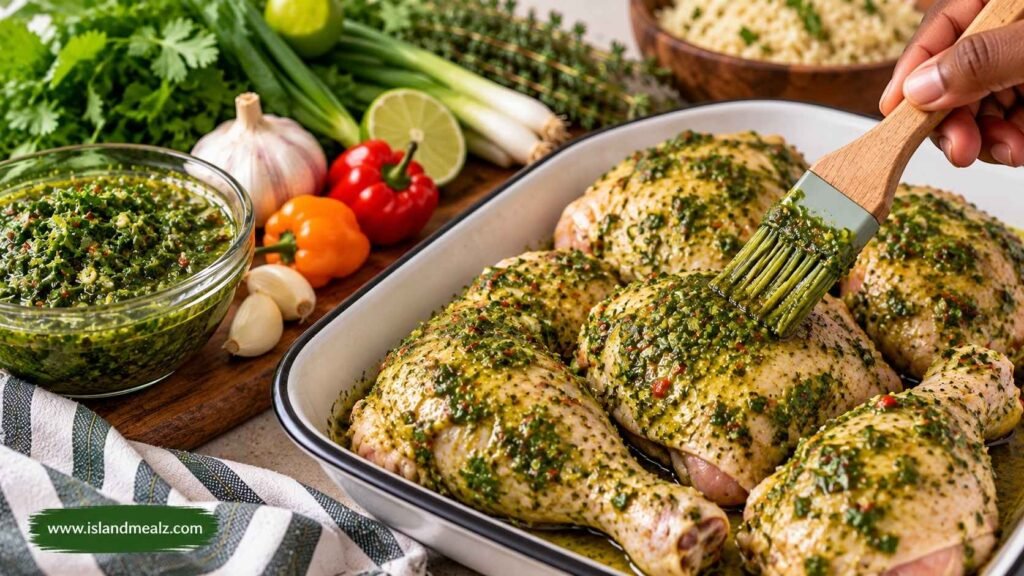
Use It as a Meat Marinade
Green seasoning works well with chicken, beef, pork, goat, and lamb. Rub the seasoning over the meat and let it rest before cooking.
Chicken is one of the easiest foods to season with this blend. Rub the seasoning over the chicken, making sure it reaches the thicker parts. Let it rest in the refrigerator before grilling, roasting, baking, or pan-cooking.
Use It With Fish and Seafood
Fish needs a lighter touch. Coat the fillets with a thin layer of green seasoning and let them rest briefly before cooking. The herbs, garlic, and pepper add plenty of flavor without covering up the taste of the fish.
Add It to Rice and Peas
Stir a spoonful of green seasoning into rice and peas while they cook. The herbs and aromatics add another layer of flavor to the dish.
You can also use it with plain rice when you want a quick way to make a simple side dish more flavorful.
Add It to Soups and Stews
Green seasoning makes a useful base for soups and stews. Add it near the beginning of cooking so the herbs and aromatics have time to blend with the other ingredients.
Try it in chicken soup, beef stew, fish stew, vegetable soup, or peas soup.
Use It in Curry Dishes
Add green seasoning before cooking Caribbean-style curry chicken, curry goat, shrimp, or vegetables. It works especially well with other spices used in curry dishes.
Start with a small amount and adjust as you cook.
Season Vegetables and Beans
You can also use green seasoning with beans, lentils, potatoes, and fresh vegetables. Stir a little into vegetables before roasting or sautéing.
This makes the seasoning useful beyond traditional Caribbean dishes. Keep a small jar in the refrigerator, and you will have a quick flavor base ready whenever you cook.
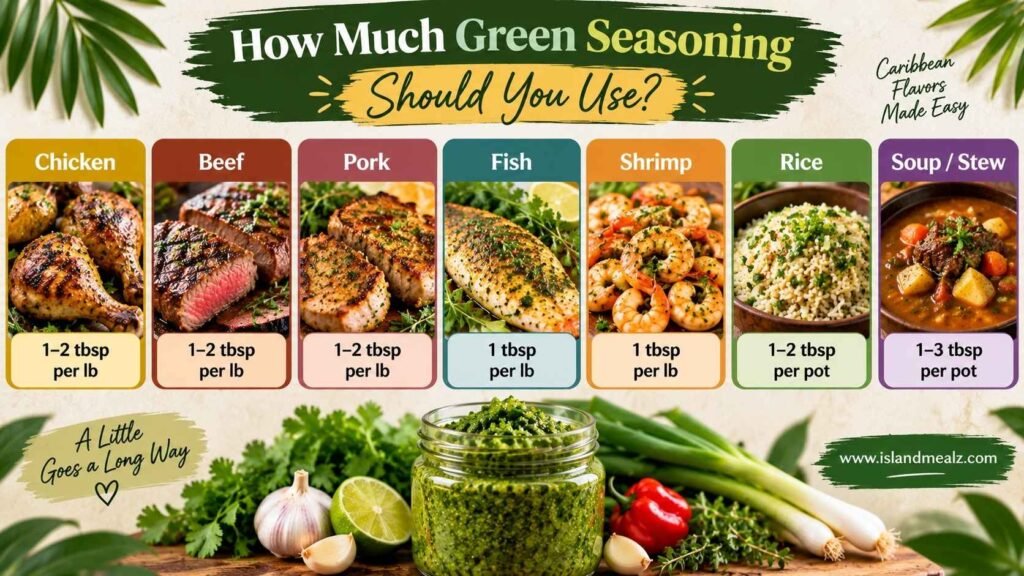
How Much Green Seasoning Should You Use?
Chicken is one of the easiest foods to season with this blend. Rub the seasoning over the chicken, making sure it reaches the thicker parts. Let it rest in the refrigerator before grilling, roasting, baking, or pan-cooking.
| Food | Starting Amount |
| Chicken | 1–2 tablespoons per pound |
| Beef | 1–2 tablespoons per pound |
| Pork | 1–2 tablespoons per pound |
| Fish | 1 tablespoon per pound |
| Shrimp | 1 tablespoon per pound |
| Rice | 1–2 tablespoons per pot |
| Soup or stew | 1–3 tablespoons |
For marinades, coat the food evenly with the seasoning. You can add more if the mixture does not cover the food well.
For soups, stews, and rice, add the seasoning a little at a time. This makes it easier to control the flavor.
Keep in mind that homemade green seasoning can vary in strength. Culantro, Scotch bonnet peppers, garlic, and other ingredients may taste stronger or milder depending on what you use. Taste your food as you cook and adjust the amount to suit your preference.
How Long Should You Marinate With Green Seasoning?
Green seasoning can add flavor to meat and seafood in a short amount of time. The best marinating time depends on the food you are preparing.
| Food | Suggested Marinating Time |
| Fish | 15–30 minutes |
| Shrimp | 15–30 minutes |
| Chicken | 2 hours to overnight |
| Beef | 2 hours to overnight |
| Pork | 2 hours to overnight |
Fish and shrimp have delicate textures, so they do not need a long marinade. A short time is usually enough to add fresh herb and garlic flavor.
Chicken can sit in green seasoning for a few hours or overnight. This gives the herbs and aromatics more time to flavor the meat.
Beef and pork can also benefit from a longer marinating time. Keep the meat covered and refrigerated while it marinates.
Do not leave raw meat or seafood at room temperature while marinating. Place it in the refrigerator as soon as you add the green seasoning.
If you add lime juice or vinegar to the seasoning, keep the seafood marinating time short. Acid can change the texture of delicate fish and shrimp. For seafood, I would rather use a shorter marinade and add more seasoning during cooking if needed.
Tips for Making the Best Caribbean Green Seasoning
Use herbs that still look fresh and smell good. If the leaves are wilted or yellow, the finished seasoning will not have the same bright flavor.
Be careful with the liquid. Add only enough to help the blender move. A thick seasoning is easier to use as a marinade and does not run off the food as quickly.
Go slowly with Scotch bonnet. The heat can become much stronger after blending, so start with a small amount if you are unsure.
Taste the mixture before storing it. This is the easiest time to add more salt, lime juice, herbs, or pepper.
I also prefer making the seasoning slightly thick. You can always loosen it later with a little water when using it in a soup or stew.
Finally, use clean equipment and a clean storage container. Fresh herbs and vegetables need careful handling and proper refrigeration.
Caribbean Green Seasoning Variations
Green seasoning does not have one fixed recipe. Ingredients and amounts can change from one Caribbean island to another. Families often adjust the blend based on what they have and the flavors they enjoy.
Trinidad-Style Green Seasoning
Trinidad-style green seasoning often features culantro, also called chadon beni or shado beni. Scallions, thyme, garlic, peppers, and other fresh herbs are also common.
This version has a strong herbal flavor and works well with chicken, fish, seafood, meat, rice, and stews.
Jamaican-Style Green Seasoning
A Jamaican-style version can include scallions, thyme, garlic, ginger, parsley, and hot peppers. Some cooks also add onion or other fresh herbs.
The blend works well as a marinade for chicken, pork, fish, and other meats.
Guyanese-Style Green Seasoning
Guyanese versions can also use fresh herbs, garlic, scallions, thyme, celery, and peppers. The exact blend depends on the cook and the dish.
It can be used to season meat, seafood, rice dishes, soups, and stews.
The main idea stays the same across these variations. Fresh herbs and aromatics create a flavorful base that can be adjusted to suit your taste. There is no need to follow one exact combination if you do not have every ingredient available.
How to Store Caribbean Green Seasoning
Fresh green seasoning contains raw herbs and vegetables, so proper storage is important. Transfer it to a clean, airtight container as soon as you finish blending it.
Refrigerator Storage
Keep the seasoning refrigerated and use a clean spoon each time. A glass jar with a tight lid works well.
For the best quality, make smaller batches that you can use within a short period. If the seasoning develops an unusual smell, mold, or other signs of spoilage, discard it.
The exact storage time can vary based on the ingredients and preparation method. Follow a conservative storage approach rather than keeping homemade seasoning for too long.
Can You Freeze Green Seasoning?
Yes, freezing is a convenient way to preserve homemade green seasoning. An ice cube tray makes it easy to freeze small portions.
Spoon the seasoning into the tray and freeze until solid. Then transfer the cubes to a freezer-safe bag or container and label it with the date.
When you need some for a meal, take out only the amount you need. Frozen portions can be added to soups, stews, rice, sauces, or marinades.
Freezing is especially useful when you buy a large bunch of fresh herbs. It helps you save the extra seasoning instead of letting the herbs go to waste.
Can You Make Caribbean Green Seasoning Without Scotch Bonnet?
Absolutely. Scotch bonnet gives the seasoning its heat, but it is not the only way to build flavor. If you prefer mild food, leave it out and use sweet, pimento, or bell peppers instead.
For a mild version, use sweet peppers, pimento peppers, or a small amount of bell pepper. These peppers add aroma and a fresh flavor without bringing much heat.
If you want some spice but do not have Scotch bonnet peppers, you can use a small amount of another hot pepper. Start with less than you think you need and add more after tasting.
You can also leave out hot peppers completely and add heat later when you cook your meal. This gives you more control over the spice level of each dish.
Caribbean Green Seasoning vs. Jerk Seasoning
Green seasoning and jerk seasoning can both be used on meat, but they give you very different flavors. Green seasoning is built around fresh herbs and aromatics, while jerk seasoning has a stronger spice profile.
Jerk seasoning usually has a stronger spice profile. Depending on the recipe, it may include ingredients such as allspice, thyme, Scotch bonnet peppers, garlic, ginger, and other spices.
| Feature | Green Seasoning | Jerk Seasoning |
| Main form | Fresh paste | Paste or dry blend |
| Main flavor | Fresh herbs and aromatics | Warm spices and herbs |
| Common use | Marinades and cooking base | Jerk-style cooking |
| Heat | Easy to adjust | Often spicy |
| Texture | Wet and fresh | Wet or dry |
Green seasoning works as an everyday flavor base for many dishes. You can use it before cooking or stir it into soups, stews, rice, and sauces.
Jerk seasoning has a more specific flavor profile and is closely associated with Jamaican jerk cooking. While both can be used as marinades, they create different tastes in the finished dish.
Frequently Asked Questions About Caribbean Green Seasoning
What Is Caribbean Green Seasoning Made Of?
Caribbean green seasoning is usually made with fresh herbs, scallions, garlic, peppers, and other aromatics. Culantro, cilantro, and fresh thyme are common choices. Some recipes also include onion, ginger, lime juice, or vinegar.
What Does Caribbean Green Seasoning Taste Like?
It has a fresh, herbal, savory flavor with notes of garlic, scallions, and peppers. The taste can range from mild to spicy depending on the ingredients you use.
Is Green Seasoning the Same as Sofrito?
No. Both are fresh flavor bases, but they are different preparations. Green seasoning is common in Caribbean cooking, while sofrito is associated with several Latin American, Spanish, and Caribbean cuisines and can have different ingredients.
Can I Use Cilantro Instead of Culantro?
Yes. Cilantro is a practical substitute when fresh culantro is not available. The flavor will be lighter because culantro has a stronger herbal taste.
Is Caribbean Green Seasoning Spicy?
It depends on the peppers. Scotch bonnet can make the seasoning quite hot, while sweet peppers or bell peppers create a much milder blend.
Can I Freeze Caribbean Green Seasoning?
Yes. Freezing is one of the easiest ways to keep a larger batch from going to waste. Pour the seasoning into an ice cube tray, freeze it, and transfer the solid portions to a freezer-safe bag or container. When you cook, take out only the amount you need.
How Long Does Homemade Green Seasoning Last?
Keep homemade green seasoning refrigerated in a clean, airtight container and use it within a short period for the best quality. If you notice mold, an unusual smell, or other signs of spoilage, discard it.
What Meat Can I Season With Green Seasoning?
You can use green seasoning with chicken, beef, pork, goat, and lamb. It also works well with fish and seafood.
Can I Use Green Seasoning on Fish?
Yes. Green seasoning adds fresh flavor to fish and other seafood. Because seafood is delicate, use a moderate amount and avoid very long marinating times when the blend contains lime juice or vinegar.
Can I Make Green Seasoning Without a Blender?
Yes. A food processor works well, and you can also finely chop or crush the ingredients by hand. The texture may be less smooth, but the flavor can still be excellent.
Caribbean Green Seasoning Recipe
This fresh herb seasoning comes together in one blender and can be used for marinades, soups, stews, rice, seafood, and meat.
Prep Time: 15 minutes
Cook Time: 0 minutes
Total Time: 15 minutes
Cuisine: Caribbean
Course: Seasoning / Marinade
Yield: About 1½ to 2 cups
Ingredients
- 1 cup fresh culantro or chadon beni
- 1 cup fresh cilantro
- 5–6 scallions
- 4–5 fresh thyme sprigs
- ½ cup fresh parsley
- 6 garlic cloves
- ½ medium onion
- 3–4 pimento or sweet peppers
- 1 Scotch bonnet pepper
- 2 tablespoons lime juice
- ¼ cup water, or as needed
- 1 teaspoon salt
Instructions
- Wash the herbs, scallions, peppers, and other fresh ingredients well. Pat them dry.
- Roughly chop the onion, scallions, peppers, and garlic.
- Add all the ingredients to a blender or food processor.
- Blend until smooth or slightly chunky, depending on your preference.
- Add a little more water only if needed to help the ingredients blend.
- Taste the seasoning and adjust the salt, lime juice, or pepper.
- Transfer the finished seasoning to a clean airtight container.
- Refrigerate it or freeze it in small portions for later use.
Use a small amount at first and add more as needed. The flavor can vary depending on the freshness and strength of the herbs and peppers.
Final Thoughts
A jar of homemade Caribbean green seasoning can save you time when you are cooking. Instead of chopping herbs and garlic for every meal, you already have a flavorful mixture ready to use.
Start with the recipe as written, then adjust it the next time you make it. You may want more garlic, less heat, or extra thyme depending on how you plan to use it.
Keep a small batch in the refrigerator and freeze the rest in portions. That way, you can reach for it whenever chicken, seafood, rice, soup, or a stew needs a little more flavor.