
Jamaican steamed cabbage is one of those simple side dishes that can make an everyday meal feel more special. The cabbage cooks with carrots, bell peppers, onion, scallions, garlic, and thyme, so every bite has a little sweetness and savory flavor. A Scotch bonnet pepper adds the traditional Jamaican kick if you like some heat.
The recipe does not take much time, and you only need one pan. The trick is to cook the cabbage just until tender instead of letting it turn soft and watery. Serve it alongside jerk chicken, rice and peas, fried fish, or another favorite main dish for a colorful and satisfying meal.
What Is Jamaican Steamed Cabbage?
Jamaican steamed cabbage is a vegetable side dish made with sliced cabbage and a mix of fresh vegetables and seasonings. Carrots, onion, bell pepper, scallions, garlic, and thyme are common additions. Together, they give the cabbage a fresh, savory taste and plenty of color.
What makes the Jamaican version different from plain steamed cabbage is the seasoning. Scotch bonnet pepper is often used for its heat and distinct flavor. If you prefer less spice, you can leave it whole while the cabbage cooks and remove it before serving.
The cabbage is usually cooked in a covered skillet with a small amount of water or broth. The trapped steam helps soften the vegetables without filling the pan with liquid. When done, the cabbage should be tender but not mushy.
It is an easy side for a Jamaican-style dinner, but you do not have to save it for special meals. It also works well with grilled chicken, baked fish, roasted meat, or rice.
Why You’ll Love This Jamaican Steamed Cabbage Recipe
There is not much work involved in this recipe. Once the vegetables are sliced, everything comes together in one skillet. That makes it a handy side dish when you need something flavorful without spending a long time in the kitchen.
The vegetables also give the dish plenty of texture and color. Carrots add a little sweetness, bell peppers bring freshness, and the onion, garlic, scallions, and thyme build the savory flavor.
You can make the dish mild or spicy depending on what your family likes. Scotch bonnet brings more heat, while leaving it out gives you a much gentler version.
It is also easy to serve with different meals. Try it with jerk chicken and rice, fried fish, grilled meat, or even a simple weeknight dinner.
Jamaican Steamed Cabbage Ingredients
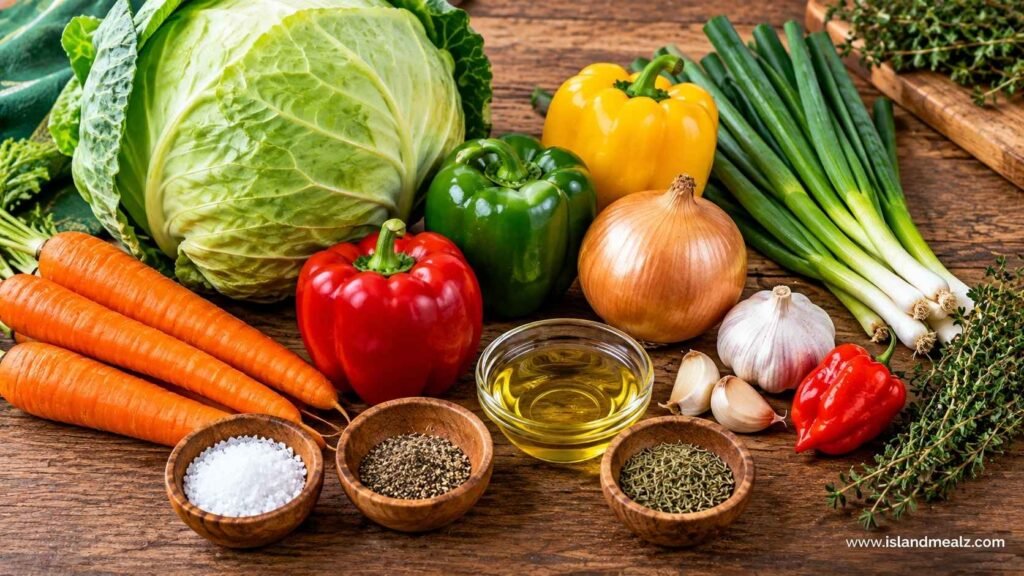
You do not need a long list of ingredients to make Jamaican steamed cabbage. Fresh vegetables and a few simple seasonings create most of the flavor.
Cabbage
Use one medium head of fresh green cabbage. Remove the tough outer leaves and core, then slice the cabbage into thin strips. Thin slices cook more evenly and give the dish a better texture.
Carrots
Carrots add color, mild sweetness, and a little crunch. Slice them thinly or cut them into matchstick-sized pieces so they cook at the same rate as the cabbage.
Onion
Yellow or white onion works well in this recipe. It adds a sweet and savory base as it cooks with the other vegetables.
Bell Pepper
Red, green, or yellow bell pepper can be used. Bell peppers add color and a mild fresh flavor to the dish.
Scallions
Scallions, also called green onions, add a fresh onion flavor. Slice both the white and green parts for the best use of the vegetable.
Garlic
Fresh garlic adds a deeper savory taste. Mince it finely so it blends well with the onions, peppers, and cabbage.
Fresh Thyme
Fresh thyme gives the cabbage a warm herbal flavor that works especially well with Jamaican-style cooking. If fresh thyme is not available, a small amount of dried thyme can be used.
Scotch Bonnet Pepper
Scotch bonnet is a classic Jamaican ingredient. It adds both heat and flavor. For less heat, leave the pepper whole while cooking and remove it before serving. For a hotter dish, chop a small amount and mix it into the cabbage.
Oil or Butter
Use vegetable oil, olive oil, coconut oil, or butter. The oil helps cook the aromatics and vegetables, while butter gives the cabbage a richer taste.
Water or Vegetable Broth
A small amount of water or vegetable broth creates steam inside the covered pan. Do not add too much liquid, as the cabbage should not become watery.
Salt and Black Pepper
Use salt and black pepper to bring all the flavors together. Start with a small amount and adjust after the cabbage has cooked.
How to Make Jamaican Steamed Cabbage
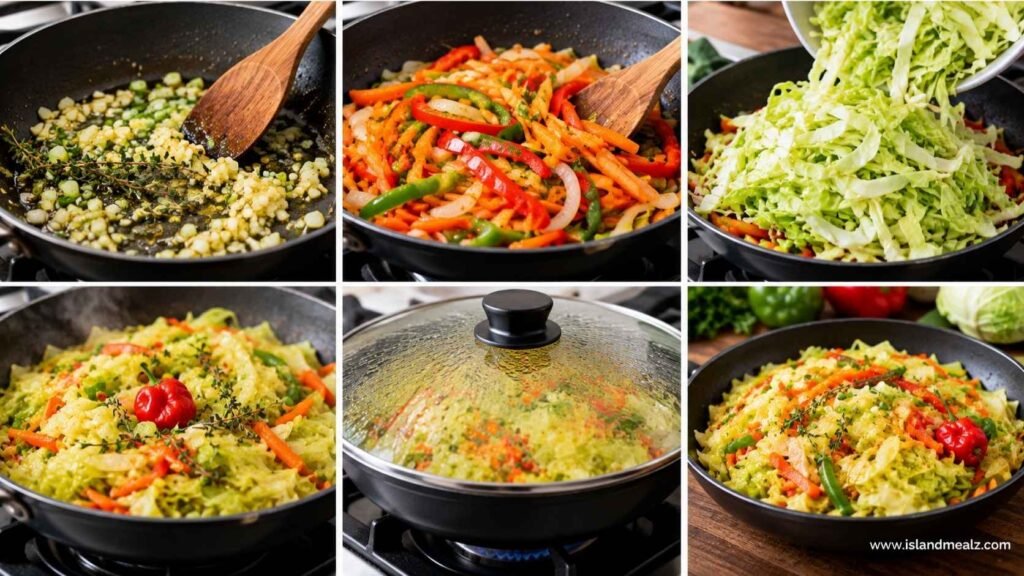
Making Jamaican steamed cabbage is simple. Prepare all the vegetables before you start cooking. This makes the process faster and helps the vegetables cook evenly.
Step 1: Prepare the Cabbage
Remove any damaged outer leaves from the cabbage. Cut it in half and remove the hard core from the center.
Slice the cabbage into thin strips. Rinse the sliced cabbage under cold water and drain it well.
Step 2: Prepare the Vegetables
Peel and thinly slice the carrots. Slice the onion and bell pepper into thin pieces.
Chop the scallions and mince the garlic. Remove the thyme leaves from the stems if desired.
For the Scotch bonnet, you can leave it whole for less heat or chop a small piece for more heat. Wash your hands well after handling the pepper.
Step 3: Sauté the Aromatics
Place a large skillet or Dutch oven over medium heat. Add the oil or butter and let it warm.
Add the onion, scallions, garlic, and thyme. Cook for about 2 to 3 minutes, stirring often. The vegetables should become fragrant without browning too much.
Step 4: Add the Carrots and Bell Pepper
Add the sliced carrots and bell pepper to the pan. Stir everything together.
Cook for another 2 to 3 minutes. This short cooking time helps the vegetables soften while keeping some of their texture.
Step 5: Add the Cabbage
The cabbage may seem like it will not fit in the pan at first. Do not worry. It will shrink as it heats, so add it in batches if your skillet is on the smaller side.
Step 6: Steam the Cabbage
Pour in a small amount of water or vegetable broth. Cover the pan with a lid and let the cabbage cook over medium-low heat.
Start checking the cabbage after about 10 minutes. It should look softened but still hold its shape when you pick up a forkful.
Check the cabbage near the end of the cooking time. It should be tender but still have a little bite. Avoid cooking it until it becomes very soft.
Step 7: Taste and Serve
Remove the lid and taste the cabbage. Add more salt or black pepper if needed.
If you used a whole Scotch bonnet, remove it before serving. Remove the thyme stems as well.
Serve the Jamaican steamed cabbage while it is warm. It makes a colorful side dish for jerk chicken, fried fish, rice and peas, or other Jamaican favorites.
How to Keep Jamaican Steamed Cabbage From Getting Mushy
Nobody wants cabbage that turns into a pile of soft, watery vegetables. The good news is that a few small cooking choices can help you avoid that.
Start with thin, even slices. Very thick pieces take longer to soften, while tiny pieces can become overcooked before the rest is ready.
Be careful with the water. Cabbage releases moisture as it cooks, so you only need a small amount of extra liquid. Adding too much can leave the finished dish watery.
Keep the pan covered while the cabbage cooks, but check it near the end. Once the cabbage is tender and still has a little bite, take it off the heat.
If your cabbage is already soft enough, do not keep cooking it just because the timer has not finished. The vegetables will continue to cook from the heat left in the pan.
Tips for the Best Jamaican Steamed Cabbage
Use fresh cabbage for the best flavor and texture. Choose a firm head with crisp leaves and no dark or soft spots.
Slice the cabbage into thin, even strips. This helps it cook at the same rate and makes each bite easier to enjoy.
Fresh thyme adds a nice Jamaican flavor to the dish. If you only have dried thyme, use a smaller amount because its flavor is more concentrated.
Adjust the Scotch bonnet pepper to your taste. You can leave it whole for gentle heat or chop a small amount for a stronger kick.
Taste the cabbage before serving. This is the best time to adjust the salt, black pepper, or other seasonings.
Do not wash the cabbage and leave it soaking. Rinse the sliced cabbage, then drain it well before adding it to the pan. Extra water can make the vegetables steam too heavily.
Easy Variations and Substitutions
One nice thing about Jamaican steamed cabbage is how easy it is to adjust. You can change the heat, cooking fat, or vegetables without making the dish complicated.
Mild Jamaican Steamed Cabbage
If you do not enjoy spicy food, leave out the Scotch bonnet pepper. You can also place a whole pepper in the pan while cooking and remove it before serving.
This gives the cabbage some of the pepper’s flavor without adding as much heat.
Spicy Jamaican Steamed Cabbage
For more heat, finely chop a small piece of Scotch bonnet and add it with the other vegetables. Start with a small amount because Scotch bonnet peppers are very hot.
You can always add more, but it is difficult to reduce the heat once it is mixed into the dish.
Vegan Jamaican Steamed Cabbage
Use coconut oil, olive oil, or vegetable oil instead of butter. The vegetables still develop plenty of flavor from the onion, garlic, thyme, and peppers.
This simple swap makes the dish suitable for a vegan meal.
Jamaican Steamed Cabbage With Butter
Butter gives the cabbage a richer and slightly creamy flavor. Add a small amount near the end of cooking and stir until it melts.
You can use this option when serving the cabbage with grilled chicken, fish, or other hearty dishes.
Add More Vegetables
You can add other vegetables if you want more variety. Tomatoes, extra bell peppers, corn, or chayote can work well.
Keep the vegetables sliced into similar sizes so they cook evenly with the cabbage.
Add Protein
If you want to turn the cabbage into more of a complete meal, cooked shrimp or saltfish can be stirred in near the end. Keep the amount modest so the cabbage and vegetables remain the main part of the dish.
What to Serve With Jamaican Steamed Cabbage
Jamaican steamed cabbage works well with many main dishes. Its fresh vegetables and light seasoning can balance richer or spicier foods.
| Main Dish | Why It Works |
| Jerk Chicken | The mild cabbage balances the spicy, smoky chicken. |
| Rice and Peas | Together, they make a classic Jamaican-style plate. |
| Brown Stew Chicken | The fresh cabbage works well with the rich stew sauce. |
| Curry Goat | The vegetables add a lighter element to a hearty curry. |
| Fried Fish | The soft cabbage pairs nicely with crispy fish. |
| Ackee and Saltfish | Both dishes work well as part of a Jamaican breakfast or meal. |
| Oxtail | The vegetables provide a fresh contrast to the rich oxtail gravy. |
| Fried Plantains | Sweet plantains add a pleasant contrast to the savory cabbage. |
Jamaican steamed cabbage is especially good when served next to a rich or strongly seasoned main dish. The vegetables bring a fresh contrast to foods such as jerk chicken, curry goat, brown stew chicken, and oxtail. For a simple plate at home, add rice and peas and a few slices of fried plantain.
Jamaican Steamed Cabbage Recipe
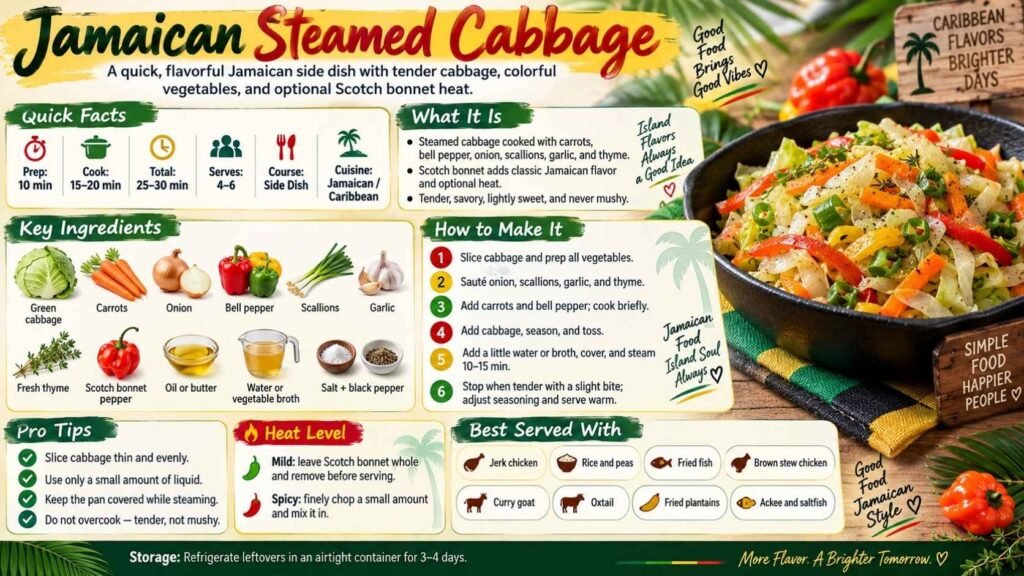
This Jamaican steamed cabbage recipe makes a vegetable side dish with tender cabbage, colorful vegetables, and Jamaican seasonings. It is simple enough for a weeknight meal and works well with chicken, fish, rice, or other favorite dishes.
Prep Time: 10 minutes
Cook Time: 15–20 minutes
Total Time: 25–30 minutes
Servings: 4–6
Course: Side Dish
Cuisine: Jamaican, Caribbean
Ingredients
- 1 medium head green cabbage, thinly sliced
- 2 medium carrots, thinly sliced
- 1 small onion, sliced
- 1 bell pepper, thinly sliced
- 2 scallions, chopped
- 2 garlic cloves, minced
- 2–3 sprigs fresh thyme
- 1 small Scotch bonnet pepper, whole or finely chopped
- 1 tablespoon cooking oil or butter
- ¼ cup water or vegetable broth
- ½ teaspoon black pepper
- Salt to taste
Instructions
- Remove the outer leaves and hard core from the cabbage. Slice it into thin strips, rinse, and drain well.
- Prepare the carrots, onion, bell pepper, scallions, garlic, thyme, and Scotch bonnet pepper.
- Heat the oil or butter in a large skillet over medium heat. Add the onion, scallions, garlic, and thyme. Cook for 2–3 minutes.
- Add the carrots and bell pepper. Stir and cook for another 2–3 minutes.
- Add the sliced cabbage, salt, and black pepper. Toss everything together until the vegetables are well combined.
- Pour in the water or vegetable broth. Cover the skillet and reduce the heat to medium-low.
- Cook for 10–15 minutes, stirring once or twice. Stop cooking when the cabbage is tender but still has a slight bite.
- Taste and adjust the seasoning. Remove the Scotch bonnet and thyme stems if needed.
- Serve the Jamaican steamed cabbage warm with your favorite Jamaican main dish.
Recipe Notes
For a milder dish, leave the Scotch bonnet whole and remove it before serving. For more heat, chop a small amount and mix it into the cabbage.
Avoid adding too much water. The cabbage naturally releases moisture as it cooks, so a small amount of liquid is enough to create steam.
How to Store and Reheat Jamaican Steamed Cabbage
Jamaican steamed cabbage is best when served fresh, but you can save leftovers for another meal. Let the cabbage cool before storing it.
How to Store It
Place the cooled cabbage in an airtight container and refrigerate it. Use the leftovers within 3 to 4 days for the best quality.
How to Reheat It
You can reheat the cabbage in a skillet over medium-low heat. Add a small splash of water if the vegetables seem dry, then cover the pan for a few minutes.
You can also use a microwave. Place the cabbage in a microwave-safe dish, cover it loosely, and heat it in short intervals until warm.
Avoid overheating the cabbage. Too much heat can make it softer than you want.
Can You Freeze Jamaican Steamed Cabbage?
You can freeze leftover steamed cabbage, but the texture may change after thawing. The vegetables can become softer because cabbage contains a lot of water.
For the best texture, enjoy the cabbage fresh or refrigerated within a few days.
Read Also: Cornish Hen Dish: Easy Ideas for a Special Meal
Frequently Asked Questions
What is Jamaican steamed cabbage made of?
Jamaican steamed cabbage is usually made with green cabbage, carrots, onion, bell pepper, scallions, garlic, and thyme. Scotch bonnet pepper is often added for heat and flavor.
How do you make Jamaican steamed cabbage?
Start by sautéing the onion, garlic, scallions, and thyme in oil or butter. Add the carrots and bell pepper, then mix in the sliced cabbage.
Add a small amount of water or broth, cover the pan, and cook until the cabbage becomes tender but still has some bite.
What gives Jamaican cabbage its flavor?
The flavor comes from a combination of fresh vegetables, garlic, thyme, scallions, and Jamaican Scotch bonnet pepper. The cooking fat also adds richness.
Can I make Jamaican steamed cabbage without Scotch bonnet?
Yes. You can leave out the Scotch bonnet if you do not like spicy food. You can also use a small amount of another chili pepper for a milder level of heat.
Is Jamaican steamed cabbage spicy?
It can be spicy, but the heat is easy to control. Use a whole Scotch bonnet for a milder flavor or chop a small amount into the cabbage for more heat.
How do you keep steamed cabbage from getting mushy?
Use only a small amount of water and avoid overcooking the cabbage. Slice it evenly and remove it from the heat when it becomes tender but still has a slight bite.
Can I make Jamaican steamed cabbage without butter?
Yes. Use olive oil, coconut oil, or vegetable oil instead. These options work well with the vegetables and seasonings.
What do you serve with Jamaican steamed cabbage?
Serve it with jerk chicken, rice and peas, fried fish, brown stew chicken, curry goat, oxtail, or fried plantains. It can also be served as a simple vegetable side with everyday meals.
Final Thoughts
Jamaican steamed cabbage is proof that a simple vegetable side does not have to be boring. A few fresh vegetables, Jamaican seasonings, and the right cooking time are enough to turn ordinary cabbage into a flavorful part of the meal.
Keep the cabbage slightly tender, go easy on the water, and adjust the Scotch bonnet to your taste. Serve it with jerk chicken, fried fish, rice and peas, or whatever you are cooking that day. Once you get the basic method down, it is an easy recipe to make your own.