
Soursop tea is a simple herbal drink made from soursop leaves and water. It has a mild, earthy taste and is enjoyed in many Caribbean homes. If you have fresh or dried soursop leaves, you can make this tea with a few simple steps.
Soursop tea is one of those simple Caribbean drinks that does not need a long list of ingredients. The tea is made from soursop leaves and water, giving it a light herbal flavor. Fresh ginger, lime, or a little honey can also be added if you want more flavor.
The first time you make it, keep the recipe mild. Soursop leaves can give the tea a stronger earthy taste when you use too many. I prefer starting with a small batch and adjusting the flavor the next time.
What Is Soursop Tea?
Soursop tea is a herbal drink made from the leaves of the soursop tree. Soursop is also known as graviola or guanabana. The tree grows in warm tropical regions, including parts of the Caribbean, Central America, and South America.
Unlike fruit tea, soursop leaf tea uses the leaves instead of the sweet soursop fruit. The leaves are gently simmered or steeped in water to make a light herbal drink. The tea has a mild, earthy flavor that many people enjoy on its own. Soursop tea is different from a drink made with the fruit itself. The leaves are what you brew for this type of tea. Once prepared, the drink has a gentle herbal taste rather than the creamy, sweet flavor you get from ripe soursop fruit.
Soursop is familiar in many Caribbean kitchens and gardens, including Jamaica. The leaf tea is usually kept pretty simple. Water and soursop leaves do most of the work, while ginger, lime, or honey can be added for extra flavor.
If you like a little extra flavor, you can add fresh ginger, lime, lemon, or a small amount of honey. These simple ingredients can give the tea a brighter and more refreshing taste without making the recipe complicated.
Jamaican Soursop Tea Recipe
You only need a few ingredients to make a good cup of soursop tea. The leaves are the star of the recipe, so there is no need to load the pot with extra spices.
I usually recommend starting with ginger only if you enjoy a little warmth in your tea. Honey and lime are best added after brewing, so you can control the flavor one cup at a time.
For a simple Jamaican-style version, you can also add ginger, lime, or honey. These extras are optional, so you can adjust the flavor to your liking.
Ingredients
- 4–6 fresh or dried soursop leaves
- 3 cups of water
- 1–2 slices of fresh ginger, optional
- 1–2 teaspoons of honey, optional
- 1 teaspoon of fresh lime juice, optional
A quick tip: If your leaves are large, you do not need to keep adding more just because the pot looks empty. Start with the amount listed above and see how the tea tastes after brewing. You can always make the next batch a little stronger.
Choose clean, healthy-looking leaves and rinse fresh leaves well before using them. If you use dried leaves, check them for any dust or unwanted pieces.
How to Make Soursop Tea
- Add 3 cups of water to a small saucepan.
- Rinse the soursop leaves well and add them to the water.
- Add 1–2 slices of fresh ginger if you want extra flavor.
- Bring the water to a gentle boil, then lower the heat and simmer for about 10 minutes.
- Turn off the heat, cover the pot, and let the tea steep for another 5–10 minutes.
- Strain the tea into a cup.
- Add honey or fresh lime juice if you like.
- Serve warm, or let it cool and serve over ice.
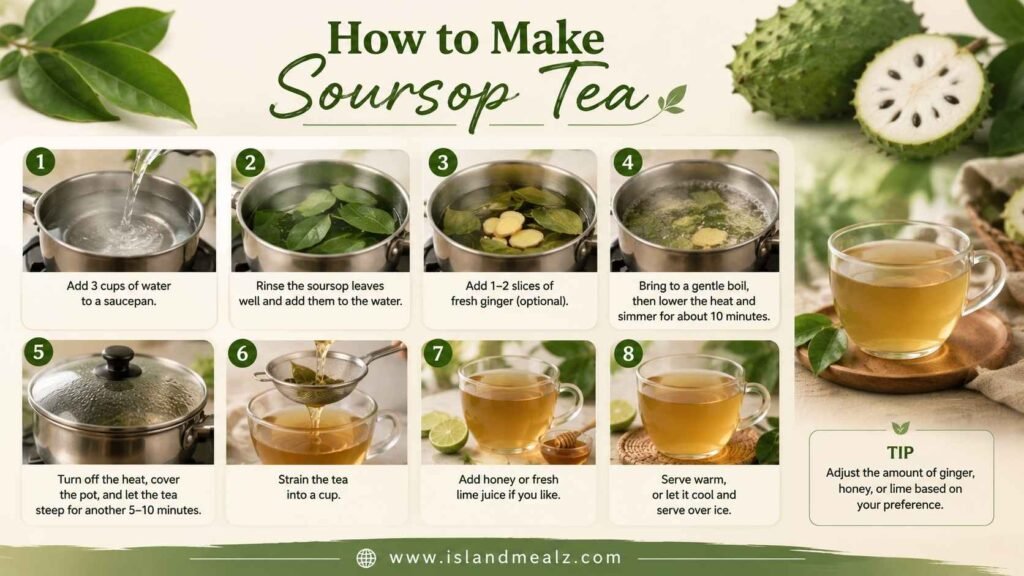
The finished tea should have a light herbal aroma and a mild earthy taste. You can adjust the amount of ginger, honey, or lime based on your preference.
Fresh vs. Dried Soursop Leaves
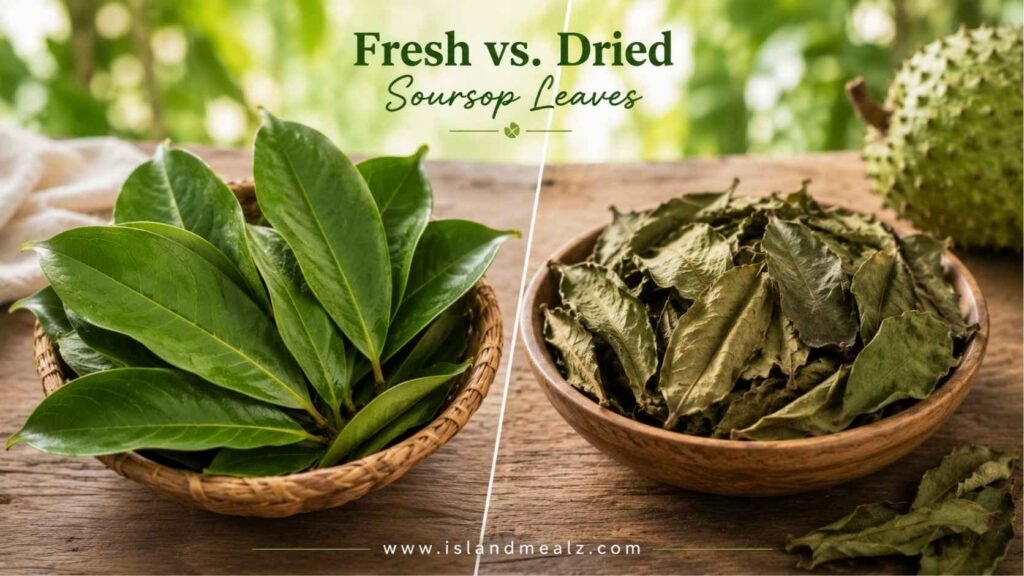
Fresh and dried soursop leaves can both be used for tea. The bigger difference is convenience. Fresh leaves need to be used sooner, while dried leaves are easier to keep in the pantry and use whenever you want a cup.
Can You Use Fresh Soursop Leaves?
Fresh leaves are a good choice when you have access to a soursop tree. Pick clean, healthy-looking leaves and rinse them well under running water before making the tea.
Fresh leaves usually give the tea a lighter and more natural herbal flavor. They are best used soon after harvesting because they do not stay fresh for very long.
If you are picking fresh leaves yourself, choose leaves that look clean and healthy. Give them a good rinse before putting them in the pot. Avoid leaves that look damaged, moldy, or unusually discolored.
Can You Use Dried Soursop Leaves?
Dried leaves are convenient because you can store them for longer. They are also useful when fresh soursop leaves are not available in your area.
Before using dried leaves, check that they are clean and free from moisture, mold, or unwanted debris. Store unused leaves in a dry, airtight container.
Which Is Better for Soursop Tea?
There is no need to choose one over the other. Fresh leaves are convenient when you have a reliable source, while dried leaves are easier to keep at home.
For either option, start with a small amount and adjust the strength based on the flavor you prefer.
How to Make Soursop Tea Taste Better
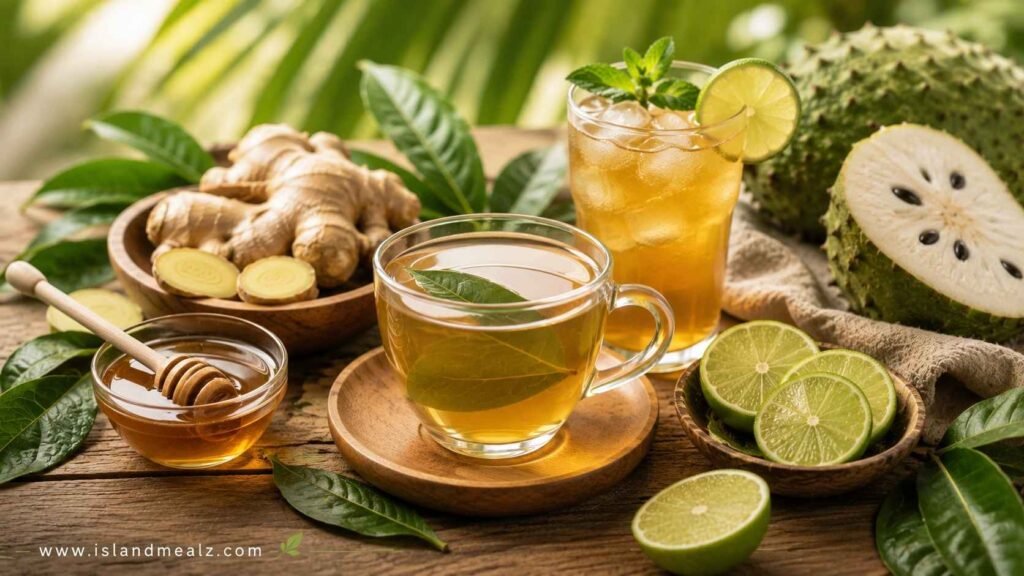
Soursop leaf tea has a mild, earthy flavor. Some people enjoy it plain, while others prefer a little extra flavor. A few simple ingredients can make the tea more refreshing.
Add Fresh Ginger
Ginger is my favorite addition when I want the tea to have a little more character. One or two thin slices are enough for a small pot. Let them simmer with the leaves, then remove them before serving.
Add Honey
If the earthy taste of the leaves is not your favorite, try a little honey. Add it after straining and start with a small amount. It is much easier to add more sweetness than to fix an overly sweet cup.
Add Lime or Lemon
A little fresh lime or lemon juice gives the tea a bright, citrusy taste. Add it after the tea has cooled slightly so the fresh flavor stands out.
Try It Iced
Soursop tea also makes a refreshing cold drink. Let the prepared tea cool, refrigerate it, and pour it over ice. Add a small squeeze of lime for a simple Caribbean-style twist.
How to Serve Soursop Tea
There is no wrong way to serve soursop tea. A warm cup works well when you have just finished brewing it, while chilled tea makes a nice option for a hot afternoon.
If you are serving it warm, taste it before adding anything. You may find that the natural flavor is already mild enough for you.
You can enjoy the tea plain or add a little honey for sweetness. A small squeeze of lime can also give it a fresh, citrusy flavor.
How to Serve Soursop Tea Hot
Serve the tea warm in a mug, especially on a cool morning or evening. Add ginger while brewing if you enjoy a warm and spicy flavor.
How to Make Iced Soursop Tea
For a refreshing cold drink, let the tea cool to room temperature and refrigerate it. Pour it over ice and add a little lime juice before serving.
You can also prepare a larger batch and keep it chilled for a quick homemade drink. Always use a clean, covered container when storing brewed tea.
Is Soursop Tea Caffeine-Free?
Plain soursop leaf tea does not naturally contain caffeine. That is because it is made from soursop leaves rather than black tea, green tea, or other traditional tea leaves.
This makes it a simple option for people who want a warm herbal drink without adding caffeine. The flavor is mild and earthy, so you can enjoy it plain or add ginger, lime, or a little honey.
Keep in mind that packaged soursop tea blends may contain other ingredients. If you are buying a tea blend, check the label to see whether it includes caffeine-containing herbs or traditional tea leaves.
Soursop Tea Benefits: What We Know
Soursop leaves contain several natural plant compounds, including flavonoids and phenolic compounds. Researchers have looked at some of these compounds because of their antioxidant activity.
That sounds promising, but it is important to keep the claim in perspective. A study on an extract or isolated compound is not the same as a study on a normal cup of homemade soursop tea.
Soursop leaf tea has a place in traditional Caribbean herbal practices. People have prepared it as a homemade drink for generations. Still, traditional use and modern medical evidence are two different things, so it is better not to make health promises about the tea.
Antioxidant Compounds in Soursop Leaves
Soursop leaves contain plant compounds such as flavonoids and phenolic compounds. These substances are being studied for their antioxidant activity.
However, research on soursop extracts or concentrated compounds is different from research on a regular cup of homemade soursop tea.
What Does Research Say About Soursop Tea?
Research on soursop is still developing. Some studies have explored compounds found in the plant, but strong human evidence about the effects of drinking soursop leaf tea is limited.
For this reason, it is better to enjoy soursop tea as a traditional herbal beverage rather than rely on it as a treatment for a medical problem.
Soursop Tea Safety and Side Effects
Soursop tea may be a traditional drink, but it should still be treated with some care. There is not enough research to say that drinking large amounts or using it every day for a long time is safe for everyone.
For most people, the best approach is to enjoy it as a beverage rather than use it as a treatment for a health condition. Avoid making the tea unusually strong or drinking large amounts.
If you take prescription medicine or have an ongoing health condition, it is worth checking with your doctor before making soursop tea part of your regular routine.
Is Soursop Tea Safe to Drink Every Day?
There is no well-established daily amount of homemade soursop leaf tea that has been proven safe for everyone. If you plan to drink it regularly, it is a good idea to speak with a healthcare professional.
Who Should Be Careful With Soursop Tea?
Pregnant or breastfeeding people, children, and anyone taking prescription medicines should talk with a healthcare professional before drinking soursop leaf tea regularly.
Extra caution may also be important for people with blood pressure, blood sugar, or neurological concerns. Soursop may interact with certain medicines or affect the body in ways that are not fully understood.
Can Soursop Tea Cure Cancer?
No. There is not enough reliable human evidence to say that soursop tea can cure or treat cancer. Laboratory research on soursop compounds should not be confused with proven benefits from drinking the tea.
If you have a medical condition, use proper medical care and do not replace prescribed treatment with soursop tea.
Common Mistakes When Making Soursop Tea
Making soursop tea is simple, but a few small mistakes can affect its taste and quality. Using clean leaves and the right amount of water helps you make a better cup every time.
Using Too Many Leaves
Adding too many leaves can make the tea taste very strong and bitter. Start with a moderate amount and adjust the flavor the next time you prepare it.
Boiling the Leaves Too Hard
A gentle simmer works well for homemade soursop tea. Very aggressive boiling can produce a stronger, less pleasant flavor.
Skipping the Rinsing Step
Always rinse fresh soursop leaves before using them. This removes dirt and other unwanted particles from the surface.
Making the Tea Too Strong
A darker or stronger tea is not necessarily better. If the flavor tastes harsh, use fewer leaves or more water in your next batch.
Expecting a Sweet Fruit Flavor
Soursop leaf tea does not taste like ripe soursop fruit. The leaves produce a mild herbal flavor, so adding a little honey or lime can make the drink more enjoyable.
Using Old or Poor-Quality Leaves
The quality of the leaves matters. Do not use leaves that smell musty, show signs of mold, or have been stored in a damp place. Fresh ingredients will give you a better starting point for any homemade tea.
How to Store Soursop Tea
If you make more soursop tea than you can drink at once, store the extra tea properly. Let the tea cool first, then pour it into a clean container with a tight-fitting lid.
Keep the container in the refrigerator. Chilled soursop tea is also great over ice when you want a refreshing drink later.
For the best taste and quality, make a fresh batch regularly instead of keeping brewed tea for too long. If the tea develops an unusual smell, taste, or appearance, discard it rather than drinking it.
Once the tea has cooled, pour it into a clean container with a lid and place it in the refrigerator. Keeping it covered helps protect the tea from picking up other food smells in the fridge.
When you are ready for another serving, give it a quick check. If the smell, appearance, or taste seems unusual, it is better to throw it out and make a fresh batch.
Frequently Asked Questions About Soursop Tea
How do you make soursop tea?
Add clean soursop leaves to water and gently simmer them for about 10 minutes. Let the tea steep, then strain it before serving. You can add honey, ginger, or lime for extra flavor.
How many soursop leaves do you need for tea?
For this recipe, 4–6 leaves with 3 cups of water is a simple starting point. You can adjust the amount based on the flavor you prefer.
How long should you boil soursop leaves for tea?
A gentle simmer of around 10 minutes works well for this recipe. After simmering, cover the tea and let it steep for another 5–10 minutes.
Can you make soursop tea with fresh leaves?
Absolutely. Fresh leaves work well for this recipe. Just rinse them thoroughly before brewing and use leaves that look clean and healthy.
Can you make soursop tea with dried leaves?
Yes. Dried leaves are especially handy when fresh soursop leaves are hard to find. Keep them in a dry, airtight container and check them before brewing.
Is soursop tea caffeine-free?
Plain soursop leaf tea is naturally caffeine-free. However, packaged blends may contain other tea leaves or ingredients, so check the label before buying.
What does soursop tea taste like?
Soursop leaf tea has a mild, earthy, and herbal taste. It does not taste as sweet as the fresh soursop fruit.
Can you drink soursop tea cold?
Yes. Let the prepared tea cool, refrigerate it, and serve it over ice. A little lime juice can make it more refreshing.
Can you drink soursop tea every day?
There is no well-established daily amount for long-term use. If you plan to drink it regularly, especially while taking medication, talk with a healthcare professional first.
Is soursop tea safe during pregnancy?
Pregnant people should avoid using soursop leaf tea regularly without speaking with a healthcare professional. Herbal drinks can have effects that are not well studied during pregnancy.
Is soursop tea good for you?
Soursop leaves contain various plant compounds that researchers have studied. However, evidence from laboratory or animal studies does not prove that homemade soursop tea treats or prevents health conditions.
Is soursop tea the same as graviola tea?
Yes. Graviola tea is another common name for tea made from the soursop plant. Soursop is also known as Annona muricata and guanabana.
Final Thoughts on This Soursop Tea Recipe
Soursop tea is easy to prepare once you have good-quality leaves on hand. The basic recipe needs only water and soursop leaves, while ginger, lime, and honey let you adjust the flavor to your liking.
Whether you enjoy it warm or chilled, keep the recipe mild and treat it as a traditional herbal drink rather than a medical treatment. If you plan to drink it regularly or take medication, check with a healthcare professional first.