
Many people assume Jamaican food vs Caribbean food are exactly the same because Jamaican dishes are served in Caribbean restaurants around the world. I had the same question when I first started learning about Caribbean cuisine. After exploring recipes and food traditions from different islands, I realized that Jamaican cuisine has its own unique identity while still being an important part of Caribbean food.
If you’ve ever searched for Caribbean recipes, you’ve probably noticed that many people use the terms Jamaican food and Caribbean food as if they mean the same thing. While Jamaica is one of the Caribbean’s most famous culinary destinations, its cuisine is only one part of the region’s rich food culture. Every Caribbean island has developed its own recipes, flavors, and cooking traditions over time.
Whether you’re planning a trip to the Caribbean, trying authentic island recipes, or simply curious about the differences, this guide will help you understand what makes Jamaican cuisine unique and how it fits into the broader Caribbean food culture.
If you order “Caribbean food” at restaurants in New York, London, or Toronto, you’ll often receive Jamaican dishes such as jerk chicken or curry goat. That’s one reason many people believe the two cuisines are exactly the same.
Understanding Caribbean Cuisine
Caribbean cuisine is a collection of traditional foods from the islands and coastal countries surrounding the Caribbean Sea. It is not the cuisine of a single country. Instead, it includes the unique cooking styles, local ingredients, and cultural traditions of many places, including Jamaica, Trinidad and Tobago, Barbados, Cuba, Puerto Rico, Haiti, and the Dominican Republic. Each destination has developed its own recipes while sharing a love for fresh, flavorful ingredients.
One of the reasons Caribbean food is so popular is its variety. The region offers everything from grilled seafood and spicy meat dishes to comforting stews, rice meals, and tropical desserts. While many recipes use similar ingredients, every island prepares them in its own way, creating a rich and diverse food culture.
One thing that makes Caribbean cuisine so interesting is that no two islands cook in exactly the same way. Even when they use similar ingredients such as rice, beans, or plantains, the flavors and cooking methods can be completely different.
One thing that surprised me while researching Caribbean cuisine was how differently each island uses the same basic ingredients. Even simple dishes like rice and beans can taste completely different depending on where they are prepared.
What Is Caribbean Food?
Caribbean food refers to the traditional cuisine of the Caribbean region. It is known for combining fresh seafood, tropical fruits, root vegetables, rice, beans, herbs, and aromatic spices. These ingredients are used to create meals that are colorful, flavorful, and satisfying.
Many Caribbean dishes have been passed down through generations. They reflect the region’s history, local agriculture, and cultural traditions.What makes Caribbean cuisine special is that no two islands cook exactly the same way. A meal in Barbados can taste completely different from one served in Jamaica or Puerto Rico, even if both use ingredients like rice, seafood, and plantains.
Why Caribbean Cuisine Is So Diverse
Caribbean cuisine has evolved over centuries through the influence of different cultures. Each group introduced new ingredients, spices, and cooking techniques that became part of everyday island cooking.
- African Influence: Brought slow-cooking methods, hearty stews, and ingredients such as okra and plantains.
- European Influence: Spanish, British, French, and Dutch settlers introduced livestock, bread, and new cooking styles.
- Indian Influence: Added curry spices, flatbreads, and flavorful spice blends that remain popular today.
- Indigenous Taíno Influence: Contributed native ingredients such as cassava, peppers, maize, and tropical fruits.
These cultural influences make Caribbean cuisine one of the most diverse food traditions in the world. Although the islands share many ingredients, each country has created its own unique dishes and flavors. This diversity is also the main reason why Jamaican food has its own distinct identity while remaining an important part of the broader Caribbean cuisine.
What Makes Jamaican Food Unique?
Jamaican food is one of the most recognizable cuisines in the Caribbean. It is known for its bold flavors, fresh ingredients, and traditional cooking methods that have been passed down for generations. While it shares some similarities with other Caribbean cuisines, Jamaican food has developed a unique identity that makes it popular around the world.
The secret behind Jamaican cuisine is its balance of spicy, smoky, savory, and slightly sweet flavors. Ingredients such as Scotch bonnet peppers, allspice, thyme, and ginger are used to create dishes that are rich in taste and aroma. Combined with slow cooking and grilling techniques, these ingredients give Jamaican food its signature character.
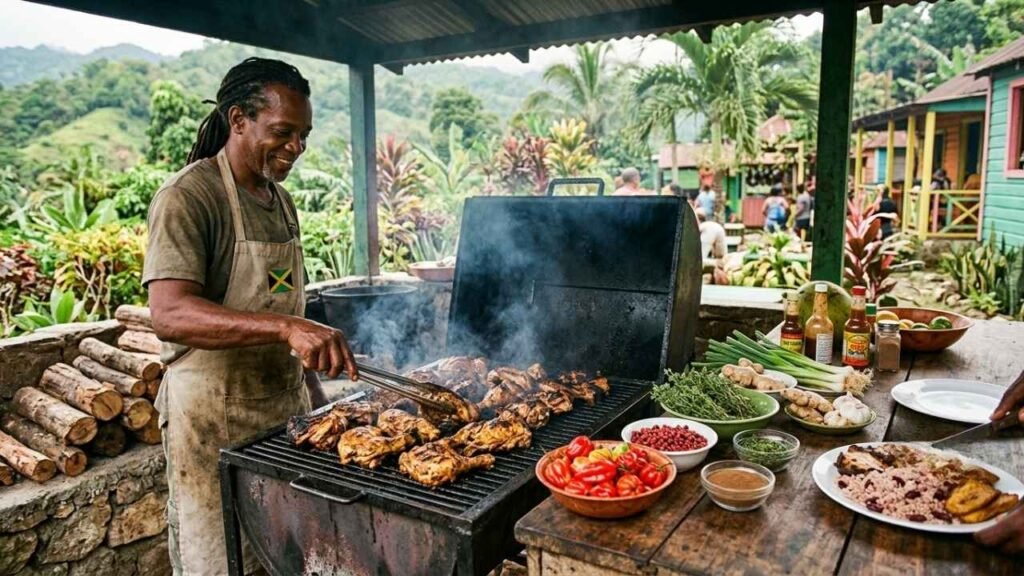
If you’ve ever tasted authentic jerk chicken, you’ll quickly notice that its smoky flavor is very different from the grilled chicken served in most other Caribbean countries.
History of Jamaican Cuisine
Jamaican cuisine reflects the island’s rich cultural history. The Indigenous Taíno people were the first to use local ingredients like cassava, peppers, and tropical fruits. Later, African, British, Spanish, Indian, and Chinese communities introduced new foods, spices, and cooking techniques that shaped the cuisine over time.
This blend of cultures created a diverse food tradition where local ingredients and international influences work together. Today, many Jamaican recipes still preserve these traditions while remaining popular with modern food lovers.
Signature Flavors
Jamaican cuisine is famous for its bold and well-balanced flavors. Unlike many other Caribbean cuisines, it often combines smoky heat with fragrant herbs and spices.
Some of the signature ingredients include:
- Scotch bonnet peppers for intense heat and fruity flavor.
- Allspice (pimento) for a warm, aromatic taste.
- Fresh thyme to enhance meats, seafood, and stews.
- Garlic, ginger, and scallions for rich and savory marinades.
These ingredients are used in many traditional recipes, especially the famous jerk seasoning, which has become a symbol of Jamaican cuisine.
Why Jamaican Food Is Famous
Jamaican food has gained international recognition because of its unique flavors and iconic dishes. Meals such as jerk chicken, ackee and saltfish, curry goat, and rice and peas are enjoyed in restaurants and homes across the world.
Its popularity has also grown through tourism and the global Jamaican community, introducing authentic island flavors to millions of people. Today, Jamaican cuisine is considered one of the most celebrated food traditions in the Caribbean, offering a perfect blend of history, culture, and unforgettable taste.
Jamaican Food vs Caribbean Food: Key Differences
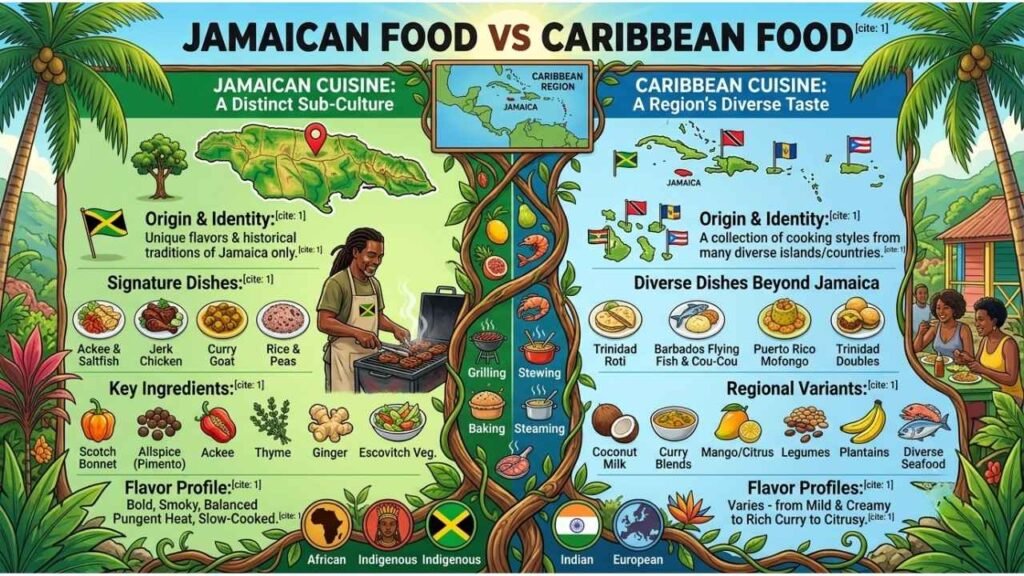
Although Jamaican food is part of Caribbean cuisine, the two terms do not mean the same thing. Caribbean cuisine is a broad category that includes the traditional foods of many islands and countries in the region. Jamaican cuisine represents the unique food culture of Jamaica alone.
Both cuisines share fresh ingredients, tropical produce, and rich cultural influences. However, they differ in flavor, cooking techniques, signature dishes, and local traditions. Understanding these differences makes it easier to appreciate the diversity of Caribbean food.
Comparison of Jamaican Food and Caribbean Food
| Feature | Jamaican Food | Caribbean Food |
| Definition | Traditional cuisine of Jamaica | Cuisine of all Caribbean countries and territories |
| Region | Jamaica | Entire Caribbean region |
| Flavor Profile | Bold, smoky, spicy | Mild to spicy, depending on the island |
| Signature Ingredients | Scotch bonnet, allspice, ackee | Coconut milk, herbs, seafood, tropical produce |
| Cooking Methods | Jerk grilling, stewing, roasting | Grilling, baking, frying, steaming, stewing |
| Famous Dishes | Jerk Chicken, Ackee and Saltfish, Curry Goat | Roti, Doubles, Mofongo, Flying Fish and Cou Cou |
| Cultural Influences | African, British, Spanish, Indian, Chinese, Taíno | African, European, Indian, Indigenous, and local island traditions |
Regional Identity
The biggest difference is the area each term covers. Jamaican food comes only from Jamaica, while Caribbean food includes the cuisines of many islands such as Trinidad and Tobago, Barbados, Cuba, Puerto Rico, Haiti, and the Dominican Republic.
This means every Jamaican dish is Caribbean food, but not every Caribbean dish is Jamaican. Each island has developed its own recipes using local ingredients and traditional cooking methods.
Flavors and Ingredients
Jamaican cuisine is famous for its bold and smoky flavors. It relies heavily on Scotch bonnet peppers, allspice, thyme, ginger, and fresh herbs to create rich marinades and spicy seasonings. The traditional jerk seasoning is one of the best examples of Jamaica’s distinctive flavor profile.
Caribbean cuisine offers greater variety because every island has its own culinary style. Some countries prefer spicy dishes, while others focus on mild herbs, coconut milk, citrus, or curry spices. As a result, no two Caribbean islands offer exactly the same dining experience.
Cooking Styles
Jamaican cooking is best known for the jerk cooking method, where meat is marinated with herbs and spices before being grilled over charcoal or pimento wood. Slow-cooked stews and curries are also common in Jamaican homes.
Across the Caribbean, cooking methods vary from island to island. Grilling, frying, baking, steaming, and slow stewing are all widely used. These techniques reflect the local culture and the ingredients available in each country.
Popular Dishes
Jamaican cuisine is recognized worldwide for dishes such as jerk chicken, ackee and saltfish, curry goat, escovitch fish, and rice and peas.
Caribbean cuisine includes many other famous meals, including roti and doubles from Trinidad and Tobago, flying fish and cou cou from Barbados, mofongo from Puerto Rico, and ropa vieja from Cuba. These dishes highlight the rich diversity found throughout the Caribbean.
Key Takeaway
The main difference between Jamaican food vs Caribbean food is that Jamaican cuisine represents one country’s culinary tradition, while Caribbean cuisine includes the food cultures of many islands. Jamaican food is celebrated for its bold spices and jerk cooking, whereas Caribbean cuisine offers a broader variety of flavors, ingredients, and cooking styles shaped by different cultures across the region.
Popular Jamaican Dishes
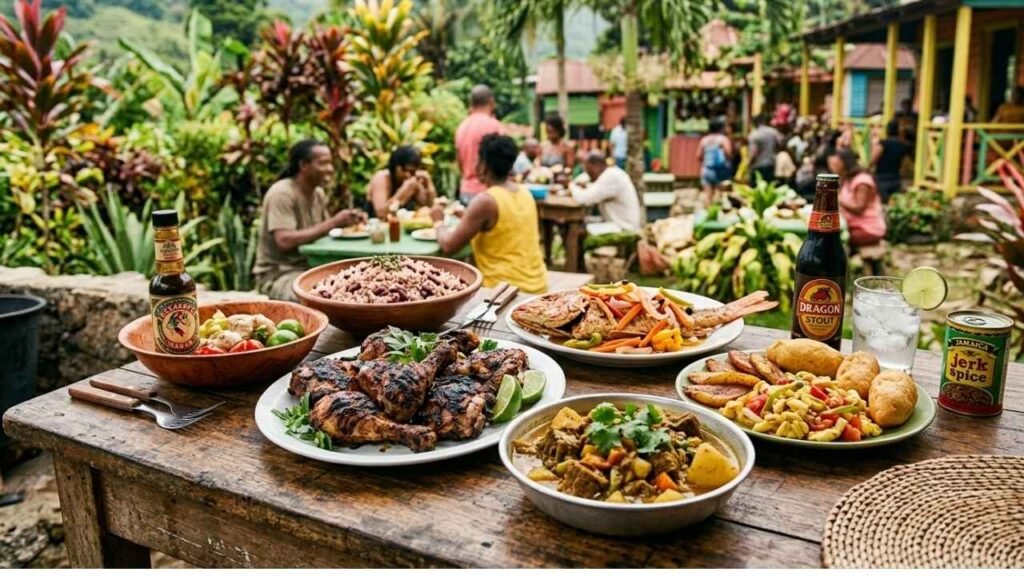
Jamaican cuisine is loved around the world for its rich flavors and comforting meals. Traditional recipes combine fresh local ingredients with aromatic herbs and spices to create dishes that are both satisfying and memorable. Many of these meals have been prepared for generations and continue to play an important role in Jamaican culture.
If you are exploring Jamaican food vs Caribbean food, these signature dishes show why Jamaican cuisine has become one of the most recognized food traditions in the Caribbean.
Many visitors say that trying local food at roadside jerk stands gives them a much better experience than eating at tourist restaurants.
Ackee and Saltfish
Ackee and saltfish is the national dish of Jamaica. It is made with cooked ackee fruit, salted cod, onions, tomatoes, bell peppers, and fresh herbs. The creamy texture of ackee pairs perfectly with the savory flavor of saltfish.
Although ackee is Jamaica’s national fruit, it must be fully ripe before cooking because unripe ackee can be unsafe to eat.
This dish is commonly served for breakfast with boiled green bananas, fried dumplings, roasted breadfruit, or bammy.
Jerk Chicken
Jerk chicken is Jamaica’s most famous dish and a symbol of the country’s culinary heritage. Chicken is marinated in a blend of Scotch bonnet peppers, allspice, thyme, garlic, ginger, and scallions, then grilled over charcoal to create its signature smoky flavor.
It is often served with rice and peas, festival, or grilled vegetables, making it a favorite among both locals and visitors.
Curry Goat
Curry goat is a traditional Jamaican dish that is especially popular during family gatherings and celebrations. The goat meat is slowly cooked with Jamaican curry powder, onions, garlic, thyme, and potatoes until it becomes tender and flavorful.
Curry goat is especially popular during family gatherings, holidays, and community celebrations. Its rich taste and aromatic spices make it one of the island’s most loved comfort foods.
Rice and Peas
Rice and peas is a classic Jamaican side dish that accompanies many main courses. Despite its name, it is usually prepared with kidney beans, coconut milk, thyme, garlic, and scallions.
Despite its name, Jamaicans usually prepare this dish with kidney beans rather than green peas. The creamy coconut flavor makes it the perfect partner for jerk chicken, curry goat, and seafood dishes.
Escovitch Fish
Escovitch fish is a traditional Jamaican seafood dish made by frying whole fish until crispy and topping it with a tangy mixture of onions, carrots, bell peppers, vinegar, and Scotch bonnet peppers.
The combination of crispy fish and pickled vegetables creates a fresh, flavorful meal that is enjoyed across the island.
Popular Jamaican Dishes at a Glance
| Dish | Main Ingredients | Best Served |
| Ackee and Saltfish | Ackee, salted cod, onions, peppers | Breakfast or Lunch |
| Jerk Chicken | Chicken, jerk seasoning, allspice, Scotch bonnet | Lunch or Dinner |
| Curry Goat | Goat meat, Jamaican curry, herbs | Lunch or Dinner |
| Rice and Peas | Rice, kidney beans, coconut milk | Side Dish |
| Escovitch Fish | Fried fish, vegetables, vinegar | Lunch or Dinner |
Together, these dishes reflect Jamaica’s rich food culture and explain why its cuisine has earned worldwide recognition.While Jamaican recipes are famous worldwide, they represent only one part of the Caribbean’s culinary heritage.
Popular Caribbean Dishes Beyond Jamaica
Jamaican cuisine is one of the most famous food traditions in the Caribbean, but it is only one part of the region’s diverse culinary heritage. Every Caribbean island has its own signature dishes, shaped by local ingredients, cultural influences, and family traditions. Exploring these recipes helps you understand why Caribbean cuisine is much broader than Jamaican food alone.
Exploring dishes from different islands is one of the best ways to understand how diverse Caribbean cuisine really is.Here are some of the most popular Caribbean dishes from other islands.
Roti
Roti is a well-known dish from Trinidad and Tobago. It consists of soft, flaky flatbread filled with curried chicken, goat, beef, shrimp, or vegetables. Influenced by Indian cuisine, roti has become a popular street food and a favorite family meal throughout the Caribbean.
Doubles
Doubles is another famous street food from Trinidad and Tobago. It is made with two pieces of fried flatbread called bara, filled with curried chickpeas and topped with chutneys or pepper sauce. It is commonly eaten for breakfast or as a quick snack because it is both flavorful and filling.
Flying Fish and Cou Cou
Flying fish and cou cou is the national dish of Barbados. The flying fish is lightly seasoned and steamed or fried, while cou cou is prepared from cornmeal and okra. This simple yet delicious meal reflects Barbados’ strong connection to the sea and its fresh local ingredients.
Mofongo
Mofongo is one of the most famous dishes in Puerto Rico. It is made by mashing fried green plantains with garlic, olive oil, and crispy pork cracklings. It is often served with shrimp, chicken, beef, or seafood in a rich sauce, making it a hearty and satisfying meal.
Pelau
Pelau is a traditional one-pot dish from Trinidad and Tobago. It combines rice, chicken or beef, pigeon peas, coconut milk, and vegetables. Slow cooking allows the flavors to blend together, creating a comforting meal that is often served at family gatherings and celebrations.
Popular Caribbean Dishes Comparison
| Country | Signature Dish | Main Ingredients |
| Trinidad and Tobago | Roti | Flatbread, curried meat or vegetables |
| Trinidad and Tobago | Doubles | Bara, curried chickpeas, chutneys |
| Barbados | Flying Fish and Cou Cou | Flying fish, cornmeal, okra |
| Puerto Rico | Mofongo | Green plantains, garlic, pork |
| Trinidad and Tobago | Pelau | Rice, meat, pigeon peas, coconut milk |
Key Takeaway
These traditional dishes show that Caribbean cuisine is incredibly diverse. While many islands use common ingredients such as rice, plantains, seafood, and tropical spices, each country prepares them in its own unique way.
This is one of the biggest differences between Jamaican food and Caribbean food. Jamaican cuisine has its own famous dishes and cooking traditions, while Caribbean cuisine represents the rich and varied food cultures of the entire region.
Although every island has its own specialties, many traditional recipes begin with the same fresh ingredients.
Common Ingredients in Jamaican and Caribbean Food
Although Jamaican food and Caribbean food have their own unique identities, they share many of the same fresh ingredients. The tropical climate of the Caribbean makes it easy to grow fruits, vegetables, herbs, and spices that are used in everyday cooking. These ingredients form the foundation of many traditional recipes across the region.
The main difference is how each island combines these ingredients. Jamaica is known for its bold jerk seasoning and smoky flavors, while other Caribbean countries create their own unique recipes using similar foods.
Herbs and Spices
Fresh herbs and aromatic spices are essential in both Jamaican and Caribbean cooking. They add depth, fragrance, and flavor to meats, seafood, rice dishes, and stews.
Some of the most commonly used herbs and spices include:
- Thyme
- Garlic
- Ginger
- Scallions (green onions)
- Allspice (pimento)
- Scotch bonnet peppers
- Black pepper
- Cinnamon
- Nutmeg
These ingredients are often blended into marinades, sauces, and seasoning mixes that give Caribbean dishes their distinctive taste.
Staple Foods
Many Caribbean meals are built around simple, nutritious ingredients that have been part of island diets for generations.
Caribbean kitchens rely on staple ingredients such as rice, beans, plantains, cassava, breadfruit, sweet potatoes, and coconut milk. These foods appear in everyday meals across many islands, although each country prepares them differently.
These ingredients are easy to combine with local herbs and spices, making them suitable for everything from hearty stews to grilled dishes.
Common Ingredients Comparison
| Ingredient | Jamaican Food | Caribbean Food | Common Uses |
| Rice | Yes | Yes | Side dishes and one-pot meals |
| Beans | Yes | Yes | Rice dishes, soups, and stews |
| Plantains | Yes | Yes | Fried, baked, or boiled |
| Coconut Milk | Yes | Yes | Rice, curries, and desserts |
| Scotch Bonnet Pepper | Yes | Yes | Marinades, sauces, and spicy dishes |
| Allspice | Very Common | Common | Jerk seasoning and marinades |
| Thyme | Yes | Yes | Soups, stews, and meat dishes |
| Seafood | Yes | Yes | Grilled, fried, or steamed recipes |
Key Takeaway
The shared use of fresh herbs, tropical produce, and flavorful spices is one reason why Jamaican and Caribbean cuisines are often grouped together. However, each island uses these ingredients in its own way, creating distinct flavors and cooking traditions.
Jamaican cuisine stands out because of its generous use of allspice, Scotch bonnet peppers, and jerk seasoning, while Caribbean cuisine as a whole reflects the rich diversity of many islands and cultures.
Ingredients are important, but cooking techniques are what truly create each island’s signature flavors.
Common Misconceptions About Jamaican and Caribbean Food
If you ask people to name a Caribbean dish, many will immediately mention jerk chicken or ackee and saltfish. Because of this, it’s easy to assume that Jamaican food represents all Caribbean cuisine. I thought the same at first, but after exploring recipes from different islands, it became clear that every Caribbean country has its own food traditions and signature dishes.
Another common misconception is that all Caribbean food is very spicy. While Jamaica is famous for using Scotch bonnet peppers in dishes like jerk chicken, many Caribbean recipes are mild and rely on fresh herbs, coconut milk, garlic, citrus, or local spices instead of intense heat. The spice level often depends on the island and even on family recipes.
People also assume that every Caribbean island cooks the same way. In reality, local history has shaped each cuisine differently. For example, Trinidad and Tobago is known for Indian-inspired dishes like roti and doubles, while Barbados is famous for flying fish and cou cou. These differences make Caribbean cuisine far more diverse than many people realize.
Finally, Caribbean cuisine is not just about seafood. Although fresh fish is popular because of the region’s coastal location, everyday meals also include chicken, goat, beef, rice, beans, plantains, root vegetables, and tropical fruits. Exploring these dishes is one of the best ways to appreciate the rich culinary heritage of the Caribbean.
Flavor and Cooking Styles
The flavors and cooking methods are what truly set Jamaican food apart while also connecting it to the wider Caribbean cuisine. Both cuisines use fresh ingredients and aromatic spices, but each island has its own way of preparing meals. These differences create a wide variety of tastes that make Caribbean food popular around the world.
Jamaican cuisine is known for its bold, smoky, and spicy flavors, while Caribbean cuisine offers everything from mild and creamy dishes to rich curries and grilled seafood.
Jamaican Flavors
Jamaican food is famous for its strong and well-balanced taste. Many traditional recipes combine spicy, smoky, savory, and slightly sweet flavors in a single dish.
Some of the ingredients that create these signature flavors include:
- Scotch bonnet peppers for heat
- Allspice (pimento) for warmth and aroma
- Fresh thyme for an earthy flavor
- Garlic and ginger for depth
- Scallions for freshness
These ingredients are blended into marinades and seasonings that make dishes like jerk chicken, curry goat, and escovitch fish so distinctive.
Caribbean Flavors
Caribbean cuisine is much more varied because it represents many different countries. While some islands enjoy spicy meals, others prefer milder dishes flavored with herbs, citrus, or coconut milk.
Common flavor profiles across the Caribbean include:
- Spicy and smoky
- Mild and savory
- Creamy coconut-based
- Tangy citrus flavors
- Rich curry spices
- Fresh seafood with herbs
This variety allows every island to develop its own culinary identity while sharing many of the same tropical ingredients.
Common Cooking Methods
Traditional cooking techniques help preserve the authentic taste of Caribbean food. The most common methods include:
- Jerk Cooking: A traditional Jamaican method where meat is marinated with herbs and spices before being grilled over charcoal or pimento wood.
- Grilling: Widely used across the Caribbean for chicken, seafood, and vegetables, giving food a smoky flavor.
- Stewing: Meat or seafood is slowly cooked with herbs, spices, and vegetables until tender and flavorful.
Flavor and Cooking Style Comparison
| Feature | Jamaican Food | Caribbean Food |
| Flavor Profile | Bold, smoky, and spicy | Mild to spicy, depending on the island |
| Signature Seasoning | Jerk seasoning | Curry blends, herbs, citrus, and local spices |
| Main Herbs | Thyme, scallions, garlic | Thyme, parsley, cilantro, garlic |
| Common Cooking Methods | Jerk grilling, stewing | Grilling, stewing, baking, frying, steaming |
| Famous Example | Jerk Chicken | Roti, Flying Fish, Mofongo, Pelau |
Key Takeaway
The biggest difference in flavor is that Jamaican cuisine focuses on bold spices and smoky jerk cooking, while Caribbean cuisine offers a wider range of flavors influenced by different islands and cultures. Whether you prefer spicy grilled meats or mild seafood dishes, both cuisines provide delicious meals that celebrate the fresh ingredients and rich traditions of the Caribbean.
Is Jerk Chicken Jamaican or Caribbean?
Jerk chicken is one of the most famous dishes in the world, but many people ask whether it is Jamaican or Caribbean. The answer is simple: jerk chicken originated in Jamaica. Because Jamaica is part of the Caribbean, jerk chicken is also considered a Caribbean dish. However, its history, traditional recipe, and cooking method are uniquely Jamaican.
The origins of jerk cooking date back hundreds of years. The Taíno people, the island’s first inhabitants, used slow-smoking techniques to cook meat. Later, the Jamaican Maroons refined this method by seasoning meat with local herbs and spices before cooking it slowly over pimento wood. This technique eventually became the famous jerk cooking style known around the world.
Authentic jerk chicken gets its distinctive flavor from a blend of Scotch bonnet peppers, allspice, thyme, garlic, ginger, scallions, and other spices. The chicken is marinated for several hours and then grilled slowly over charcoal or pimento wood, creating a smoky, spicy, and juicy result.
Today, jerk chicken is served in many countries and has inspired countless variations. You can find jerk sandwiches, wraps, burgers, and even pizzas in different parts of the world. Despite these modern adaptations, the original recipe remains a proud part of Jamaica’s culinary heritage.
Key Takeaway
Jerk chicken is originally a Jamaican dish and one of the country’s greatest culinary contributions. While it is also classified as Caribbean food because Jamaica belongs to the Caribbean region, its authentic flavors, traditional seasoning, and cooking method are deeply rooted in Jamaican culture. This is a perfect example of how Jamaican cuisine adds its own unique identity to the wider world of Caribbean food.
Which Cuisine Is Healthier?
Both Jamaican food and Caribbean food can be healthy when prepared with fresh ingredients and balanced cooking methods. Traditional recipes often include seafood, lean meats, vegetables, beans, tropical fruits, and aromatic herbs that provide essential nutrients. The healthiness of a meal depends more on how it is prepared than on the cuisine itself.
Grilled fish, roasted chicken, fresh vegetables, and bean-based dishes are common throughout the Caribbean. At the same time, some traditional meals include fried foods or rich sauces, so enjoying them in moderation is a good choice for a balanced diet.
Nutritional Comparison
| Feature | Jamaican Food | Caribbean Food |
| Protein Sources | Jerk chicken, fish, goat, seafood | Fish, chicken, seafood, legumes |
| Vegetables | Callaloo, cabbage, pumpkin, carrots | Okra, cabbage, leafy greens, peppers |
| Healthy Carbohydrates | Rice, beans, yam, breadfruit | Rice, cassava, plantains, sweet potatoes |
| Fruits | Mango, pineapple, papaya, guava | Mango, banana, coconut, soursop |
| Common Cooking Methods | Grilling, roasting, stewing | Grilling, steaming, baking, stewing |
Which One Should You Choose?
If you prefer smoky grilled dishes with bold seasonings, Jamaican cuisine offers many healthy options such as jerk chicken, grilled fish, and vegetable-based side dishes. If you enjoy a wider variety of flavors, Caribbean cuisine includes nutritious meals made with seafood, legumes, fresh vegetables, and tropical fruits.
The best choice depends on your personal preferences and cooking methods. Choosing grilled or steamed dishes, adding plenty of vegetables, and eating fresh fruit can make both Jamaican and Caribbean meals part of a healthy lifestyle.
Key Takeaway
There is no clear winner when comparing the health benefits of Jamaican food vs Caribbean food. Both cuisines use fresh, wholesome ingredients that can support a balanced diet. By choosing lighter cooking methods and enjoying traditional meals in moderation, you can experience the rich flavors of the Caribbean while maintaining healthy eating habits.
Best Caribbean Islands for Food Lovers
The Caribbean is home to many islands, each with its own unique food culture. While they share fresh tropical ingredients and rich culinary traditions, every island has developed signature dishes that reflect its history and local flavors. If you enjoy discovering new cuisines, these destinations offer unforgettable dining experiences.
Jamaica
Jamaica is one of the best destinations for food lovers. Its cuisine is famous for bold spices, smoky jerk cooking, and hearty meals prepared with fresh local ingredients.
Some must-try Jamaican dishes include:
- Jerk chicken
- Ackee and saltfish
- Curry goat
- Escovitch fish
- Rice and peas
From roadside jerk stands to local family restaurants, Jamaica offers an authentic taste of Caribbean culture.
Trinidad and Tobago
Trinidad and Tobago is known for its multicultural cuisine, influenced by African, Indian, Chinese, and European traditions. The country is especially famous for its flavorful street food.
Popular dishes include:
- Roti
- Doubles
- Pelau
- Bake and shark
These meals are packed with spices and fresh ingredients, making Trinidad and Tobago a favorite destination for adventurous food lovers.
Barbados
Barbados is renowned for its fresh seafood and traditional Bajan cuisine. The island combines simple cooking techniques with high-quality local ingredients to create delicious meals.
Some signature dishes include:
- Flying fish and cou cou
- Fish cakes
- Macaroni pie
- Pudding and souse
Seafood restaurants and local markets make Barbados an excellent place to experience authentic Caribbean flavors.
Which Island Is Best for Food?
Each island offers something different:
- Choose Jamaica for bold spices and jerk cooking.
- Visit Trinidad and Tobago for flavorful street food and Indian-inspired dishes.
- Explore Barbados for fresh seafood and classic Bajan recipes.
The best destination depends on your personal taste, but together these islands showcase the incredible diversity of Caribbean cuisine.
Final Verdict
When comparing Jamaican food vs Caribbean food, it is important to remember that Jamaican cuisine is one part of the broader Caribbean culinary tradition. Caribbean food represents the combined cuisines of many islands, while Jamaican food reflects the unique flavors, ingredients, and cooking methods of Jamaica.
If you’re new to Caribbean cuisine, start with a classic Jamaican meal such as jerk chicken with rice and peas, then explore dishes from Trinidad and Tobago, Barbados, or Puerto Rico. Comparing recipes from different islands is the best way to appreciate the incredible diversity of Caribbean food.

One Response