
Jamaican food is famous for its bold flavors, colorful ingredients, and comforting home-cooked meals. If you have always wanted to cook authentic Jamaican dishes but didn’t know where to begin, you’re in the right place. Learning Jamaican cooking doesn’t have to be difficult. With a few basic ingredients and simple techniques, you can prepare delicious Caribbean meals in your own kitchen.
This beginner’s guide to Jamaican Cooking explains everything you need to know before making your first Jamaican recipe. From understanding essential herbs and spices to building a pantry and learning traditional cooking methods, you’ll gain the confidence to cook authentic Jamaican food step by step.
Why Jamaican Cooking Is Worth Learning
One reason many people enjoy Jamaican cooking is its flexibility. You don’t have to follow every recipe exactly as written. Once you understand the basic herbs and seasonings, you can adjust the spice level, swap ingredients, and still create meals that taste authentic.
Jamaican cooking is more than preparing food. It is a way to experience the rich culture, history, and traditions of the Caribbean. Every meal combines fresh ingredients, aromatic herbs, and bold spices to create flavors that are both unique and satisfying. Whether you are cooking for yourself or your family, Jamaican dishes bring warmth and variety to the table.
Rich Cultural Heritage
Jamaican cuisine reflects the island’s diverse history. Over the years, different cultures have influenced the way people cook and enjoy food. African, British, Spanish, Indian, Chinese, and Indigenous Taíno traditions have all shaped modern Jamaican recipes. This blend of cultures has created a cuisine that is full of bold flavors, colorful ingredients, and comforting dishes.
Many traditional meals have been passed down through generations. Family recipes often include fresh herbs, homemade spice blends, and slow cooking methods that enhance both taste and texture. Learning these recipes helps you appreciate the traditions behind every meal while keeping authentic Jamaican cooking alive.
Bold and Fresh Flavors
Jamaican food is known for its exciting mix of sweet, savory, smoky, and spicy flavors. Fresh ingredients such as thyme, scallions, garlic, ginger, and coconut milk are commonly used to build rich and balanced tastes. Popular spices like allspice and curry powder add depth, while Scotch bonnet peppers provide heat for those who enjoy spicy food.
The secret to authentic Jamaican cooking is balancing these ingredients instead of relying on one strong flavor. Even if you prefer mild meals, you can adjust the amount of spice without losing the true character of the dish.
Beginner-Friendly Recipes
Many Jamaican recipes are easy to prepare, making them perfect for first-time cooks. Simple dishes like Rice and Peas, Fried Plantains, Steamed Cabbage, and Brown Stew Chicken require only a few ingredients and basic cooking methods. These recipes help beginners learn essential skills such as seasoning, marinating, simmering, and frying.
Starting with easy recipes also helps you become familiar with traditional Jamaican ingredients. Once you understand how herbs and spices work together, you can confidently try more advanced dishes like Jerk Chicken, Curry Goat, or Ackee and Saltfish.
Health Benefits of Homemade Jamaican Food
Cooking Jamaican food at home allows you to control the quality of your ingredients and prepare healthier meals. Fresh vegetables, lean meats, beans, herbs, and natural spices provide important nutrients while adding plenty of flavor. Homemade meals also contain fewer preservatives and less processed food than many ready-made options.
You can make your favorite Jamaican recipes even healthier by grilling instead of deep frying, reducing added salt, and including more vegetables. These simple changes let you enjoy authentic island flavors while maintaining a balanced diet.
Jamaican Cooking Basics Every Beginner Should Know
Before you start cooking Jamaican food, it is important to understand the basics. Traditional Jamaican cuisine is built on fresh ingredients, flavorful herbs, and simple cooking methods. You do not need expensive equipment or professional skills to prepare authentic meals. Once you learn the fundamentals, you will find it easier to cook a wide variety of Jamaican dishes with confidence.
Jamaican recipes focus on creating balanced flavors rather than making food extremely spicy. Fresh herbs, aromatic spices, and slow cooking techniques work together to produce meals that are rich, comforting, and full of taste. Learning these basics will help you avoid common mistakes and improve your cooking from the very beginning.
The Flavor Profile of Jamaican Cuisine
If you’ve never cooked Jamaican food before, don’t worry. Most recipes follow the same basic cooking principles. Fresh herbs, good seasoning, and patience matter much more than complicated techniques.
Fresh thyme, garlic, ginger, green onions, allspice, black pepper, and curry powder form the foundation of many recipes. Coconut milk adds a creamy texture, while lime juice brings freshness to marinades and sauces. If you enjoy spicy food, Scotch bonnet peppers provide the signature heat found in many traditional Jamaican dishes. However, beginners can reduce or skip the pepper without changing the overall flavor too much.
Common Cooking Styles
Jamaican cuisine uses several cooking methods, and each one creates a different texture and flavor. Learning these techniques will make it easier to prepare authentic meals at home.
Grilling
Grilling is one of the most popular cooking methods in Jamaica. It is commonly used for Jerk Chicken, fish, pork, and vegetables. Marinated meat is cooked over charcoal or a grill to create a smoky flavor and a slightly crispy outside while keeping the inside juicy.
Stewing
Stewing is widely used for dishes like Brown Stew Chicken and Oxtail. Meat is first browned to develop flavor, then slowly cooked with onions, tomatoes, herbs, and seasonings. This slow process creates tender meat and a rich, flavorful sauce.
Frying
Frying is perfect for preparing side dishes such as Fried Plantains, Festival, and Jamaican Dumplings. When done correctly, frying creates a crispy outside while keeping the inside soft and delicious. Always use the right oil temperature to avoid greasy food.
Baking
Baking is commonly used for Jamaican Patties, breads, cakes, and desserts. It provides even cooking and helps create a flaky crust or soft texture, depending on the recipe.
Slow Cooking
Some traditional Jamaican dishes require several hours of cooking. Slow cooking allows herbs and spices to fully blend into the meat, resulting in tender, flavorful meals like Curry Goat and Oxtail. Although it takes more time, the rich taste is well worth the wait.
Understanding Jamaican Seasoning
Seasoning is one of the most important parts of Jamaican cooking. It is what gives each dish its distinctive taste and aroma. Unlike simply adding salt and pepper, Jamaican seasoning combines fresh herbs, spices, vegetables, and sometimes citrus juice to create layers of flavor.
A typical seasoning mixture includes garlic, ginger, thyme, green onions, onions, allspice, black pepper, and a small amount of Scotch bonnet pepper. Many cooks also add soy sauce, vinegar, or lime juice to enhance the flavor and help tenderize meat during marination.
For the best results, season meat several hours before cooking or leave it in the refrigerator overnight. This allows the flavors to soak into the ingredients, making every bite more flavorful. Even simple recipes become more delicious when they are properly seasoned, which is why seasoning is considered the heart of authentic Jamaican cooking.
Build Your First Jamaican Pantry
When I recommend building a Jamaican pantry, I don’t mean buying every ingredient on the first day. Start with a few essentials that appear in most recipes. As you cook more often, you’ll naturally expand your collection.
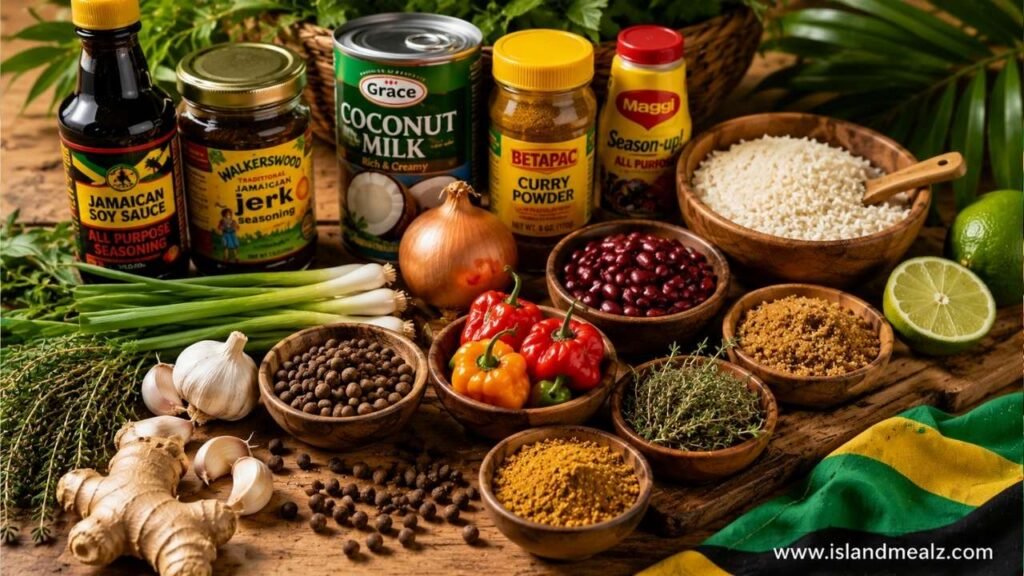
Essential Herbs
Fresh herbs add aroma and depth to Jamaican dishes. They create balanced flavors and make simple recipes taste fresh and authentic.
- Thyme – A key herb used in soups, stews, rice dishes, and marinades.
- Green Onions (Scallions) – Add a mild onion flavor to seasonings and sauces.
- Parsley – Often used as a garnish or to add freshness to cooked dishes.
- Fresh Cilantro (Optional) – Used in some modern Jamaican recipes for extra flavor.
Whenever possible, choose fresh herbs instead of dried ones. Fresh herbs provide a stronger aroma and better taste.
Essential Spices
Jamaican cuisine is known for its bold yet balanced spices. These seasonings create the signature flavors found in many traditional dishes.
- Allspice (Pimento) – The most important Jamaican spice with a warm, slightly sweet flavor.
- Black Pepper – Adds gentle heat and enhances other spices.
- Curry Powder – Used in Jamaican curry dishes and marinades.
- Ground Ginger – Adds warmth and a light spicy flavor.
- Nutmeg – Commonly used in desserts and drinks.
- Cinnamon – Perfect for baked goods and sweet recipes.
- Paprika – Adds color and mild smoky flavor.
Store spices in airtight containers away from direct sunlight to keep them fresh for longer.
Fresh Ingredients
Fresh ingredients are the foundation of authentic Jamaican cooking. They add natural flavor and help create delicious homemade meals.
- Garlic
- Onions
- Fresh ginger
- Scotch bonnet peppers
- Tomatoes
- Bell peppers
- Limes
- Fresh coconut (if available)
If Scotch bonnet peppers are too spicy for your taste, you can use milder peppers while learning the basics.
Pantry Staples
These everyday pantry items appear in many Jamaican recipes and are worth keeping on hand.
- Long-grain rice
- Dried or canned kidney beans
- Coconut milk
- Cooking oil
- Soy sauce
- Brown sugar
- White vinegar
- Tomato paste
- Chicken or vegetable stock
- Flour
- Cornmeal
These ingredients allow you to prepare a wide range of Jamaican meals without frequent trips to the grocery store.
Beginner’s Jamaican Pantry Checklist
| Ingredient | Why You Need It | Common Uses |
| Allspice (Pimento) | Signature Jamaican flavor | Jerk seasoning, stews, marinades |
| Thyme | Fresh herbal taste | Rice and Peas, soups, chicken dishes |
| Scotch Bonnet Pepper | Traditional heat | Jerk recipes, sauces, curries |
| Garlic | Flavor base | Marinades, stews, meats |
| Ginger | Warm, aromatic flavor | Curry dishes, sauces, drinks |
| Green Onions | Mild onion flavor | Seasoning blends, soups |
| Coconut Milk | Creamy texture | Rice and Peas, soups, curries |
| Curry Powder | Rich spice blend | Curry Chicken, Curry Goat |
| Kidney Beans | Traditional side ingredient | Rice and Peas |
| Long-Grain Rice | Staple grain | Rice dishes |
| Soy Sauce | Adds depth and color | Marinades, stews |
| Brown Sugar | Balances spices | Jerk seasoning, sauces |
| Tomato Paste | Thickens sauces | Brown Stew Chicken, curries |
Building your pantry one ingredient at a time makes learning Jamaican cooking simple and affordable. Once these essentials are in your kitchen, you will be ready to prepare many classic dishes with confidence while enjoying authentic Caribbean flavors at home.
Essential Kitchen Equipment for Jamaican Cooking
You do not need a professional kitchen to cook authentic Jamaican food. Most traditional recipes can be prepared with basic cookware and a few reliable kitchen tools. The right equipment makes cooking easier, saves time, and helps you achieve better results.
As a beginner, focus on buying quality tools that you will use regularly. Many Jamaican recipes involve chopping fresh ingredients, marinating meat, simmering stews, and frying side dishes. Having the right equipment will help you prepare these meals with confidence.
Basic Tools
These kitchen tools are enough to prepare most Jamaican recipes at home.
Sharp Chef’s Knife
A sharp knife is one of the most important tools in any kitchen. It helps you chop vegetables, trim meat, slice herbs, and prepare ingredients quickly and safely. Keep your knife sharp for clean cuts and better control.
Cutting Board
A sturdy cutting board provides a safe surface for preparing food. If possible, use separate boards for vegetables and raw meat to reduce the risk of cross-contamination.
Large Cooking Pot
A large pot is essential for cooking Rice and Peas, soups, curries, and stews. Choose a heavy-bottomed pot because it distributes heat evenly and prevents food from sticking.
Dutch Oven
A Dutch oven is perfect for slow-cooked Jamaican dishes such as Brown Stew Chicken, Curry Goat, and Oxtail. It retains heat well and keeps meat tender during long cooking times.
Frying Pan or Cast-Iron Skillet
A frying pan is useful for preparing Fried Plantains, Festival, dumplings, and sautéed vegetables. A cast-iron skillet is an excellent choice because it holds heat well and creates a beautiful golden-brown finish.
Mixing Bowls
Mixing bowls are useful for marinating meat, preparing seasoning blends, and mixing ingredients before cooking. Having bowls in different sizes makes meal preparation more convenient.
Measuring Cups and Spoons
While experienced cooks often measure by sight, beginners should use measuring tools to achieve consistent results. Accurate measurements help balance herbs, spices, and liquids.
Wooden Spoon
A wooden spoon is gentle on cookware and works well for stirring soups, stews, curries, and rice without scratching the surface of your pots.
Optional Tools That Make Cooking Easier
These tools are not required, but they can save time and improve your cooking experience.
Blender or Food Processor
A blender makes it easy to prepare homemade jerk seasoning, marinades, sauces, and fresh spice pastes. It creates a smooth mixture in just a few minutes.
Pressure Cooker
Many traditional Jamaican recipes require long cooking times. A pressure cooker helps tenderize meat much faster while keeping its rich flavor.
Grill or Grill Pan
If you enjoy Jerk Chicken, grilled fish, or grilled vegetables, a grill or grill pan is a great addition to your kitchen. It creates the smoky flavor that many Jamaican dishes are known for.
Citrus Juicer
Fresh lime juice is commonly used in Jamaican marinades and recipes. A citrus juicer makes it quick and easy to extract every drop of juice.
Food Storage Containers
Airtight containers help store homemade jerk seasoning, leftover meals, chopped vegetables, and fresh herbs. Proper storage keeps ingredients fresh and reduces food waste.
Essential Kitchen Equipment Checklist
| Kitchen Tool | Purpose | Recommended for Beginners |
| Chef’s Knife | Chopping and slicing ingredients | Yes |
| Cutting Board | Safe food preparation | Yes |
| Large Cooking Pot | Rice, soups, curries, and stews | Yes |
| Dutch Oven | Slow-cooked meals | Yes |
| Frying Pan or Cast-Iron Skillet | Frying and sautéing | Yes |
| Mixing Bowls | Marinating and mixing | Yes |
| Measuring Cups and Spoons | Accurate ingredient measurements | Yes |
| Wooden Spoon | Stirring food | Yes |
| Blender | Marinades and sauces | Optional |
| Pressure Cooker | Faster cooking for meats | Optional |
| Grill or Grill Pan | Grilled Jamaican dishes | Optional |
| Food Storage Containers | Storing ingredients and leftovers | Optional |
Starting with these basic kitchen tools will make Jamaican cooking easier and more enjoyable. As you gain experience, you can add more equipment to your kitchen, but these essentials are enough to prepare many traditional Jamaican recipes with excellent results.
Step-by-Step Guide to Cooking Jamaican Food
Before turning on the stove, take a few minutes to prepare everything you’ll need. Professional cooks often call this “getting organized,” and it makes cooking much easier.
Cooking Jamaican food becomes much easier when you follow a simple process. Every traditional recipe may be different, but most of them follow the same basic steps. From choosing fresh ingredients to serving the final dish, each step plays an important role in creating authentic Jamaican flavors.
If you are a beginner, focus on learning one step at a time. As your confidence grows, you will find it easier to prepare a wide variety of Jamaican meals.
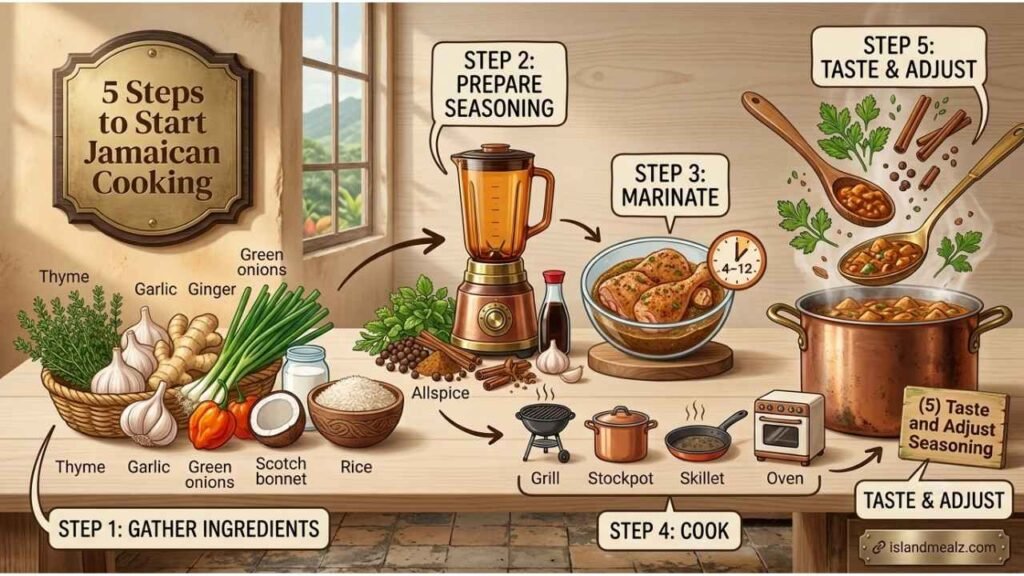
Step 1: Gather Fresh Ingredients
Great Jamaican food starts with fresh, high-quality ingredients. Fresh vegetables, herbs, spices, and meat create better flavor than processed or old ingredients.
Before you begin cooking, make sure you have everything ready. This saves time and helps you stay organized throughout the cooking process.
Common ingredients include:
- Fresh thyme
- Garlic
- Ginger
- Green onions
- Scotch bonnet pepper
- Onion
- Bell pepper
- Coconut milk
- Long-grain rice
- Chicken, beef, goat, or fish
Buying fresh ingredients whenever possible will improve both the taste and texture of your meals.
Step 2: Prepare Your Seasoning
Seasoning is one of the most important parts of Jamaican cooking. Instead of adding spices while cooking, many Jamaican recipes begin by preparing a flavorful seasoning blend.
A simple homemade seasoning usually includes garlic, ginger, onion, green onions, thyme, black pepper, allspice, soy sauce, and a little oil. If you enjoy spicy food, add a small amount of Scotch bonnet pepper.
Mix the ingredients well or blend them into a smooth paste. This seasoning can be used for chicken, beef, fish, pork, and vegetables.
Beginner Tip: Prepare extra seasoning and store it in the refrigerator for several days. It saves time when cooking future meals.
Step 3: Marinate Properly
Marinating allows the seasoning to soak into the food before cooking. This step gives meat a deeper flavor and makes it more tender.
Cover the meat completely with the seasoning mixture and place it in the refrigerator. Although 30 minutes is enough for beginners, marinating for 4 to 12 hours produces much better results. Many experienced Jamaican cooks prefer to marinate meat overnight.
Avoid leaving meat at room temperature for long periods. Always marinate it in the refrigerator to keep it fresh and safe.
Step 4: Choose the Right Cooking Method
Different Jamaican recipes require different cooking methods. Choosing the correct technique helps you achieve the best flavor and texture.
Here are some common methods:
| Cooking Method | Best For | Result |
| Grilling | Jerk Chicken, Fish | Smoky and slightly charred |
| Stewing | Brown Stew Chicken, Oxtail | Tender meat with rich gravy |
| Frying | Plantains, Festival, Dumplings | Crispy outside and soft inside |
| Baking | Jamaican Patties, Bread | Even cooking and golden crust |
| Simmering | Rice and Peas, Soups | Soft texture and blended flavors |
Follow the cooking time recommended in each recipe. Cooking too quickly over high heat can reduce flavor and make meat dry.
Step 5: Taste and Adjust Seasoning
One mistake beginners often make is seasoning food at the last minute. Jamaican recipes develop their rich flavor because the herbs and spices have enough time to work into the meat. One of the habits of experienced Jamaican cooks is tasting food while it cooks. This helps balance the flavors before serving.
If the dish needs more flavor, add a little thyme, black pepper, garlic, or salt. If it is too spicy, balance the heat with coconut milk or serve it with rice. If the gravy is too thick, add a small amount of water or stock.
Make small adjustments instead of adding large amounts of seasoning all at once. This helps you maintain the authentic taste of the dish.
Helpful Cooking Tips for Beginners
Keep these simple tips in mind while learning Jamaican cooking:
- Read the entire recipe before you begin.
- Prepare and measure all ingredients in advance.
- Use fresh herbs whenever possible.
- Cook over medium heat unless the recipe says otherwise.
- Do not rush slow-cooked recipes.
- Taste your food before serving.
- Practice one recipe until you feel confident before trying another.
By following these five simple steps, you will build a strong foundation in Jamaican cooking. With regular practice, you will learn how to prepare authentic Caribbean meals that are full of flavor, easy to make, and enjoyable to share with family and friends.
Final Thoughts
Every experienced cook starts as a beginner, and Jamaican cooking is no different. Focus on learning one recipe at a time, experiment with fresh herbs and spices, and don’t worry if your first meal isn’t perfect. With practice, you’ll become more comfortable with the techniques and soon be preparing authentic Jamaican dishes that your family and friends will enjoy.

5 Responses