
When most people think of Jamaican food, jerk chicken is usually the first dish that comes to mind. While it’s certainly one of Jamaica’s most famous meals, the country’s cuisine has far more to offer. From the creamy texture of Ackee and Saltfish to the comforting flavors of Curry Goat and the sweetness of freshly baked Gizzada, every dish reflects generations of tradition, cultural influence, and local ingredients. Jamaican food is more than a collection of recipes—it’s a story of the island’s people, history, and way of life. In this guide, you’ll discover the dishes, ingredients, cooking methods, and traditions that make Jamaican cuisine one of the most exciting in the Caribbean.
If you’ve ever tasted authentic Jamaican Jerk Chicken or enjoyed a plate of Ackee and Saltfish, you’ve probably noticed that Jamaican food is unlike any other cuisine. Every meal reflects the island’s history, culture, and passion for bold, unforgettable flavors.
In recent years, Jamaican cuisine has gained tremendous popularity across the United States. Whether you’re searching for authentic Jamaican recipes, curious about traditional ingredients, planning a Caribbean-themed dinner, or simply looking to expand your culinary knowledge, there’s never been a better time to explore the vibrant world of Jamaican cooking. The combination of fresh tropical produce, aromatic herbs, fiery peppers, and slow-cooked comfort foods offers something for every taste preference.
What makes Jamaican food truly unique is its balance of bold flavors and simple, wholesome ingredients. Staples such as Scotch bonnet peppers, allspice (pimento), thyme, coconut milk, plantains, breadfruit, and fresh seafood create dishes that are both flavorful and deeply rooted in the island’s heritage. From hearty breakfasts and satisfying street food to refreshing tropical drinks and indulgent desserts, Jamaican cuisine offers an incredible variety of meals enjoyed by families every day and celebrated around the world.
This Ultimate Guide to Jamaican Food is designed to be your complete resource for understanding and enjoying authentic Jamaican cuisine. Instead of focusing on a single recipe, this guide explores the traditions, ingredients, cooking methods, and popular dishes that define Jamaica’s rich culinary identity. Whether you’re a beginner discovering Jamaican food for the first time or a longtime fan looking to deepen your knowledge, you’ll find practical information, cultural insights, and helpful resources throughout this guide.
What Is Jamaican Food?
If you’ve never tried authentic Jamaican food, you might expect every dish to be extremely spicy. In reality, Jamaican cuisine is much more balanced than many people imagine. While Scotch bonnet peppers add heat to some recipes, the real magic comes from the combination of fresh herbs, aromatic spices, tropical produce, and slow-cooking techniques. Every meal is designed to deliver layers of flavor rather than just heat, which is one of the reasons Jamaican cuisine has become popular around the world.
At the heart of Jamaican cooking is the idea of transforming simple, locally available ingredients into flavorful and satisfying meals. Fresh vegetables, tropical fruits, seafood, meats, legumes, and aromatic herbs are combined with carefully balanced spices to create dishes that are both comforting and exciting. Popular ingredients such as Scotch bonnet peppers, allspice (also known as pimento), thyme, ginger, garlic, coconut milk, and green onions give Jamaican food its distinctive flavor profile.
One of the reasons Jamaican cuisine is so unique is its rich cultural history. The island’s food traditions have been shaped by the people who settled there over hundreds of years. The indigenous Taíno people introduced ingredients such as cassava, sweet potatoes, maize, peppers, and various tropical fruits. Later, African communities brought cooking methods, spices, and recipes that became the foundation of many traditional Jamaican dishes. British influence introduced baking techniques and popular foods such as saltfish, while Indian immigrants contributed flavorful curries and spices. Chinese immigrants added stir-frying methods and noodle-based dishes, and other Caribbean traditions also played a role in shaping the cuisine enjoyed today.
Perhaps the most famous example of Jamaican cooking is jerk, a traditional method of seasoning and slow-cooking meat over wood or charcoal. Jerk chicken has become an international favorite because of its smoky flavor, spicy marinade, and perfectly grilled texture. However, Jamaican cuisine is much more diverse than jerk alone. The country’s national dish, Ackee and Saltfish, showcases the island’s ability to combine simple ingredients into a flavorful and satisfying meal. Other beloved dishes include Curry Goat, Oxtail Stew, Escovitch Fish, Rice and Peas, Pepper Pot Soup, and Jamaican Beef Patties.
Jamaican food is also closely connected to family traditions and community celebrations. Meals are often prepared from scratch using fresh ingredients and shared during family gatherings, holidays, church events, festivals, and special occasions. Cooking is seen as more than preparing food—it is a way of preserving culture, passing down family recipes, and bringing people together around the table.
Although many people associate Jamaican cuisine with spicy food, not every dish is hot. While Scotch bonnet peppers add heat to certain recipes, many traditional meals focus on rich, savory, sweet, or smoky flavors instead. Herbs, fresh vegetables, and carefully balanced seasonings create depth without overwhelming the palate, making Jamaican food enjoyable for a wide range of tastes.
Today, Jamaican cuisine continues to grow in popularity across the United States and around the world. Restaurants, food festivals, and home cooks are introducing more people to authentic Jamaican recipes and ingredients every year. Whether someone is preparing their first Jamaican meal or exploring Caribbean cuisine in greater depth, Jamaican food offers a delicious combination of history, culture, and unforgettable flavors that make it one of the world’s most celebrated culinary traditions.
Traditional Jamaican Foods
Traditional Jamaican food is a reflection of the island’s rich history, diverse cultural influences, and love for bold, comforting flavors. Many recipes have been passed down through generations, preserving authentic cooking techniques and family traditions. Whether served at family gatherings, street food stalls, restaurants, or festive celebrations, these dishes represent the heart of Jamaican cuisine. While every region of Jamaica has its own specialties, several iconic meals are enjoyed across the island and have gained international recognition.
Every country has a handful of dishes that define its culinary identity, and Jamaica is no exception. Whether you’re visiting the island for the first time or cooking at home, these traditional Jamaican foods represent the flavors, ingredients, and cooking techniques that locals have enjoyed for generations. Some are everyday family meals, while others are reserved for holidays and special occasions.
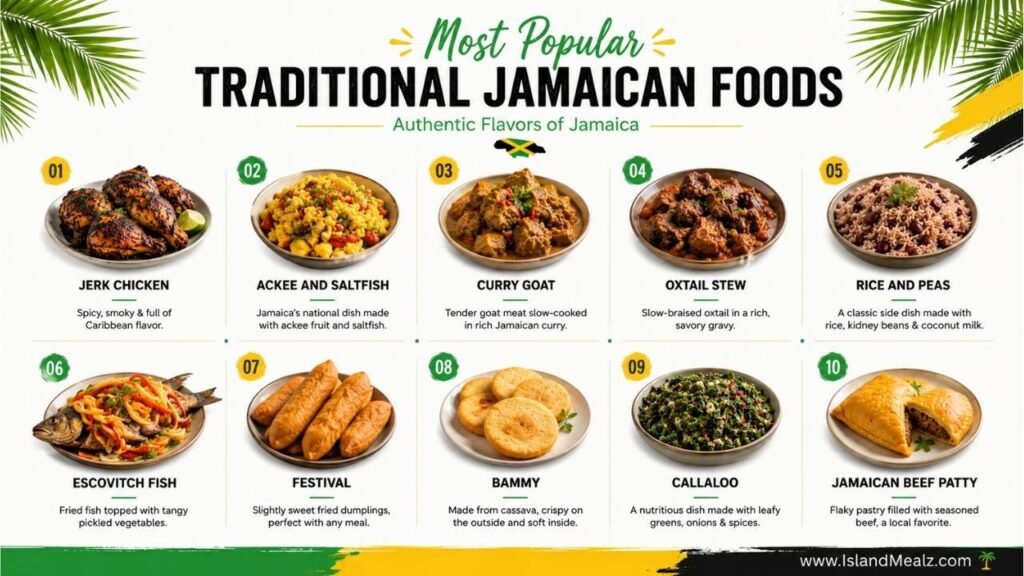
Ackee and Saltfish
In many Jamaican households, Ackee and Saltfish isn’t just breakfast—it’s a weekend tradition. Families often gather around the table to enjoy it with fried dumplings, boiled green bananas, or roasted breadfruit.
Ackee and Saltfish is Jamaica’s national dish and a favorite breakfast choice throughout the country. Ackee is a tropical fruit that becomes soft and creamy when fully ripe, while salted cod is soaked, boiled, and sautéed with onions, tomatoes, sweet peppers, thyme, and Scotch bonnet peppers. The combination creates a savory, flavorful dish that is commonly served with fried dumplings, roasted breadfruit, boiled green bananas, or festival. It is one of the first dishes visitors are encouraged to try when exploring authentic Jamaican cuisine.
Jerk Chicken
Imagine standing beside a roadside jerk pan in Jamaica, where the aroma of smoky pimento wood fills the air. That’s the authentic experience traditional jerk cooking is famous for.
Jerk Chicken is undoubtedly the most famous Jamaican dish around the world. The secret lies in its traditional jerk seasoning, which combines allspice (pimento), Scotch bonnet peppers, thyme, garlic, ginger, onions, and other spices. The chicken is marinated for several hours or overnight before being slowly grilled over charcoal or pimento wood. This cooking method creates a smoky aroma, juicy texture, and spicy flavor that has become synonymous with Jamaican food. Jerk chicken is commonly served with rice and peas, festival, roasted breadfruit, or fresh salad.
Curry Goat
Curry Goat is one of Jamaica’s most beloved comfort foods and is especially popular at weddings, family celebrations, and holiday gatherings. Influenced by Indian cuisine, this dish features tender goat meat slow-cooked in a rich curry sauce with potatoes, onions, garlic, thyme, and Caribbean spices. The long cooking process allows the meat to become incredibly tender while absorbing the aromatic flavors of the curry. It is traditionally served with white rice or Jamaican rice and peas.
Oxtail Stew
Jamaican Oxtail is a rich and hearty stew prepared by slowly braising seasoned oxtail until it becomes tender and falls off the bone. The dish is cooked with butter beans, onions, garlic, carrots, thyme, and a flavorful gravy that develops during the slow-cooking process. Oxtail is a favorite Sunday dinner across Jamaica and is often paired with rice and peas for a satisfying meal.
Escovitch Fish
Escovitch Fish is a classic Jamaican seafood dish prepared by frying whole fish until crispy and topping it with a tangy mixture of pickled onions, carrots, bell peppers, vinegar, thyme, and Scotch bonnet peppers. The combination of crispy fish and pickled vegetables creates a refreshing balance of flavors. Escovitch Fish is especially popular during Easter and other family celebrations.
Rice and Peas
Despite its name, Jamaican Rice and Peas is typically made with kidney beans rather than green peas. Cooked with coconut milk, thyme, garlic, scallions, and allspice, it is one of the island’s most popular side dishes. Rice and Peas perfectly complements jerk chicken, curry goat, oxtail, and many other traditional meals.
Jamaican Beef Patty
The Jamaican Beef Patty is a popular snack known for its flaky golden crust and flavorful ground beef filling. Seasoned with herbs, spices, onions, garlic, and Scotch bonnet peppers, the filling delivers a delicious balance of savory and mildly spicy flavors. Many people enjoy beef patties with coco bread, making them a favorite street food and quick meal throughout Jamaica.
Festival
Festival is a lightly sweet fried dough that is crispy on the outside and soft inside. It is commonly served alongside jerk chicken, fried fish, or Escovitch Fish, providing a pleasant contrast to spicy and savory dishes. Its slightly sweet flavor makes it one of the most recognizable side dishes in Jamaican cuisine.
Bammy
Bammy is a traditional cassava flatbread that dates back to the indigenous Taíno people. It is often soaked in coconut milk before being fried or baked, creating a soft interior with a lightly crisp exterior. Bammy is frequently served with fried fish and seafood dishes, making it an important part of Jamaica’s culinary heritage.
Callaloo
Callaloo is a nutritious leafy green vegetable that is commonly sautéed with onions, garlic, tomatoes, thyme, and peppers. It is enjoyed as both a breakfast side dish and a healthy accompaniment to lunch or dinner. Rich in vitamins and minerals, Callaloo is considered one of the healthiest vegetables used in Jamaican cooking.
These traditional dishes represent only a small portion of Jamaica’s diverse culinary heritage. Every recipe reflects the island’s history, cultural influences, and passion for fresh ingredients and bold flavors. Whether you’re preparing an authentic meal at home or visiting a Jamaican restaurant, exploring these classic dishes is the best way to experience the true taste of Jamaica.
Jamaican Ingredients
Ask any Jamaican home cook what makes a great meal, and you’ll likely hear the same answer: it all starts with the ingredients. Fresh herbs, tropical fruits, aromatic spices, and locally grown vegetables form the foundation of nearly every traditional recipe. Understanding these ingredients not only helps you cook authentic Jamaican dishes but also explains why the island’s cuisine has such a distinctive flavor.
Whether you’re cooking a traditional Jamaican recipe at home or simply exploring Caribbean cuisine, understanding these essential ingredients will help you appreciate what makes Jamaican food so unique.
Scotch Bonnet Pepper
Scotch bonnet pepper is one of the most recognizable ingredients in Jamaican cooking. Known for its bright color, fruity aroma, and intense heat, this pepper is a key ingredient in jerk seasoning, sauces, soups, stews, and marinades. Despite its spiciness, Scotch bonnet also adds a slightly sweet, tropical flavor that enhances many dishes. It is often used whole for a milder heat or finely chopped when a stronger kick is desired.
Allspice (Pimento)
Known locally as pimento, allspice is considered one of the signature spices of Jamaican cuisine. Its flavor combines hints of cinnamon, cloves, nutmeg, and black pepper, making it an essential ingredient in jerk seasoning, meat marinades, baked goods, and traditional drinks. Whole pimento berries are often used during slow cooking, while ground allspice is commonly added to spice blends.
Fresh Thyme
Fresh thyme is one of the most frequently used herbs in Jamaican kitchens. It adds an earthy, slightly minty flavor to soups, stews, curries, rice dishes, and meat recipes. Thyme is often cooked with scallions, garlic, onions, and pimento to build the rich flavor base found in many traditional Jamaican meals.
Coconut Milk
Coconut milk is a staple ingredient in Jamaican cooking, adding richness and a naturally sweet flavor to both savory and sweet dishes. It is commonly used in Rice and Peas, curries, soups, desserts, and beverages. Fresh coconut milk is traditionally extracted from grated coconuts, although canned coconut milk is now widely used for convenience.
Callaloo
Callaloo is a leafy green vegetable that is both nutritious and versatile. It is commonly sautéed with onions, tomatoes, garlic, thyme, and peppers to create a flavorful side dish or breakfast meal. Rich in vitamins, minerals, and antioxidants, Callaloo is considered one of the healthiest vegetables in Jamaican cuisine.
Plantains
Plantains are larger and starchier than regular bananas and are enjoyed at different stages of ripeness. Green plantains are often boiled or fried as a savory side dish, while ripe plantains become naturally sweet when fried or baked. They are a popular accompaniment to breakfast, lunch, and dinner throughout Jamaica.
Breadfruit
Breadfruit is a tropical fruit with a texture similar to potatoes when cooked. It can be roasted, boiled, baked, or fried and is commonly served alongside jerk chicken, fried fish, and other traditional meals. Breadfruit is high in fiber and complex carbohydrates, making it a filling and nutritious staple food.
Cassava
Cassava is a root vegetable that has been part of Jamaican cuisine since the time of the indigenous Taíno people. It is most famously used to make Bammy, a traditional cassava flatbread that pairs perfectly with seafood dishes. Cassava is also used in puddings, cakes, and other Caribbean recipes.
Saltfish
Saltfish, or salted cod, has been a staple ingredient in Jamaica for centuries. Before cooking, it is soaked and boiled to remove excess salt before being combined with vegetables and seasonings. It is best known as the main ingredient in Jamaica’s national dish, Ackee and Saltfish, but it is also used in fritters, stews, and breakfast recipes.
Ginger and Garlic
Fresh ginger and garlic provide the aromatic foundation for countless Jamaican recipes. These ingredients add depth, warmth, and natural flavor to jerk marinades, curries, soups, sauces, and stews. They are often blended with onions, thyme, scallions, and Scotch bonnet peppers to create flavorful seasoning pastes.
Green Onions (Scallions)
Scallions, also known as green onions, are another essential ingredient in Jamaican cooking. They contribute a fresh, mild onion flavor that complements meats, seafood, vegetables, and rice dishes. Along with thyme and garlic, scallions form the flavor base for many authentic Jamaican recipes.
Why These Ingredients Matter
Each ingredient in Jamaican cuisine has a specific purpose. Some provide heat, others contribute sweetness, aroma, or depth of flavor, while many add nutritional value. Together, they create the balanced, vibrant taste that makes Jamaican food unique. Learning about these essential ingredients is the first step toward preparing authentic Jamaican meals and understanding the traditions behind the island’s world-famous cuisine.
Popular Jamaican Drinks
Jamaican cuisine is known not only for its flavorful dishes but also for its refreshing and traditional beverages. Many Jamaican drinks are made using fresh fruits, herbs, spices, and natural ingredients that reflect the island’s tropical climate and rich cultural heritage. Whether served at family gatherings, holiday celebrations, restaurants, or street markets, these beverages are an important part of everyday life in Jamaica.
From cooling fruit juices to spicy homemade drinks and festive punches, Jamaican beverages offer something for every season and occasion. Here are some of the most popular Jamaican drinks you should know.
Sorrel Drink
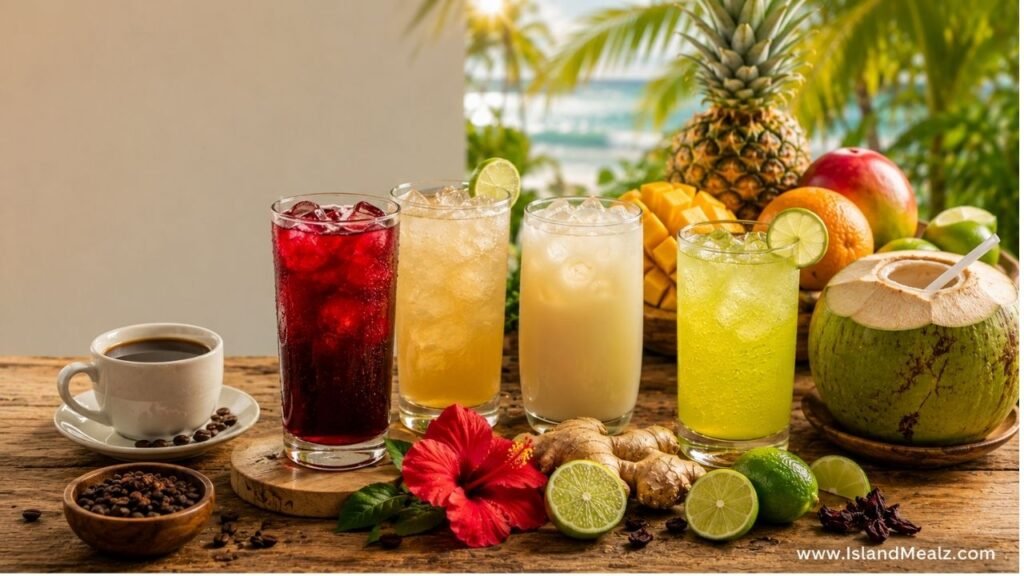
Sorrel is one of Jamaica’s most iconic traditional beverages, especially during the Christmas season. It is made by steeping dried sorrel (hibiscus) petals with fresh ginger, cloves, cinnamon, and sweeteners to create a vibrant red drink with a sweet and tangy flavor. Some families also add fruit juice or a splash of rum during holiday celebrations.
Sorrel is rich in antioxidants and vitamin C, making it both refreshing and flavorful. It can be served chilled over ice and is enjoyed throughout the Caribbean.
Jamaican Ginger Beer
Unlike many commercial ginger beers, traditional Jamaican Ginger Beer is made from fresh ginger root. The drink has a bold, spicy flavor balanced with sweetness and citrus. It is commonly prepared with ginger, sugar, lime juice, and water, then chilled before serving.
Jamaican Ginger Beer is especially popular during hot weather because of its refreshing taste. It is also served during family gatherings, celebrations, and holiday meals.
Irish Moss Drink
Irish Moss Drink is a creamy Jamaican beverage made from sea moss, milk, spices, vanilla, cinnamon, and nutmeg. Many Jamaicans believe this drink supports overall wellness due to its rich mineral content, although it is also appreciated simply for its smooth texture and unique flavor.
It is commonly enjoyed as a breakfast drink or afternoon refreshment and has become increasingly popular outside Jamaica.
Rum Punch
Jamaican Rum Punch is a classic tropical beverage often served at parties, weddings, beach events, and celebrations. It combines Jamaican rum with fruit juices such as pineapple, orange, and lime, along with grenadine and aromatic spices. The result is a colorful and refreshing drink that perfectly captures the flavors of the Caribbean.
While traditional Rum Punch contains alcohol, many families also prepare non-alcoholic versions that everyone can enjoy.
Ting
Ting is one of Jamaica’s most recognizable soft drinks. Made from grapefruit juice, it has a crisp, citrusy flavor with the perfect balance of sweetness and tartness. It is often enjoyed on its own or paired with spicy dishes like jerk chicken and curry goat because its refreshing taste helps balance bold flavors.
Ting is available in many Caribbean grocery stores and has become popular in several countries around the world.
Fresh Tropical Fruit Juices
Jamaica is home to a wide variety of tropical fruits, making freshly prepared fruit juices a daily favorite. Some of the most popular options include:
- Mango Juice
- Pineapple Juice
- Soursop Juice
- Tamarind Juice
- Guava Juice
- June Plum Juice
- Passion Fruit Juice
These beverages are naturally refreshing and are often prepared without artificial flavors, allowing the fresh fruit to shine.
Coconut Water
Fresh coconut water is one of the healthiest and most refreshing drinks available in Jamaica. It is naturally rich in electrolytes and is commonly enjoyed straight from young green coconuts. Locals and visitors alike appreciate coconut water for its light, slightly sweet taste and its ability to keep the body hydrated in Jamaica’s warm tropical climate.
Jamaican Blue Mountain Coffee
Jamaica is world-famous for producing Jamaican Blue Mountain Coffee, one of the highest-quality coffees available. Grown in the cool Blue Mountains, these coffee beans are known for their smooth, mild flavor and low bitterness. Coffee lovers around the world consider it a premium product because of its careful cultivation and exceptional taste.
Whether served black or with milk, Jamaican coffee is a favorite morning beverage for many households.
Why Jamaican Drinks Are Special
Traditional Jamaican drinks are made with fresh, natural ingredients that reflect the island’s tropical environment and diverse culinary traditions. From festive beverages like Sorrel and Rum Punch to everyday favorites such as Ginger Beer, Coconut Water, and fresh fruit juices, these drinks perfectly complement Jamaica’s bold and flavorful cuisine. Whether you’re visiting Jamaica or preparing Caribbean recipes at home, trying these authentic beverages is an excellent way to experience the true taste of the island.
Jamaican Desserts
Jamaican desserts are a delicious reflection of the island’s tropical climate, cultural diversity, and love for natural ingredients. Many traditional sweets are made using fresh coconut, ripe bananas, sweet potatoes, cassava, spices, and tropical fruits that grow abundantly across Jamaica. Unlike overly sugary desserts, many Jamaican treats focus on rich flavors, warm spices, and homemade recipes that have been passed down through generations.
Whether enjoyed after a family meal, during holidays, or at community celebrations, Jamaican desserts hold a special place in the country’s food culture. Here are some of the most popular Jamaican desserts that every food lover should try.
Gizzada
Gizzada, sometimes called Pinch-Me-Round, is one of Jamaica’s oldest and most recognizable pastries. It features a crisp pastry shell filled with a sweet mixture of grated coconut, brown sugar, ginger, nutmeg, cinnamon, and vanilla. The pastry edges are pinched by hand, giving Gizzada its distinctive appearance.
The combination of flaky pastry and rich coconut filling makes Gizzada a favorite snack or dessert enjoyed throughout Jamaica.
Sweet Potato Pudding
Jamaican Sweet Potato Pudding is often described as “a little bit of heaven.” This traditional dessert is made with grated sweet potatoes, coconut milk, brown sugar, flour, butter, raisins, and aromatic spices such as cinnamon, nutmeg, and vanilla.
The pudding is baked until it develops a soft, moist center with a slightly caramelized top. It is commonly served during holidays, Sunday dinners, and family gatherings.
Toto Cake
Toto is a traditional Jamaican coconut cake known for its moist texture and rich coconut flavor. It is prepared using grated coconut, flour, brown sugar, butter, eggs, vanilla, nutmeg, and cinnamon. The result is a soft cake with a delicate sweetness that pairs perfectly with tea or coffee.
Many Jamaican families have their own treasured Toto recipes that have been handed down for generations.
Jamaican Rum Cake
Jamaican Rum Cake, also known as Black Cake, is one of the island’s most famous holiday desserts. It is traditionally prepared for Christmas, weddings, birthdays, and other special occasions.
The cake is made with dried fruits that have been soaked in rum and wine for several months before baking. Combined with warm spices, molasses, butter, and browning sauce, the result is a rich, moist cake with deep flavor and a luxurious texture.
Although it is especially popular during the holiday season, many bakeries prepare Rum Cake throughout the year.
Grater Cake
Grater Cake is a colorful coconut candy made by combining freshly grated coconut with sugar and ginger. It is often prepared in two layers—one pink and one white—giving it a distinctive appearance.
This sweet treat is commonly sold by local vendors and remains a nostalgic childhood favorite for many Jamaicans.
Banana Fritters
Banana Fritters are a simple yet delicious Jamaican dessert made from ripe bananas, flour, sugar, cinnamon, vanilla, and a pinch of nutmeg. The batter is spooned into hot oil and fried until golden brown.
These fritters are crispy on the outside, soft on the inside, and are often enjoyed as a breakfast treat, afternoon snack, or light dessert.
Coconut Drops
Coconut Drops are bite-sized sweets made by cooking fresh coconut pieces with brown sugar, ginger, and spices until the mixture thickens and hardens as it cools. Unlike Gizzada, Coconut Drops have a chewy texture and a stronger ginger flavor.
They are commonly found in local markets and homemade snack collections across Jamaica.
Tamarind Balls
Tamarind Balls are made by combining ripe tamarind pulp with brown sugar and rolling the mixture into small bite-sized balls. Some versions include ginger or chili powder for an extra burst of flavor.
These sweet and tangy treats are popular among both children and adults and are often sold by street vendors.
Duckunoo (Blue Drawers)
Duckunoo, also known as Blue Drawers, is a traditional steamed dessert made with grated sweet potatoes, green bananas, coconut milk, raisins, brown sugar, and warm spices. The mixture is wrapped in banana leaves and steamed until firm.
This unique preparation method gives Duckunoo its authentic flavor and soft, pudding-like texture, making it a treasured part of Jamaican culinary heritage.
Why Jamaican Desserts Are Unique
Jamaican desserts are known for using fresh, locally grown ingredients instead of relying on heavy creams or processed flavorings. Coconut, tropical fruits, root vegetables, and fragrant spices such as cinnamon, nutmeg, vanilla, and ginger create desserts that are rich in flavor and deeply connected to the island’s traditions.
Whether you’re baking a festive Rum Cake, enjoying a slice of Sweet Potato Pudding, or trying a homemade Gizzada for the first time, these classic desserts offer a delicious way to experience Jamaica’s vibrant food culture.
Traditional Jamaican Breakfast
Breakfast is one of the most important meals of the day in Jamaica, and it is often much more filling than a typical American breakfast. Instead of cereal or pastries, many Jamaicans start their morning with freshly cooked dishes made from local vegetables, salted fish, ground provisions, dumplings, and tropical fruits. These hearty meals provide lasting energy and reflect the island’s rich culinary traditions.
Traditional Jamaican breakfasts are commonly enjoyed at home, local restaurants, roadside cook shops, and family gatherings. While recipes may vary from one household to another, several classic breakfast dishes are considered staples across the island.
Ackee and Saltfish
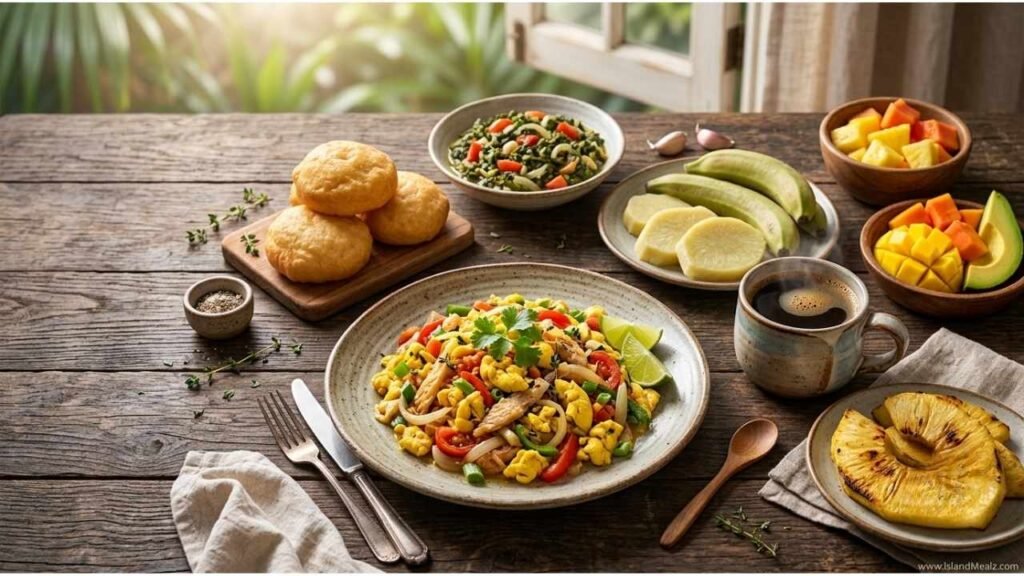
No Jamaican breakfast is more famous than Ackee and Saltfish, the country’s national dish. Ackee, Jamaica’s national fruit, is cooked with salted cod, onions, tomatoes, sweet peppers, thyme, scallions, garlic, and a touch of Scotch bonnet pepper for extra flavor.
The creamy texture of ackee pairs perfectly with the savory saltfish, creating a balanced and satisfying meal. It is traditionally served with fried dumplings, boiled green bananas, roasted breadfruit, boiled yam, or festival, making it one of the most complete Jamaican breakfasts.
Fried Dumplings
Fried dumplings are a breakfast favorite in Jamaica. Made from flour, baking powder, salt, butter, and water, they are fried until golden brown with a crispy exterior and soft, fluffy interior.
They are commonly served alongside Ackee and Saltfish, Callaloo, Salt Mackerel, or fried fish. Many Jamaicans also enjoy them with butter, cheese, or avocado.
Callaloo
Callaloo is a nutritious leafy green vegetable that plays a major role in traditional Jamaican breakfasts. It is sautéed with onions, tomatoes, garlic, thyme, scallions, and peppers to create a flavorful vegetable dish that pairs well with eggs, saltfish, fried dumplings, or boiled provisions.
Because it is naturally rich in vitamins, minerals, and fiber, Callaloo is considered one of the healthiest breakfast choices in Jamaican cuisine.
Salt Mackerel
Salt Mackerel is another popular breakfast dish that has been enjoyed in Jamaica for generations. Before cooking, the fish is soaked and boiled to remove excess salt, then sautéed with onions, tomatoes, sweet peppers, garlic, thyme, and fresh herbs.
Although Ackee and Saltfish receives more international attention, Salt Mackerel remains a household favorite because of its rich flavor and affordability.
Boiled Green Bananas
Boiled green bananas are one of Jamaica’s traditional ground provisions and are commonly served as a breakfast side dish. Unlike sweet yellow bananas, green bananas have a firmer texture and mild flavor that complements savory meals.
They are usually served with Ackee and Saltfish, Callaloo, Salt Mackerel, or fried fish and provide a healthy source of complex carbohydrates and dietary fiber.
Roasted Breadfruit
Breadfruit is another breakfast staple found in many Jamaican homes. Roasted over an open flame or baked until tender, breadfruit develops a slightly smoky flavor and a soft, potato-like texture.
It is often sliced and served alongside Ackee and Saltfish or other savory breakfast dishes. Its ability to absorb flavors makes it an excellent accompaniment to seasoned meats and vegetables.
Boiled Yam
Yellow yam is widely enjoyed across Jamaica and is commonly included in traditional breakfast plates. It is boiled until tender and served with butter or alongside saltfish, Callaloo, or steamed vegetables.
Yam is highly filling and provides slow-releasing energy, making it a favorite choice for people with physically demanding jobs.
Porridge
Porridge is another beloved Jamaican breakfast, especially for children and older adults. Unlike traditional oatmeal, Jamaican porridges are prepared using a variety of ingredients, including:
- Cornmeal Porridge
- Peanut Porridge
- Plantain Porridge
- Hominy Corn Porridge
- Oats Porridge
These porridges are typically flavored with cinnamon, nutmeg, vanilla, condensed milk, and a touch of brown sugar, creating a creamy and comforting breakfast.
Fresh Tropical Fruits
Many Jamaicans also enjoy fresh tropical fruits with breakfast. Depending on the season, popular options include:
- Mango
- Papaya
- Pineapple
- Watermelon
- Guava
- June Plum
- Star Apple
- Banana
These fruits provide natural sweetness, vitamins, and hydration, making them a healthy addition to the morning meal.
Why Jamaican Breakfast Is Special
Traditional Jamaican breakfasts are known for being nutritious, flavorful, and satisfying. They combine protein-rich foods, fresh vegetables, root crops, tropical fruits, and aromatic seasonings to create meals that provide energy throughout the day. Rather than relying on processed foods, Jamaican breakfasts emphasize fresh ingredients and homemade recipes that have been enjoyed for generations.
Whether you’re trying the famous Ackee and Saltfish, enjoying a bowl of warm cornmeal porridge, or pairing fried dumplings with Callaloo, a traditional Jamaican breakfast offers an authentic taste of the island’s rich culinary heritage and welcoming food culture.
Jamaican Street Food
Jamaican street food is an essential part of the island’s food culture. From busy city streets and roadside cook shops to local markets and beachside stalls, freshly prepared meals and snacks are available throughout the day. Street food in Jamaica is known for its bold flavors, generous portions, and affordable prices, making it popular with both locals and visitors.
Many of these dishes have been enjoyed for generations and are prepared using traditional recipes passed down through families. Whether you’re looking for a quick snack, a hearty lunch, or an authentic taste of the Caribbean, Jamaican street food offers something for everyone.
Jamaican Beef Patty
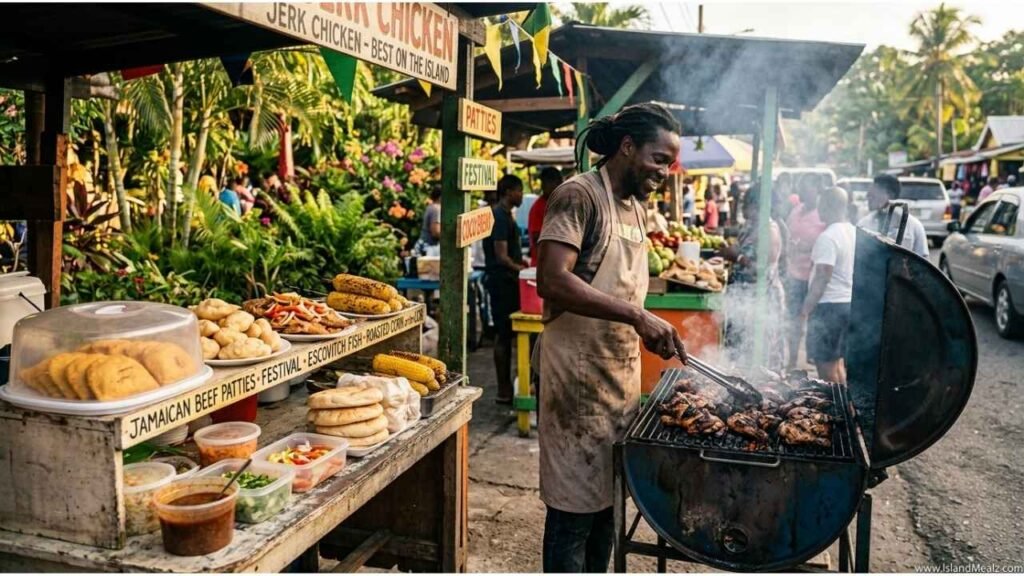
The Jamaican Beef Patty is the country’s most famous street food and one of its best-known culinary exports. It features a flaky, golden pastry filled with seasoned ground beef, onions, garlic, herbs, and spices. Depending on the recipe, patties may also include Scotch bonnet peppers for extra heat.
Today, you’ll find many variations, including:
- Chicken Patty
- Vegetable Patty
- Curry Chicken Patty
- Cheese Patty
- Shrimp Patty
- Jerk Chicken Patty
Many Jamaicans enjoy a beef patty tucked inside soft Coco Bread, creating a filling and affordable meal.
Coco Bread
Coco Bread is a soft, slightly sweet bread with a buttery texture that perfectly complements spicy fillings. Although delicious on its own, it is most commonly served with Jamaican Beef Patties.
This simple combination has become one of Jamaica’s most popular grab-and-go meals and is widely available in bakeries and roadside shops across the island.
Jerk Chicken
No discussion of Jamaican street food would be complete without Jerk Chicken. Across Jamaica, roadside jerk centers prepare chicken over charcoal or traditional pimento wood, filling the air with its unmistakable smoky aroma.
The chicken is marinated with jerk seasoning made from Scotch bonnet peppers, allspice, thyme, garlic, ginger, onions, and other herbs before being grilled slowly until tender and flavorful.
It is often served with:
- Festival
- Roasted Breadfruit
- Rice and Peas
- Fried Plantains
- Fresh Salad
Festival
Festival is a lightly sweet fried dough that is crispy on the outside and soft inside. Its slightly sweet flavor balances spicy dishes like jerk chicken and fried fish.
Although simple, Festival has become one of the most popular side dishes sold by Jamaican street vendors and beach restaurants.
Roast Corn
Roasted corn is a favorite roadside snack throughout Jamaica, especially during the summer months. Fresh ears of corn are roasted over hot charcoal until lightly charred, then served with butter, salt, or mild seasonings.
Simple yet delicious, roast corn is enjoyed by people of all ages and is often sold near beaches, parks, and busy intersections.
Fried Fish
Fresh fried fish is another popular street food found in coastal communities and beachside restaurants. Local fish are seasoned with herbs and spices before being fried until crispy and golden.
Many vendors serve fried fish with:
- Bammy
- Festival
- Breadfruit
- Fried Plantains
- Escovitch Vegetables
This combination creates one of the most authentic Jamaican seafood experiences.
Mannish Water
Mannish Water is a traditional Jamaican soup commonly sold at outdoor events, festivals, and roadside cook shops. Made with goat meat, vegetables, dumplings, herbs, and spices, it is slow-cooked until rich and flavorful.
Although visitors often find the name unusual, Mannish Water is considered one of Jamaica’s classic comfort foods and is especially popular at celebrations and weekend gatherings.
Pepper Pot Soup
Pepper Pot Soup is another well-loved street food, particularly during cooler weather and rainy days. This hearty soup combines leafy greens, vegetables, meat, dumplings, and aromatic herbs to create a satisfying meal.
Its rich flavor and nourishing ingredients have made it a favorite among Jamaican families for generations.
Roasted Breadfruit
Roasted Breadfruit is commonly sold by roadside vendors, particularly during breadfruit season. Cooked over an open flame, it develops a smoky aroma and a soft, starchy texture similar to roasted potatoes.
It pairs perfectly with jerk chicken, saltfish, fried fish, or simply a spread of butter.
Fresh Coconut and Tropical Fruits
Many Jamaican street vendors also sell fresh tropical fruits and chilled coconut water. Popular options include:
- Mango
- Pineapple
- Papaya
- Sugar Cane
- June Plum
- Star Apple
- Fresh Coconut
These naturally sweet snacks provide a refreshing break from Jamaica’s warm tropical weather and are packed with vitamins and minerals.
Why Jamaican Street Food Is Worth Trying
Jamaican street food offers a true taste of the island’s culture and everyday life. Unlike restaurant dining, these dishes are prepared using time-honored family recipes and fresh local ingredients, giving visitors an authentic culinary experience. Whether you’re enjoying a smoky jerk chicken meal, biting into a flaky beef patty, or sipping fresh coconut water on the beach, every street food tells a story about Jamaica’s rich traditions and welcoming communities.
For anyone exploring Jamaican cuisine, trying these classic street foods is one of the best ways to experience the island’s unforgettable flavors.
Jamaican Cooking Methods
Great Jamaican food isn’t created by spices alone. The way each dish is prepared plays an equally important role. Whether it’s slow-cooking oxtail until it’s fall-off-the-bone tender or grilling jerk chicken over pimento wood, traditional cooking methods are what give Jamaican cuisine its unforgettable flavor and texture.
Many Jamaican recipes are prepared using slow cooking, open-fire grilling, steaming, frying, or roasting. These methods allow herbs, spices, and seasonings to fully develop, creating meals that are rich, aromatic, and satisfying. Whether cooking at home or in a roadside cook shop, Jamaicans take pride in preparing food with patience and care rather than rushing the process.
Here are the most common cooking methods used in traditional Jamaican cuisine.
Jerk Cooking
Jerk cooking is Jamaica’s most famous culinary technique and has become a symbol of the island’s food culture. This method originated with the indigenous Taíno people and was later refined by the Maroons, who developed the unique seasoning and slow-cooking process that is still used today.
Meat—most commonly chicken or pork—is marinated with a blend of allspice (pimento), Scotch bonnet peppers, thyme, garlic, ginger, scallions, onions, and other spices. It is then slowly grilled over charcoal or pimento wood, allowing the smoky flavor to infuse the meat while keeping it juicy and tender.
Today, jerk seasoning is also used for fish, shrimp, tofu, vegetables, and even plant-based dishes.
Slow Cooking
Slow cooking is widely used in Jamaican kitchens, especially for dishes that require tender meat and rich gravies. Ingredients are cooked over low heat for several hours, allowing the flavors to blend naturally.
Popular slow-cooked dishes include:
- Curry Goat
- Oxtail Stew
- Brown Stew Chicken
- Pepper Pot Soup
- Mannish Water
This method produces soft, flavorful meat while creating thick, aromatic sauces that are perfect with rice and peas.
Grilling
Grilling is another popular cooking method in Jamaica. Fresh seafood, chicken, pork, vegetables, and even fruits are often cooked over charcoal grills to develop a delicious smoky flavor.
Unlike jerk cooking, regular grilling may use lighter seasonings while still emphasizing fresh ingredients and natural flavors. Beach restaurants and roadside vendors frequently prepare grilled fish and seafood using this technique.
Frying
Frying is commonly used for both main dishes and snacks throughout Jamaica. Foods are fried until golden brown and crispy while remaining tender inside.
Popular fried foods include:
- Fried Plantains
- Fried Dumplings
- Jamaican Beef Patties
- Escovitch Fish
- Festival
- Banana Fritters
Proper frying techniques help achieve the ideal texture without making the food overly greasy.
Stewing
Stewing is one of the oldest cooking methods in Jamaican cuisine. Meat, vegetables, herbs, and seasonings are simmered together in a flavorful sauce until everything becomes tender.
Classic stewed dishes include:
- Brown Stew Chicken
- Stewed Peas
- Oxtail
- Fish Stew
Stewing allows spices and fresh herbs to slowly release their flavors, creating rich and comforting meals.
Baking
Although Jamaica is famous for grilled and stewed dishes, baking also plays an important role in the country’s cuisine. Bakeries across the island prepare a variety of breads, pastries, cakes, and desserts using traditional recipes.
Popular baked foods include:
- Coco Bread
- Gizzada
- Toto Cake
- Jamaican Rum Cake
- Sweet Potato Pudding
Baking is especially common during holidays and family celebrations.
Roasting
Roasting is widely used for cooking vegetables and certain fruits. One of the best examples is roasted breadfruit, which is traditionally cooked over an open flame until the skin becomes charred and the inside soft and creamy.
Roasting is also used for:
- Breadfruit
- Corn
- Sweet Potatoes
- Yam
This method enhances the natural sweetness of vegetables while adding a subtle smoky flavor.
Boiling and Steaming
Boiling and steaming are essential techniques in Jamaican home cooking, particularly for preparing ground provisions such as:
- Green Bananas
- Yam
- Cassava
- Sweet Potatoes
- Dasheen
Steaming is also commonly used for vegetables, fish, and traditional dishes like Duckunoo, which is wrapped in banana leaves before cooking.
These methods preserve nutrients while maintaining the natural flavors of fresh ingredients.
Why Jamaican Cooking Methods Are Unique
Traditional Jamaican cooking focuses on bringing out the natural flavors of fresh ingredients rather than masking them. Herbs, spices, slow cooking, and fire-based techniques work together to create meals that are rich in flavor, aroma, and texture. Every cooking method has developed over centuries through the influence of African, Taíno, British, Indian, and other cultures, making Jamaican cuisine one of the most distinctive in the Caribbean.
Whether you’re preparing smoky jerk chicken, a slow-cooked pot of curry goat, crispy fried dumplings, or roasted breadfruit, understanding these cooking methods is the key to creating authentic Jamaican dishes at home.
Jamaican Herbs and Spices
Herbs and spices are the foundation of authentic Jamaican cuisine. While fresh ingredients provide the base for many traditional dishes, it is the careful combination of herbs, spices, and seasonings that creates the bold, aromatic flavors Jamaican food is famous for. Whether preparing jerk chicken, curry goat, rice and peas, soups, or seafood, Jamaican cooks rely on a handful of essential ingredients that have been used for generations.
Many of these herbs and spices are grown locally in Jamaica’s tropical climate, giving them exceptional freshness and flavor. Together, they create the perfect balance of heat, sweetness, earthiness, and aroma that defines Jamaican cooking.
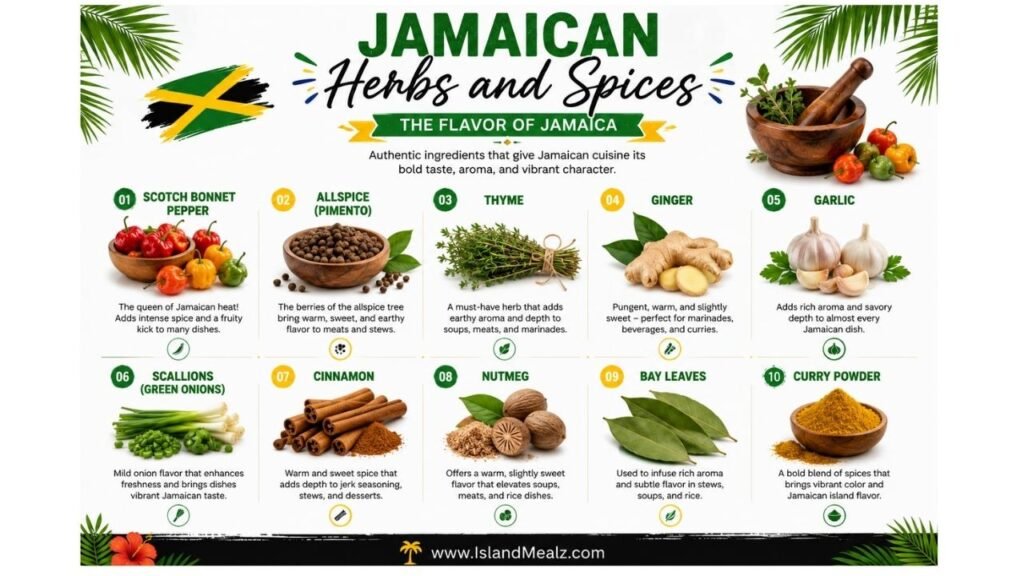
Here are the most important herbs and spices found in traditional Jamaican recipes.
Allspice (Pimento)
Allspice, known locally as pimento, is often considered the signature spice of Jamaican cuisine. Despite its name, it is a single spice made from the dried berries of the pimento tree. Its flavor combines notes of cinnamon, cloves, nutmeg, and black pepper, making it incredibly versatile.
Allspice is one of the main ingredients in authentic jerk seasoning and is also used in soups, stews, marinades, baked goods, desserts, and beverages such as Sorrel.
Scotch Bonnet Pepper
The Scotch bonnet pepper is one of the hottest peppers used in Caribbean cooking and a defining ingredient in Jamaican cuisine. Beyond its heat, it offers a fruity, slightly sweet flavor that enhances many traditional dishes.
It is commonly used in:
- Jerk Marinades
- Curry Goat
- Escovitch Fish
- Pepper Sauces
- Soups
- Stews
Depending on personal preference, the pepper may be used whole for a milder flavor or finely chopped for extra heat.
Fresh Thyme
Fresh thyme is one of the most frequently used herbs in Jamaican kitchens. It adds an earthy, slightly minty flavor that pairs well with meats, seafood, vegetables, rice dishes, and soups.
Thyme is often combined with garlic, onions, scallions, and allspice to build the flavor base of many classic Jamaican recipes.
Ginger
Fresh ginger adds warmth, freshness, and a slight spiciness to Jamaican cooking. It is commonly used in marinades, curries, baked goods, teas, desserts, and traditional drinks such as Ginger Beer and Sorrel.
Its refreshing aroma also makes it an important ingredient in homemade spice blends.
Garlic
Garlic is a key ingredient in countless Jamaican recipes. It provides depth of flavor to jerk seasoning, soups, stews, curries, seafood dishes, and meat marinades.
Fresh garlic is usually crushed or finely chopped before being mixed with thyme, scallions, onions, and peppers to create aromatic seasoning pastes.
Green Onions (Scallions)
Scallions, also called green onions, are another essential herb used throughout Jamaican cuisine. Their mild onion flavor complements meats, vegetables, seafood, and rice dishes without overpowering other ingredients.
Scallions are almost always included in homemade jerk marinades and seasoning blends.
Nutmeg
Nutmeg is widely used in Jamaican desserts and beverages. It provides a warm, sweet aroma that enhances cakes, puddings, porridges, and festive drinks.
Popular recipes containing nutmeg include:
- Sweet Potato Pudding
- Rum Cake
- Toto Cake
- Cornmeal Porridge
- Sorrel Drink
Freshly grated nutmeg delivers the best flavor and aroma.
Cinnamon
Cinnamon is another beloved spice in Jamaican kitchens. It is commonly used in desserts, porridges, baked goods, fruit drinks, and holiday beverages.
Its warm sweetness complements tropical fruits, coconut, sweet potatoes, and many traditional pastries.
Cloves
Cloves contribute a rich, slightly sweet aroma to many Jamaican holiday recipes. They are frequently used in:
- Sorrel Drink
- Rum Cake
- Stews
- Marinades
- Pickling Mixtures
Only a small amount is needed because of their strong flavor.
Bay Leaves
Bay leaves are commonly added to soups, stews, curries, and rice dishes during slow cooking. They provide a subtle herbal aroma that enhances other spices without dominating the dish.
The leaves are usually removed before serving.
Curry Powder
Although curry originated in India, it has become an essential part of Jamaican cuisine since the arrival of Indian immigrants in the 19th century.
Jamaican curry powder typically contains:
- Turmeric
- Coriander
- Cumin
- Fenugreek
- Mustard
- Black Pepper
This spice blend gives Curry Goat, Curry Chicken, and Curry Shrimp their distinctive golden color and rich flavor.
Why Jamaican Herbs and Spices Matter
The bold flavors of Jamaican cuisine would not exist without its traditional herbs and spices. Ingredients such as allspice, thyme, Scotch bonnet peppers, ginger, garlic, and scallions create the unmistakable taste that has made Jamaican food famous worldwide. Every herb and spice contributes something unique—whether it’s heat, aroma, sweetness, or depth of flavor.
Learning how these ingredients work together is essential for anyone who wants to prepare authentic Jamaican meals at home. By using fresh herbs and high-quality spices, you can recreate the vibrant flavors that define Jamaica’s rich culinary heritage.
Health Benefits of Jamaican Food
Jamaican food is often celebrated for its bold flavors and comforting dishes, but it also offers many nutritional benefits when prepared with fresh, wholesome ingredients. Traditional Jamaican cuisine includes a variety of vegetables, tropical fruits, legumes, seafood, lean meats, herbs, and spices that naturally provide essential vitamins, minerals, fiber, and protein.
Like any cuisine, some Jamaican dishes are richer than others, especially those that are fried or served with sugary beverages. However, many authentic recipes are based on fresh, minimally processed ingredients that can easily fit into a balanced diet. Understanding the nutritional value of these foods helps explain why Jamaican cuisine is not only delicious but also nourishing.
Rich in Fresh Vegetables
Vegetables are a key part of many Jamaican meals. Popular ingredients such as callaloo, cabbage, carrots, pumpkin, okra, tomatoes, sweet peppers, and green beans are commonly used in soups, stews, side dishes, and breakfast recipes.
These vegetables provide important nutrients, including:
- Vitamin A
- Vitamin C
- Vitamin K
- Folate
- Potassium
- Dietary Fiber
- Antioxidants
Eating a variety of colorful vegetables supports overall health and adds natural flavor and texture to Jamaican dishes.
Excellent Source of Protein
Protein plays an important role in muscle maintenance, energy production, and overall health. Traditional Jamaican cuisine offers many excellent protein sources, including:
- Chicken
- Fish
- Shrimp
- Goat
- Oxtail
- Saltfish
- Beans
- Peas
Seafood and lean meats are often seasoned with herbs and spices rather than heavy sauces, allowing the natural flavors to shine while providing high-quality protein.
Packed with Flavorful Herbs and Spices
One of the healthiest aspects of Jamaican cooking is its generous use of fresh herbs and spices. Instead of relying solely on processed flavorings, Jamaican recipes often include:
- Thyme
- Ginger
- Garlic
- Scallions
- Allspice
- Scotch Bonnet Peppers
These ingredients not only enhance flavor but also contain natural plant compounds that contribute to a well-balanced diet. Using herbs and spices also helps reduce the need for excessive amounts of salt or artificial seasonings.
Tropical Fruits Provide Essential Nutrients
Jamaica’s tropical climate allows a wide variety of fruits to grow throughout the year. Fresh fruits are commonly enjoyed as snacks, desserts, breakfast items, or refreshing juices.
Popular fruits include:
- Mango
- Papaya
- Pineapple
- Guava
- Soursop
- Banana
- June Plum
These fruits naturally contain vitamins, minerals, fiber, and antioxidants that support overall wellness and hydration.
Healthy Carbohydrate Sources
Many traditional Jamaican meals include ground provisions, which are starchy vegetables and root crops that provide long-lasting energy.
Common examples include:
- Yam
- Green Bananas
- Sweet Potatoes
- Breadfruit
- Cassava
- Dasheen
These foods are generally rich in complex carbohydrates and dietary fiber, making them more filling than highly processed refined grains.
Beans and Legumes Add Fiber
Kidney beans, gungo peas (pigeon peas), and other legumes are frequently used in Jamaican cooking, especially in dishes like Rice and Peas, soups, and stews.
Legumes are an excellent source of:
- Plant-Based Protein
- Dietary Fiber
- Iron
- Magnesium
- Potassium
Including beans in meals can help create balanced and satisfying dishes.
Fresh Seafood Choices
As an island nation, Jamaica enjoys access to fresh seafood throughout the year. Fish such as snapper, kingfish, and mackerel are commonly prepared grilled, steamed, or fried.
Seafood provides important nutrients including:
- Protein
- Omega-3 Fatty Acids
- Vitamin D
- Selenium
- Iodine
Grilled or steamed seafood can be a lighter option while still delivering authentic Jamaican flavor.
Homemade Cooking Encourages Fresh Ingredients
Traditional Jamaican meals are often prepared from scratch using fresh produce, herbs, spices, and locally sourced ingredients. Homemade cooking allows greater control over seasoning, cooking methods, and ingredient quality compared to heavily processed convenience foods.
Many family recipes focus on slow cooking, steaming, grilling, or boiling, which helps preserve the natural flavors of the ingredients.
Enjoy Rich Dishes in Moderation
Some popular Jamaican foods—such as fried dumplings, beef patties, festival, and rich desserts—are higher in calories, sugar, or fat. These dishes can certainly be enjoyed as part of a balanced lifestyle when eaten in moderation.
Pairing these treats with fresh vegetables, fruits, lean proteins, and healthy cooking methods helps create a well-rounded diet without sacrificing traditional flavors.
A Balanced Approach to Jamaican Cuisine
The healthiest way to enjoy Jamaican food is to focus on variety and balance. Combining fresh vegetables, tropical fruits, lean proteins, seafood, beans, herbs, spices, and whole-food ingredients creates meals that are both satisfying and nutritious.
Whether you’re preparing Ackee and Saltfish, Callaloo, grilled jerk chicken, Rice and Peas, or fresh tropical fruit, Jamaican cuisine offers countless opportunities to enjoy flavorful meals while embracing wholesome ingredients and time-honored cooking traditions.
Note: The nutritional value of any dish depends on its ingredients, portion size, and cooking method. This guide is for educational purposes only and should not be considered medical or dietary advice. If you have a medical condition or specific dietary needs, consult a qualified healthcare professional or registered dietitian.
Jamaican Food vs. Caribbean Food
Many people use the terms Jamaican food and Caribbean food interchangeably, but they are not exactly the same. While Jamaican cuisine is an important part of Caribbean cooking, the Caribbean consists of more than 20 countries and territories, each with its own unique food traditions, ingredients, and cooking styles.
In simple terms, Jamaican food is one type of Caribbean cuisine, just as Italian food is one type of European cuisine. Understanding the similarities and differences helps you appreciate the diversity of flavors found throughout the Caribbean region.
What Is Caribbean Food?
Caribbean food refers to the traditional cuisines of islands and coastal nations across the Caribbean Sea. Countries such as Jamaica, Trinidad and Tobago, Barbados, Cuba, Puerto Rico, the Dominican Republic, Haiti, and the Bahamas each have their own signature dishes, local ingredients, and culinary traditions.
Although these cuisines share certain ingredients and cooking techniques, every country has developed its own unique identity based on its history, geography, climate, and cultural influences.
What Makes Jamaican Food Unique?
Jamaican cuisine stands out because of its bold flavors, aromatic spices, and traditional cooking techniques. It has been shaped by the culinary traditions of the Taíno people, Africans, Europeans, Indians, and Chinese immigrants, creating a cuisine unlike any other in the Caribbean.
Some of the features that make Jamaican food distinctive include:
- Authentic jerk seasoning and jerk cooking.
- Generous use of allspice (pimento) and Scotch bonnet peppers.
- Traditional dishes such as Ackee and Saltfish, Curry Goat, Oxtail, and Escovitch Fish.
- A strong emphasis on fresh herbs like thyme, scallions, and garlic.
- Popular ground provisions such as yam, breadfruit, green bananas, and cassava.
- Rich food traditions connected to family gatherings, holidays, and community celebrations.
These characteristics have helped Jamaican cuisine become one of the most recognized Caribbean cuisines worldwide.
Similarities Between Jamaican and Caribbean Food
Despite their differences, Jamaican food shares many qualities with other Caribbean cuisines.
Common similarities include:
- Fresh tropical fruits and vegetables.
- Seafood as an important protein source.
- Rice served with many meals.
- Coconut milk used in savory and sweet dishes.
- Root vegetables such as cassava, yam, and sweet potatoes.
- Beans and legumes in soups and rice dishes.
- Fresh herbs and locally grown spices.
- Grilling, stewing, frying, and slow cooking as popular cooking methods.
These shared ingredients reflect the region’s tropical climate and agricultural traditions.
Key Differences
Although many ingredients overlap, each Caribbean country prepares food in its own way.
| Feature | Jamaican Food | Caribbean Food (General) |
| Cuisine Scope | Specific to Jamaica | Includes many Caribbean countries |
| Signature Flavor | Bold, smoky, spicy | Varies by country |
| Famous Seasoning | Jerk seasoning | Different spice blends depending on the island |
| National Dish | Ackee and Saltfish | Each country has its own national dish |
| Popular Pepper | Scotch Bonnet | Scotch Bonnet, Habanero, and other local peppers |
| Cooking Style | Jerk, slow cooking, stewing | Grilling, roasting, stewing, baking, frying |
| Cultural Influences | Taíno, African, British, Indian, Chinese | Varies across each Caribbean nation |
Signature Dishes Across the Caribbean
Every Caribbean country is known for its own famous dishes.
Examples include:
Jamaica
- Jerk Chicken
- Ackee and Saltfish
- Curry Goat
- Rice and Peas
Trinidad and Tobago
- Doubles
- Bake and Shark
- Pelau
Barbados
- Flying Fish and Cou-Cou
- Fish Cakes
Puerto Rico
- Mofongo
- Arroz con Gandules
Dominican Republic
- La Bandera Dominicana
- Sancocho
Although these cuisines share regional influences, each offers a unique culinary experience.
Which Cuisine Is Spicier?
Many people assume all Caribbean food is extremely spicy, but this is a misconception.
Jamaican cuisine is often considered one of the bolder and spicier Caribbean cuisines because of its use of Scotch bonnet peppers and jerk seasoning. However, not every Jamaican dish is hot. Many meals focus on herbs, natural spices, and balanced flavors rather than intense heat.
Likewise, several Caribbean countries prepare mildly seasoned dishes that highlight fresh seafood, vegetables, and tropical ingredients instead of spicy peppers.
Why People Often Confuse the Two
Jamaican restaurants are among the most common Caribbean restaurants found in the United States, Canada, and the United Kingdom. As a result, many people experience Jamaican food before trying other Caribbean cuisines and begin using the term “Caribbean food” to describe Jamaican dishes.
In reality, Jamaican cuisine is one important part of the larger Caribbean culinary tradition, but it represents only one island’s unique history and food culture.
Final Thoughts
Jamaican food and Caribbean food share many ingredients and traditions, yet they are not identical. Jamaican cuisine has its own distinctive identity, shaped by centuries of cultural influences, local ingredients, and time-honored cooking techniques. From the smoky flavor of jerk chicken to the rich taste of Ackee and Saltfish, Jamaican food offers an unforgettable culinary experience that stands proudly within the diverse world of Caribbean cuisine.
Whether you’re new to Caribbean cooking or exploring different island flavors, understanding these similarities and differences will help you better appreciate the rich food heritage of the region.
Jamaican Food Around the World
Jamaican food has grown from a beloved island cuisine into a global culinary favorite. Thanks to the Jamaican diaspora, international travel, and the increasing popularity of Caribbean flavors, authentic Jamaican dishes can now be found in major cities around the world. From family-owned restaurants to food festivals and home kitchens, Jamaican cuisine continues to win over people with its bold flavors, rich history, and vibrant culture.
Although the recipes remain rooted in Jamaican traditions, many have adapted to local tastes and ingredients while still preserving their authentic character. Today, whether you’re in New York, London, Toronto, or Sydney, there’s a good chance you’ll find a restaurant serving classic Jamaican favorites like jerk chicken, curry goat, and beef patties.
Jamaican Food in the United States
The United States is home to one of the largest Jamaican communities outside of Jamaica, making it one of the best places to experience authentic Jamaican cuisine. Cities such as New York City, Miami, Fort Lauderdale, Orlando, Atlanta, Washington, D.C., Houston, and Philadelphia have thriving Jamaican restaurants, bakeries, and food markets.
American diners have embraced dishes like:
- Jerk Chicken
- Oxtail
- Curry Goat
- Ackee and Saltfish
- Rice and Peas
- Jamaican Beef Patties
In recent years, Jamaican flavors have also influenced mainstream American cuisine. Restaurants now offer jerk tacos, jerk burgers, jerk pizza, and Caribbean-inspired bowls, introducing more people to the island’s signature seasonings.
Jamaican Food in Canada
Canada has a large Caribbean population, particularly in Toronto, where Jamaican food is deeply woven into the city’s multicultural dining scene. Authentic jerk restaurants, bakeries, and Caribbean grocery stores are easy to find, allowing both locals and visitors to enjoy traditional Jamaican meals.
Popular dishes include jerk chicken, patties, oxtail, fried plantains, and curry goat. Events such as Caribbean cultural festivals have also helped introduce Jamaican cuisine to a wider audience across Canada.
Jamaican Food in the United Kingdom
The United Kingdom has a long history of Jamaican immigration, making Jamaican cuisine an important part of British food culture. Cities like London, Birmingham, Manchester, Leeds, and Bristol feature hundreds of Jamaican restaurants and takeaway shops.
Jerk Chicken, Rice and Peas, Curry Goat, and Beef Patties are especially popular among British diners. Many supermarkets also carry Jamaican sauces, spices, beverages, and frozen foods, making it easier for families to prepare authentic meals at home.
Jamaican Food in Australia
Interest in Caribbean cuisine continues to grow across Australia. While Jamaican restaurants are less common than in North America or the United Kingdom, cities such as Sydney, Melbourne, and Brisbane have seen an increase in Caribbean food businesses and cultural events.
Food lovers are becoming more interested in authentic jerk cooking, tropical ingredients, and homemade Jamaican recipes, creating new opportunities for Jamaican cuisine to expand.
Jamaican Food in Europe
Outside the United Kingdom, Jamaican food is gradually becoming more popular in countries such as Germany, France, the Netherlands, Spain, and Sweden. Caribbean food festivals, international restaurants, and online recipe resources have introduced more Europeans to traditional Jamaican dishes.
Although authentic ingredients may sometimes be harder to find, many cooks successfully recreate Jamaican recipes using locally available alternatives.
Why Jamaican Cuisine Is So Popular
Several factors have contributed to the worldwide popularity of Jamaican food:
- Bold and unforgettable flavors.
- Unique jerk seasoning.
- Fresh herbs and tropical ingredients.
- Rich cultural heritage.
- Diverse menu with meat, seafood, and vegetarian options.
- Easy-to-recognize signature dishes.
- Growing interest in Caribbean travel and culture.
- Strong influence of Jamaican music, sports, and festivals.
These qualities have helped Jamaican cuisine earn international recognition and a loyal following around the world.
How Traditional Recipes Have Adapted
As Jamaican communities settled in different countries, many recipes evolved to match local ingredients and preferences. While the core flavors remain authentic, some restaurants adjust spice levels or substitute ingredients that are difficult to source outside Jamaica.
For example:
- Jerk chicken may be grilled instead of cooked over traditional pimento wood.
- Locally available fish may replace Caribbean species.
- Homemade spice blends may substitute fresh Jamaican herbs when necessary.
- Vegetarian and vegan versions of classic recipes have become increasingly popular.
These adaptations help preserve Jamaican culinary traditions while making them accessible to people worldwide.
Jamaican Food in the Digital Age
The internet has played a major role in spreading Jamaican cuisine across the globe. Food blogs, cooking websites, YouTube channels, and social media platforms have introduced millions of people to authentic recipes, cooking techniques, and Jamaican food culture.
Home cooks can now learn how to prepare dishes like Ackee and Saltfish, Curry Goat, Rice and Peas, and Sweet Potato Pudding without traveling to Jamaica. Online grocery stores have also made it easier to purchase traditional Jamaican spices, sauces, and ingredients from almost anywhere in the world.
Why Jamaican Food Continues to Grow
Jamaican cuisine has earned a place among the world’s most respected food traditions because it offers more than just delicious meals—it tells the story of a nation’s history, resilience, and cultural diversity. Every dish reflects generations of creativity, family traditions, and the blending of influences from Africa, Europe, Asia, and the Caribbean.
Whether enjoyed at a local restaurant, prepared at home, or discovered while traveling, Jamaican food continues to inspire people with its vibrant flavors and welcoming spirit. As more people explore Caribbean cuisine, Jamaican food is likely to remain one of its most recognized and celebrated ambassadors.
Frequently Asked Questions (FAQs)
Below are answers to some of the most commonly asked questions about Jamaican food. These FAQs help beginners understand Jamaican cuisine, its ingredients, cooking methods, and cultural significance.
1. What is Jamaican food?
Jamaican food is the traditional cuisine of Jamaica, known for its bold flavors, fresh ingredients, aromatic herbs, and rich cultural heritage. It combines influences from the Taíno people, African, British, Indian, and Chinese cultures to create unique dishes enjoyed around the world.
2. What is Jamaica’s national dish?
Jamaica’s national dish is Ackee and Saltfish. It is made by cooking ripe ackee fruit with salted cod, onions, tomatoes, sweet peppers, thyme, and other seasonings. It is commonly served with fried dumplings, roasted breadfruit, or boiled green bananas.
3. Is Jamaican food spicy?
Some Jamaican dishes are spicy, but not all. Scotch bonnet peppers are commonly used to add heat, especially in jerk recipes. However, many traditional meals focus on balanced flavors using herbs and spices rather than extreme spiciness. The spice level can often be adjusted to suit personal preference.
4. What is jerk seasoning?
Jerk seasoning is a traditional Jamaican spice blend used to marinate meat, seafood, and vegetables. It usually contains allspice (pimento), Scotch bonnet peppers, thyme, garlic, ginger, scallions, onions, cinnamon, nutmeg, and other herbs and spices. It gives food its signature smoky, spicy, and aromatic flavor.
5. What are the most popular Jamaican dishes?
Some of the most famous Jamaican dishes include:
- Jerk Chicken
- Ackee and Saltfish
- Curry Goat
- Oxtail Stew
- Escovitch Fish
- Rice and Peas
- Jamaican Beef Patty
- Callaloo
- Festival
- Bammy
These dishes represent the heart of authentic Jamaican cuisine.
6. Is Jamaican food healthy?
Many traditional Jamaican dishes can be part of a healthy, balanced diet. Meals often include fresh vegetables, lean proteins, seafood, beans, tropical fruits, and natural herbs and spices. Healthier cooking methods such as grilling, steaming, and boiling are also commonly used.
7. What ingredients are commonly used in Jamaican cooking?
Some of the most important Jamaican ingredients include:
- Scotch Bonnet Pepper
- Allspice (Pimento)
- Fresh Thyme
- Garlic
- Ginger
- Scallions
- Coconut Milk
- Plantains
- Breadfruit
- Cassava
- Callaloo
- Saltfish
These ingredients create the distinctive flavors found in authentic Jamaican recipes.
8. What is the difference between Jamaican food and Caribbean food?
Jamaican food is one type of Caribbean cuisine. While Caribbean food includes the culinary traditions of many different islands and countries, Jamaican cuisine has its own signature dishes, spices, cooking techniques, and cultural influences that make it unique.
9. What is the most famous Jamaican drink?
One of the most popular traditional Jamaican drinks is Sorrel, especially during the Christmas season. Other well-known beverages include Jamaican Ginger Beer, Irish Moss Drink, Ting, Coconut Water, and Jamaican Blue Mountain Coffee.
10. What are traditional Jamaican breakfast foods?
A traditional Jamaican breakfast often includes:
- Ackee and Saltfish
- Fried Dumplings
- Callaloo
- Salt Mackerel
- Boiled Green Bananas
- Boiled Yam
- Breadfruit
- Cornmeal Porridge
These meals are filling, flavorful, and commonly enjoyed across the island.
11. What is Jamaican street food?
Jamaican street food refers to affordable, freshly prepared meals and snacks sold by roadside vendors, local markets, and cook shops. Popular street foods include Jamaican Beef Patties, Jerk Chicken, Festival, Fried Fish, Roast Corn, Coco Bread, and Pepper Pot Soup.
12. Why is Jamaican food so popular?
Jamaican food is loved worldwide because of its bold flavors, fresh ingredients, rich cultural history, and unique cooking techniques. Signature dishes like Jerk Chicken and Ackee and Saltfish have helped introduce Jamaican cuisine to people across the globe.
13. Can I cook Jamaican food at home?
Yes. Many traditional Jamaican recipes can be prepared at home using fresh herbs, spices, vegetables, and commonly available ingredients. If certain Jamaican ingredients are unavailable, suitable substitutes can often be used while still maintaining authentic flavors.
14. Is Jamaican food suitable for vegetarians?
Yes. Although many traditional dishes contain meat or seafood, Jamaican cuisine also includes several vegetarian-friendly options such as Callaloo, Rice and Peas, Steamed Cabbage, Fried Plantains, Bammy, Festival, and a variety of vegetable soups and stews.
15. Where can I try authentic Jamaican food?
Authentic Jamaican food can be enjoyed in Jamaica, Caribbean restaurants, family-owned cook shops, and many major cities across the United States, Canada, the United Kingdom, and other countries with large Jamaican communities. You can also prepare authentic Jamaican recipes at home by following trusted cooking guides and using traditional ingredients.
Conclusion
Exploring Jamaican food is about more than learning new recipes—it’s about experiencing the history, traditions, and culture of an island that has influenced kitchens around the world. Whether you’re preparing your first plate of jerk chicken, tasting Ackee and Saltfish for the first time, or simply learning about Jamaica’s unique ingredients, every recipe offers a deeper connection to the island’s rich culinary heritage. We hope this guide inspires you to continue exploring authentic Jamaican cuisine and discover why these timeless flavors continue to captivate food lovers everywhere.
Throughout this guide, we’ve explored the foundations of authentic Jamaican cuisine, including its history, traditional dishes, essential ingredients, herbs and spices, cooking methods, breakfast favorites, street food, desserts, beverages, and nutritional benefits. Understanding these elements provides a deeper appreciation of the traditions and techniques that make Jamaican food so unique.
Whether you’re discovering Jamaican cuisine for the first time or expanding your knowledge of Caribbean cooking, there is always something new to explore. Trying authentic recipes, learning about local ingredients, and understanding the stories behind each dish can transform an ordinary meal into a meaningful cultural experience.
At Island Mealz, our goal is to help you discover the true flavors of Jamaica through reliable, easy-to-follow, and informative content. As you continue your culinary journey, explore our detailed recipe guides, ingredient articles, cooking tips, and food culture resources to learn even more about this vibrant island cuisine.
Thank you for joining us on this journey through Jamaican food. We hope this ultimate guide has inspired you to experience the rich flavors, traditions, and warm hospitality that make Jamaican cuisine one of the most beloved food cultures in the world.