
Steaming vegetables is a simple way to prepare a fresh side dish without much fuss. You don’t need a lot of oil or special ingredients. A few minutes of steam can make vegetables like broccoli, carrots, and green beans tender while helping them keep their natural color and flavor.
The best part is that you can steam vegetables using a regular pot and a steamer basket. In this article, you’ll learn how to prepare different vegetables, how long to cook them, and how to steam fresh or frozen vegetables without making them too soft.
Why Steam Vegetables?
Steaming cooks vegetables with hot water vapor instead of submerging them in boiling water. This gives you more control over their texture and makes it easier to avoid vegetables that are too soft or watery.
It is also a convenient way to prepare a side dish without adding much fat. You can serve steamed vegetables with grilled chicken, baked fish, rice, or pasta. The same basic method works for many vegetables, so you can use whatever you have in your kitchen.
Benefits of Steaming Vegetables
- Better texture: Vegetables can stay firm and tender when you cook them for the right amount of time.
- Natural flavor: Steaming lets the flavor of each vegetable come through.
- Less added fat: You don’t need oil or butter during cooking.
- Easy preparation: Most vegetables only need washing, trimming, and cutting.
- Flexible serving options: Add garlic, lemon juice, butter, or herbs before serving.
What You Need to Steam Vegetables
You probably already have most of the equipment needed to steam vegetables. A regular saucepan and a lid are enough to get started. A steamer basket makes the process easier by keeping the vegetables above the water.
Essential Kitchen Equipment
- Saucepan with a lid: Holds the water and keeps steam inside the pot.
- Steamer basket: Holds the vegetables above the water while they cook.
- Knife and cutting board: Help you trim and cut vegetables into even pieces.
- Fork: Helps you check whether the vegetables are tender.
Can You Steam Vegetables Without a Steamer?
Yes. A heat-safe metal colander can work as a substitute if it fits securely inside your saucepan. Add water to the pot, making sure it stays below the colander. Place the vegetables inside and cover the pot with a lid.
Check that the colander is stable before heating the water. Avoid using plastic equipment unless it is specifically designed for steaming and high temperatures.
How to Steam Vegetables on the Stove
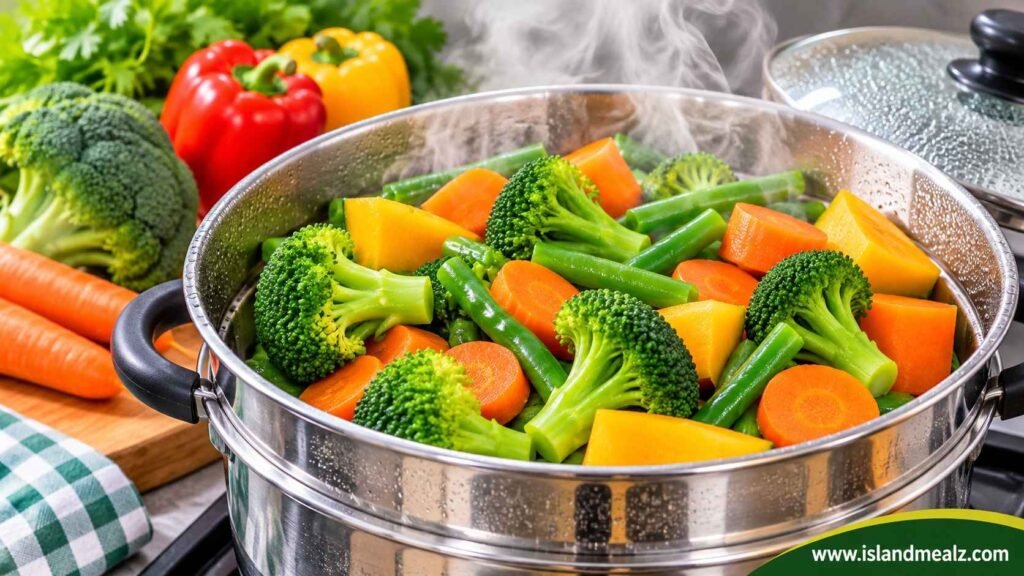
The stovetop method is a reliable way to steam most fresh vegetables. Once you have your pot and steamer basket ready, the process takes only a few simple steps.
Step 1 – Wash and Prepare the Vegetables
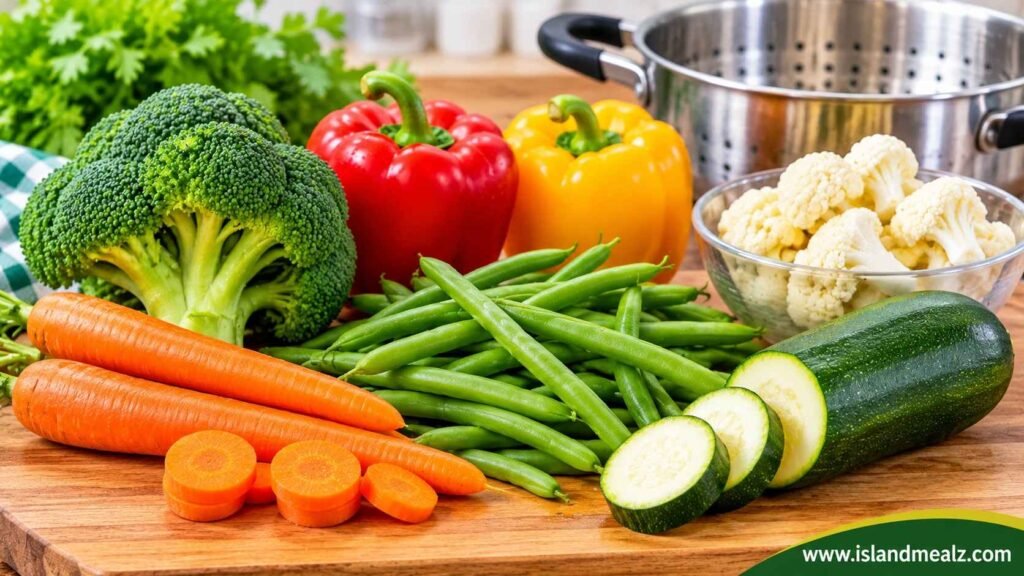
Rinse the vegetables under cool running water. Remove any damaged parts and trim the ends where needed. Cut larger vegetables into similar-sized pieces so they cook more evenly.
Step 2 – Add Water to the Pot
Pour about 1 to 2 inches of water into a saucepan. The water should stay below the bottom of the steamer basket. Vegetables should not sit in the water while cooking.
Step 3 – Bring the Water to a Boil
Place the saucepan on the stove over medium-high heat. Wait until the water starts boiling and producing steam. Keep an eye on the water level during cooking.
Step 4 – Add the Vegetables
Carefully place the steamer basket inside the pot. Spread the vegetables in a fairly even layer. Avoid packing them too tightly because steam needs room to move around.
Step 5 – Cover and Steam
Put the lid on the saucepan and let the vegetables cook. Maintain a steady simmer so the pot continues producing steam. Cooking time will depend on the vegetable and the size of each piece.
Step 6 – Check and Serve
Carefully remove the lid, opening it away from your face. Pierce a piece with a fork to check if it is tender. If it still feels firm, steam it for another minute or two. Serve the vegetables with your favorite seasoning.
How Long to Steam Different Vegetables
Not all vegetables cook at the same speed. Thin asparagus and spinach need only a few minutes, while carrots and potatoes take longer. The size of the pieces also makes a difference.
Use the following table as a starting point when steaming vegetables on the stove.
| Vegetable | Preparation | Steaming Time |
| Broccoli | Small florets | 5–7 minutes |
| Carrots | Thin slices | 8–10 minutes |
| Cauliflower | Small florets | 5–8 minutes |
| Green beans | Trimmed | 5–7 minutes |
| Asparagus | Trimmed | 3–5 minutes |
| Spinach | Fresh leaves | 2–3 minutes |
| Zucchini | Sliced | 4–6 minutes |
| Brussels sprouts | Halved | 7–10 minutes |
| Potatoes | Small cubes | 10–15 minutes |
| Sweet potatoes | Small cubes | 10–15 minutes |
How to Check If Vegetables Are Done
Pierce a piece with a fork to check its texture. It should be tender but should not fall apart. If it feels too firm, cover the pot and continue steaming for another minute or two.
These times are estimates, not fixed rules. Check the vegetables early, especially if you cut them into small pieces. This helps you avoid overcooking them.
How to Steam Vegetables Without a Steamer
You can steam vegetables even if you don’t own a steamer basket. A heat-safe metal colander and a saucepan can work as a simple alternative. Just make sure the colander fits securely and stays above the water.
Using a Metal Colander
Add about 1 to 2 inches of water to a saucepan. Place a metal colander inside, making sure its bottom does not touch the water. Add the vegetables and cover the pot with a lid.
Bring the water to a boil and let the steam cook the vegetables. Check them with a fork before removing the colander. Use oven mitts because the metal will become hot.
Avoid using a plastic colander unless the manufacturer confirms that it is safe for high-temperature steaming.
How to Steam Frozen Vegetables
Frozen vegetables are useful when fresh produce is not available. They are already washed and cut in most cases, so you can save time in the kitchen. Most frozen vegetables can go straight from the freezer into the steamer basket.
Should You Thaw Frozen Vegetables First?
No, thawing is usually unnecessary. Add the frozen vegetables directly to the basket. Cooking them from frozen can also help prevent them from becoming too soft before they reach the pot.
How to Adjust Steaming Time
Frozen vegetables may need a different cooking time depending on their size and type. Follow the package directions when available, then check the vegetables with a fork. If they are still cold or firm in the center, continue steaming until they are heated through and reach the texture you prefer.
How to Steam Vegetables in the Microwave
The microwave is a convenient option when you only need to cook a small amount of vegetables. It works well for broccoli, carrots, green beans, and other vegetables that cook quickly.
Microwave-Steaming Instructions
Wash and cut the vegetables into similar-sized pieces. Place them in a microwave-safe bowl with 1 to 2 tablespoons of water. Cover the bowl with a microwave-safe lid or plate that allows steam to escape.
Microwave for about 2 to 5 minutes, depending on the vegetable, quantity, and microwave power. Check the texture and continue cooking in short intervals if needed.
Carefully remove the cover away from your face. The trapped steam can be very hot. Drain any extra water and season the vegetables before serving.
Tips for Perfectly Steamed Vegetables
A few small adjustments can make steamed vegetables turn out much better. Keep these tips in mind the next time you prepare them.
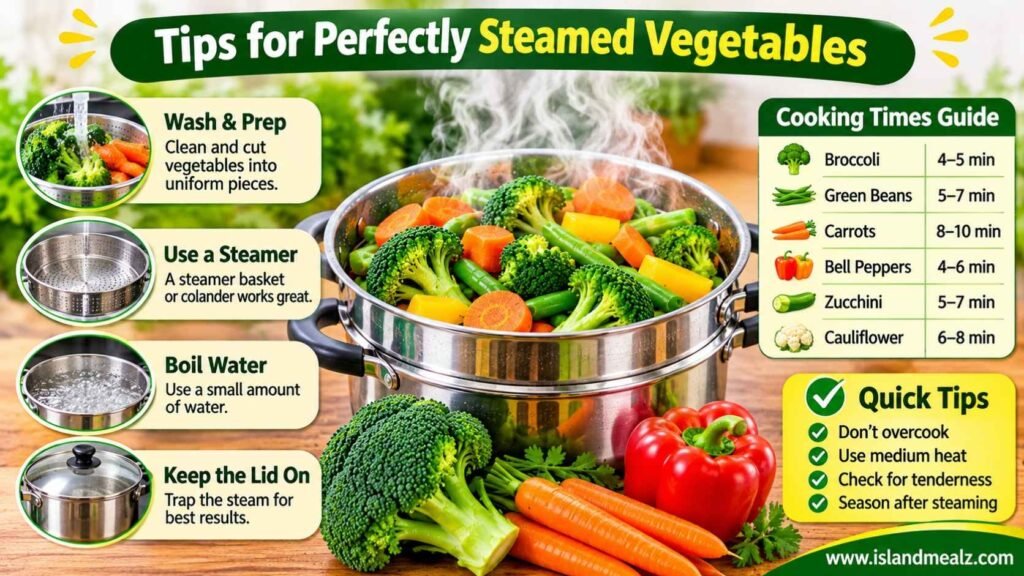
- Cut evenly: Similar-sized pieces help vegetables cook at the same rate.
- Don’t overfill the basket: Leave space for steam to circulate.
- Keep the lid on: Removing it too often lets heat and steam escape.
- Check early: Start testing vegetables before the estimated cooking time ends.
- Cook in batches: Prepare dense vegetables separately from softer ones when their cooking times differ.
- Season at the end: Add butter, olive oil, lemon juice, or herbs after cooking.
If you are steaming broccoli and carrots together, remember that carrots usually take longer. Start cooking the carrots first, then add the broccoli so both vegetables have a better chance of finishing at the same time.
How to Season Steamed Vegetables
Plain steamed vegetables are easy to prepare, but a little seasoning can make them more enjoyable. Add your seasonings after cooking so you can control the flavor and keep the vegetables from becoming too salty.
Simple Butter and Garlic Seasoning
Melt a little butter in a small pan and stir in minced garlic. Add the mixture to warm vegetables and toss gently. Finish with a pinch of salt and black pepper.
Lemon, Olive Oil, and Fresh Herbs
For a lighter option, drizzle vegetables with olive oil and fresh lemon juice. Add chopped parsley or dried oregano for extra flavor. This combination works especially well with asparagus, broccoli, and green beans.
You can also keep things simple with salt, black pepper, and a little garlic powder. Use whichever combination goes best with your main dish.
Frequently Asked Questions
Is steaming vegetables better than boiling?
Steaming can help reduce the loss of some water-soluble nutrients because vegetables do not sit directly in cooking water. Both methods can be part of a healthy diet, but steaming is a good choice when you want vegetables to keep their shape and flavor.
Should vegetables touch the boiling water?
No. When using a steamer basket, vegetables should stay above the water. The hot steam cooks them while the boiling water remains underneath.
Do you cover vegetables when steaming?
Yes. Keep the pot covered while steaming. A lid helps hold the steam inside and maintains a steady cooking temperature.
How do you prevent steamed vegetables from becoming mushy?
Check the vegetables regularly and stop cooking as soon as they become tender. Avoid cutting them too small if you want them to hold their shape.
Can you steam multiple vegetables together?
Yes. Choose vegetables with similar cooking times or add them to the basket at different times. For example, carrots can start cooking before broccoli so both are ready together.
Final Thoughts
Once you learn the basic steaming method, preparing vegetables becomes much easier. Start with a vegetable you enjoy, keep an eye on the cooking time, and remove it before it gets too soft. A little butter, garlic, or lemon juice can make a simple bowl of steamed vegetables a welcome addition to almost any meal.