
Jamaican bammy is a traditional cassava flatbread with a mild flavor and a firm, satisfying texture. It is especially popular with fried fish and escovitch fish, where its simple taste pairs well with bold Jamaican seasonings. Some people enjoy it straight from the griddle, while others prefer it soaked in coconut milk and fried until lightly golden.
Making bammy at home takes a little preparation, but the ingredients are simple. The key is preparing the cassava correctly and cooking each round evenly. In this recipe, you will learn about the ingredients, traditional cooking method, coconut milk soak, and easy ways to serve bammy with your favorite Caribbean dishes.
What Is Jamaican Bammy?
Bammy is a round, flat Jamaican bread traditionally made from processed cassava. It has roots in the food traditions of the Taíno people, who used cassava as an important part of their diet. The bread remains a familiar part of Jamaican cooking today.
Unlike wheat bread, traditional bammy does not need wheat flour. It has a mild flavor and a firm texture, making it a good match for dishes with strong seasonings. When cooked in a pan and finished with a coconut milk soak, it develops a lightly crisp outside and a softer center.
In Jamaica, bammy is often served with escovitch fish or fried fish. You may also find ready-made bammy in Caribbean grocery stores, which makes it easier to prepare at home.
Ingredients for Jamaican Bammy Recipe
Traditional Jamaican bammy uses only a few basic ingredients. Cassava provides the main structure, while salt adds a little flavor. Coconut milk is used later to soak the cooked rounds before frying.
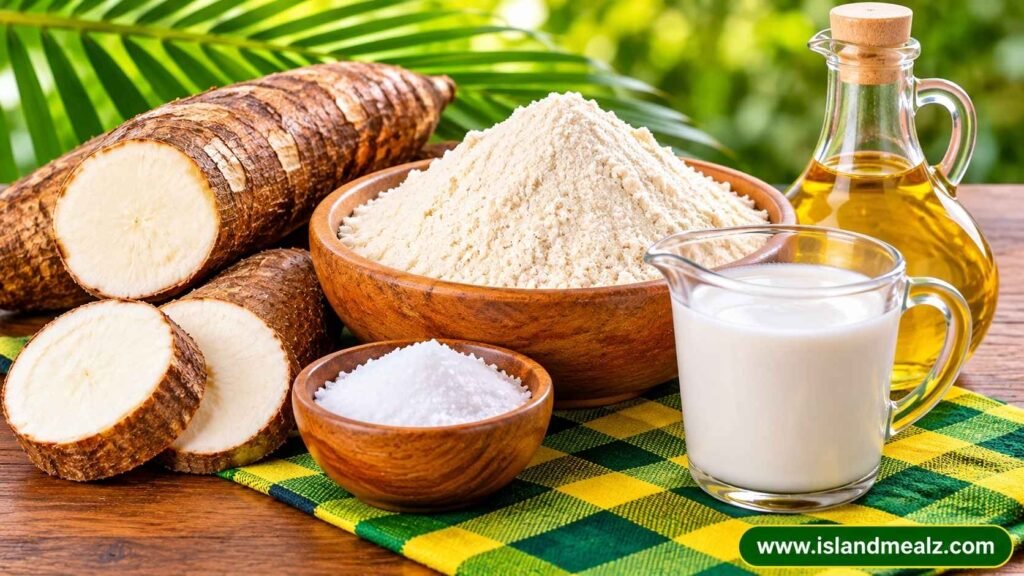
Main Ingredients
| Ingredient | Quantity | Purpose |
| Properly processed cassava | 2 lbs | Main ingredient |
| Salt | 1 teaspoon | Adds flavor |
| Coconut milk | 1 cup | For soaking |
| Vegetable oil | 2–3 tablespoons | For frying |
Ingredient Substitutions
- Coconut milk: Full-fat coconut milk gives a richer taste, but light coconut milk also works.
- Vegetable oil: Coconut oil is another option for frying.
- Salt: Use a little less or more depending on your taste.
Choose fresh cassava from a reliable food supplier, or use commercially processed cassava specifically intended for food preparation. Cassava must be processed properly before it is eaten.
Kitchen Tools You Will Need
You probably have most of the equipment needed to prepare bammy in your kitchen. Having everything ready before you start will make the process easier.
- Box grater or food processor: For preparing the cassava.
- Vegetable peeler and knife: For removing the cassava skin.
- Clean cheesecloth or suitable pressing equipment: For draining the cassava pulp during the approved preparation process.
- Mixing bowl: For combining the prepared cassava with salt.
- Measuring cups and spoons: For measuring the ingredients.
- Skillet or cast-iron pan: For cooking the bammy rounds.
- Spatula: For turning the rounds without breaking them.
A flat cooking surface also helps you shape the rounds evenly. Make sure your equipment is clean and dry before preparing the ingredients.
How to Prepare Cassava for Bammy
Cassava preparation is an important part of making traditional Jamaican bammy. The root must go through proper processing before it is used in food. Never assume that peeling, grating, and squeezing alone make every type of cassava safe to eat.
Peel and Prepare the Cassava
Start with cassava from a reliable food supplier. Wash the roots, remove the thick outer skin, and cut away any damaged areas. Follow a verified preparation method suitable for the type of cassava you are using.
Process the Cassava Properly
Traditional Jamaican bammy preparation involves grating cassava and pressing the pulp to remove its liquid. The remaining material is then dried and prepared as cassava flour. The drying and processing stages are important and should not be skipped.
Prepare the Processed Cassava
Use properly processed, food-grade cassava material for the recipe. Add the measured salt and mix until evenly distributed. The mixture should be suitable for shaping into bammy rounds.
Do not taste raw cassava pulp or use its extracted liquid in cooking. If you are unsure whether the cassava has been processed correctly, choose commercially processed cassava intended for food use instead.
How to Make Jamaican Bammy Recipe Step by Step
Once your cassava mixture is properly prepared, you can start shaping the bammy. Try to keep each round the same size so they cook evenly.
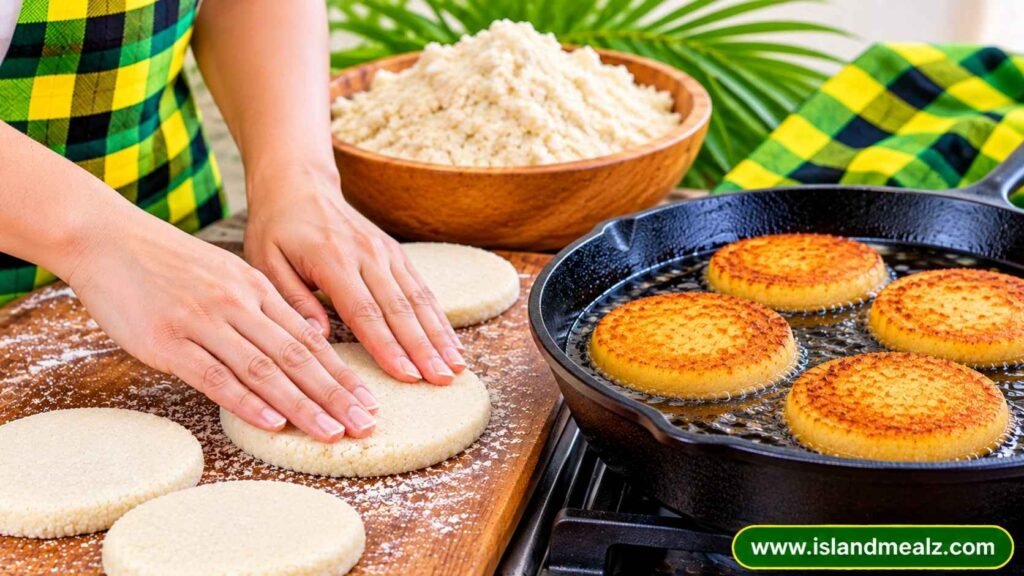
Step 1: Divide the Cassava Mixture
Place the prepared cassava mixture in a bowl. Divide it into equal portions depending on how large you want your bammy rounds to be.
Step 2: Shape the Bammy Rounds
Take one portion and press it into a flat, round shape. Aim for about 4–5 inches wide and around half an inch thick. Smooth the edges so the round holds together during cooking.
Repeat with the remaining portions.
Step 3: Heat the Skillet
Lightly grease a skillet or cast-iron pan and place it over medium heat. Allow the pan to heat before adding the first bammy round.
Step 4: Cook Both Sides
Place one round in the skillet and cook until the bottom becomes firm. Carefully turn it with a spatula and cook the other side.
Continue cooking until both sides are set and lightly golden. Adjust the heat if the surface starts browning too quickly.
Transfer the cooked bammy to a clean plate. Repeat with the remaining rounds, then move on to the coconut milk soaking step.
How to Soak and Fry Bammy in Coconut Milk
The coconut milk soak gives Jamaican bammy its familiar rich flavor. It also helps soften the inside before the final frying step. Make sure the bammy rounds are fully cooked before soaking them.
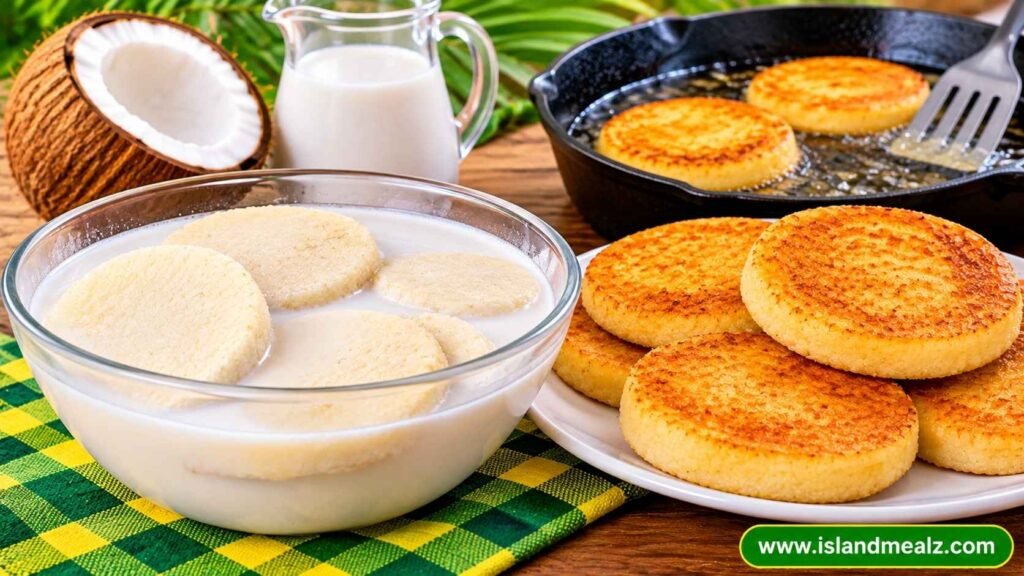
Soak the Cooked Bammy in Coconut Milk
Pour the coconut milk into a shallow bowl. Place one cooked bammy round in the bowl and turn it so both sides absorb some of the liquid.
Let it soak briefly, then lift it out and allow the extra coconut milk to drain. Avoid leaving the rounds in the liquid for too long because they can become difficult to handle.
Fry Until Golden Brown
Heat a little vegetable oil or coconut oil in a skillet over medium heat. Place the soaked bammy in the pan and fry both sides until lightly golden.
Turn each round carefully with a spatula. Transfer the finished bammy to a plate lined with paper towels to remove excess oil.
Serve warm with Jamaican fried fish or escovitch fish.
Tips for Making Perfect Jamaican Bammy
A few small details can make a difference when preparing homemade bammy. Keep these tips in mind as you work through the recipe.

- Keep the rounds even: Make each piece similar in size so they cook at the same rate.
- Use the right thickness: Rounds that are too thick can be harder to cook evenly.
- Watch the heat: Medium heat helps the outside cook without browning too quickly.
- Do not rush the coconut milk soak: Give the cooked rounds enough time to absorb flavor without becoming soggy.
- Fry in small batches: Leave enough space between the rounds so they brown properly.
- Serve while warm: Bammy tastes especially good shortly after frying, when the outside is still lightly crisp.
Take your time when shaping and cooking the rounds. Even sizes and steady heat help produce a more consistent result.
Common Mistakes to Avoid
A few preparation mistakes can affect the texture and quality of homemade bammy. Here are some things to watch out for.
- Using improperly processed cassava: Always use cassava that has gone through a suitable food-safe processing method.
- Making uneven rounds: Different sizes can lead to uneven cooking. Divide the mixture into equal portions.
- Cooking over high heat: Excessive heat can brown the outside before the center cooks properly.
- Adding too much coconut milk: Excess liquid can make the rounds difficult to handle before frying.
- Using too much oil: A heavy amount of oil can leave the finished bammy greasy.
Pay attention to the texture as you cook. If a round starts breaking or browning too quickly, adjust your handling or heat before cooking the next one.
What to Serve with Jamaican Bammy
Jamaican bammy has a mild flavor, so it works well with dishes that have bold seasonings. In Jamaica, it is especially popular as a side for fish, but you can enjoy it with other meals too.
Escovitch Fish
Escovitch fish is a classic choice. The crispy fish and tangy pickled vegetables make a flavorful combination with warm bammy.
Jamaican Fried Fish
Serve bammy with freshly fried fish for a simple Caribbean-style meal. A squeeze of lime or a little Jamaican pepper sauce adds extra flavor.
Ackee and Saltfish
Ackee and saltfish is a well-known Jamaican breakfast dish. Bammy makes a tasty side and gives you another way to enjoy this traditional combination.
Jamaican Jerk Chicken
Jerk chicken brings smoky seasoning and a little heat to the plate. Bammy has a mild taste that balances those stronger flavors.
You can also serve it with steamed vegetables or a Caribbean stew for a filling lunch or dinner.
Jamaican Bammy Recipe Variations
Traditional bammy is usually cooked on a griddle, soaked in coconut milk, and fried until golden. You can also try different cooking methods if you want to change its texture or use less oil.
Baked Bammy
For a less oily option, brush fully cooked bammy rounds lightly with oil. Place them on a baking sheet and bake until the outside is lightly golden. Turn them once so both sides heat evenly.
Grilled Bammy
Grilling gives bammy a slightly smoky flavor. Brush the cooked rounds with a little oil and place them on a preheated grill. Turn carefully to develop light grill marks on both sides.
Using Ready-Made Bammy
Ready-made bammy saves time when you do not want to prepare cassava from scratch. Look for it in Caribbean grocery stores or specialty food markets. Follow the package directions, then soak and fry it in coconut milk if the product instructions allow.
How to Store and Reheat Bammy
If you have leftover bammy, store it properly so you can enjoy it with another meal. Let the cooked rounds cool before packing them away, and refrigerate leftovers promptly.
Refrigerating Leftover Bammy
Place cooled bammy in a clean, airtight container and keep it in the refrigerator. Store it separately from sauces and other wet foods to help prevent it from becoming soggy.
Freezing Homemade Bammy
For longer storage, arrange cooled bammy rounds in a freezer-safe container. Place parchment paper between the pieces so they do not stick together. Label the container with the date and follow reliable freezing guidance for cooked cassava products.
Best Ways to Reheat Bammy
A skillet is a good way to reheat bammy. Place the rounds over medium-low heat and turn them until warmed through.
You can also use an oven to warm several pieces at once. Avoid overheating them because this can make the texture dry and tough.
Is Jamaican Bammy Healthy?
Jamaican bammy is mainly made from cassava, which provides carbohydrates for energy. Traditional bammy made with cassava and salt is naturally gluten-free because it does not contain wheat.
How you cook it also matters. Baked or grilled bammy usually needs less added oil than fried bammy. Coconut milk and frying oil add fat and calories, so portion size is worth considering.
Serve bammy with fish and vegetables for a more balanced meal. If you buy packaged bammy, check the ingredient label for added ingredients.
Frequently Asked Questions
What Is Jamaican Bammy Made Of?
Traditional Jamaican bammy is made from properly processed cassava and salt. The cassava is shaped into flat rounds, cooked, and often soaked in coconut milk before being fried.
Why Do You Soak Bammy in Coconut Milk?
Coconut milk adds a mild, rich flavor and softens the inside of the bammy. It also helps create the familiar texture of Jamaican fried bammy.
Is Jamaican Bammy Gluten-Free?
Traditional bammy made from cassava and salt is naturally gluten-free. If you buy a packaged version, check the label for added ingredients and possible cross-contact with wheat.
Can You Make Bammy Without Coconut Milk?
Yes. Coconut milk is used to add flavor, but it is not essential to the basic cassava bread. You can cook properly prepared bammy without soaking it first.
What Does Jamaican Bammy Taste Like?
Bammy has a mild, slightly earthy cassava flavor. Its texture is firm, and frying gives it a lightly crisp outside. Coconut milk adds a richer taste without overpowering the cassava.
Final Thoughts
Jamaican bammy is a simple but meaningful part of Caribbean food culture. Its mild cassava flavor makes it a natural match for escovitch fish, fried fish, and many other Jamaican dishes.
Take care when preparing the cassava, keep the rounds evenly shaped, and give them a short coconut milk soak before frying. Serve your bammy warm and enjoy a taste of traditional Jamaican cooking at home.