
Pikliz is a spicy Haitian condiment made with shredded cabbage, carrots, onions, hot peppers, and vinegar. It is crunchy, tangy, and easy to prepare at home. You can adjust the amount of pepper to suit your taste and use simple ingredients from your local grocery store.
In Haitian cooking, pikliz recipe is often served with griot, fried plantains, and other savory dishes. The vegetables need time to absorb the vinegar and seasonings, so it is best to prepare this recipe ahead of your meal. Keep the finished pikliz refrigerated and serve it as a flavorful side.
What Is Pikliz?
Pikliz is a traditional Haitian condiment made from thinly sliced vegetables, hot peppers, and vinegar. Cabbage and carrots provide the crunch, while onions and peppers add flavor. The vinegar gives the mixture its sharp, tangy taste.
Pikliz is often served with griot, a Haitian dish made with seasoned fried pork. It also goes well with fried plantains, fish, and other savory foods. A small serving can add plenty of flavor to a meal.
Pikliz is different from creamy coleslaw because it does not rely on mayonnaise or a creamy dressing. Instead, its flavor comes from vinegar, vegetables, and peppers. The heat depends on the type and amount of chili you use.
You do not need to cook the vegetables for this recipe. After mixing the ingredients, place them in a clean jar, add enough pickling liquid, and refrigerate. Allowing the mixture to rest gives the vegetables time to absorb the flavors.
Why You’ll Love This Pikliz Recipe
This recipe uses everyday vegetables and requires no cooking. Once you have sliced everything, the main job is mixing the ingredients and allowing them to rest in the refrigerator.
- Simple ingredients: Cabbage, carrots, onion, peppers, and vinegar form the base.
- Adjustable heat: Use fewer hot peppers if you prefer a milder taste.
- Useful with many meals: Serve pikliz with fried pork, chicken, fish, rice, or plantains.
- Make-ahead preparation: Prepare it before your meal so the flavors have time to develop.
You can adjust the ingredients to suit your preferences, but keep the vinegar and vegetable proportions consistent with a reliable recipe. Always refrigerate the finished mixture.
Pikliz Ingredients
You need fresh vegetables, hot peppers, vinegar, and a few seasonings to make pikliz. Wash the vegetables before cutting them, and slice them thinly so they fit easily into the jar.
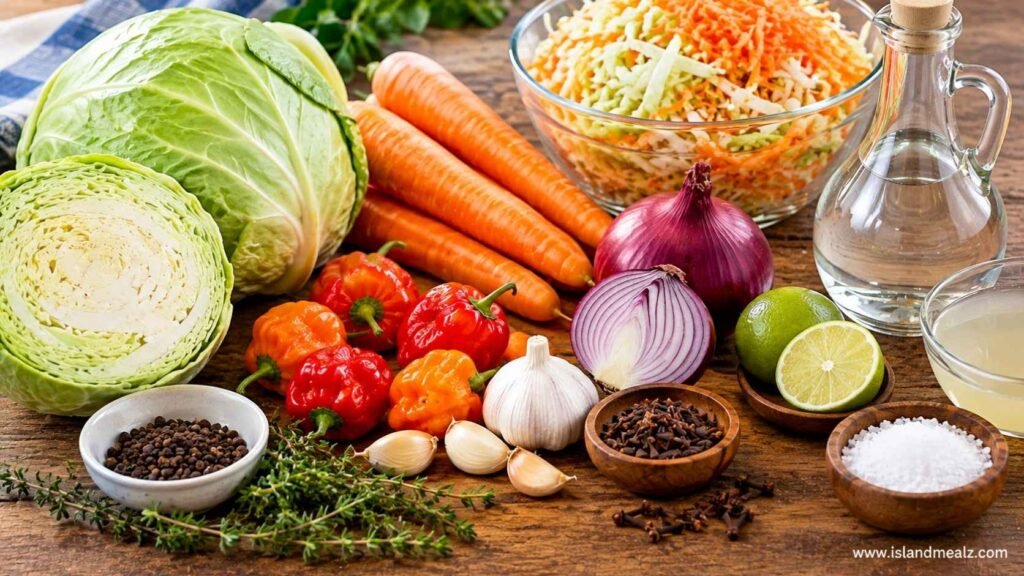
Vegetables You Will Need
- Green cabbage: Provides most of the crunch and forms the base of the recipe.
- Carrots: Add color, texture, and a little natural sweetness.
- Onion: Gives the mixture a sharper flavor.
- Scotch bonnet peppers: Provide the heat associated with traditional Haitian pikliz.
- Garlic: Adds a savory note to the vegetables.
Vinegar and Seasonings
- White vinegar: Gives pikliz its tangy flavor and forms the pickling liquid.
- Lime juice: Adds a fresh citrus note.
- Salt: Seasons the vegetables.
- Fresh thyme, cloves, or peppercorns: Optional additions for extra flavor.
Ingredient Substitutions
If Scotch bonnet peppers are unavailable, habanero peppers are another hot option. For less heat, choose a milder chili and use a smaller amount. The flavor will differ from a traditional version.
You can combine green and red cabbage if you want more color. Keep in mind that changing the proportions of vinegar and vegetables may affect the acidity of the finished mixture, so do not treat this recipe as suitable for room-temperature storage or canning.
How to Make Pikliz Step by Step
Step 1: Prepare the Vegetables
Wash the cabbage, carrots, and onion before preparing them. Remove any damaged cabbage leaves, shred the cabbage thinly, grate the carrots, and slice the onion.
Wear gloves when cutting Scotch bonnet peppers. Avoid touching your eyes or face, and wash your hands and utensils thoroughly afterward.
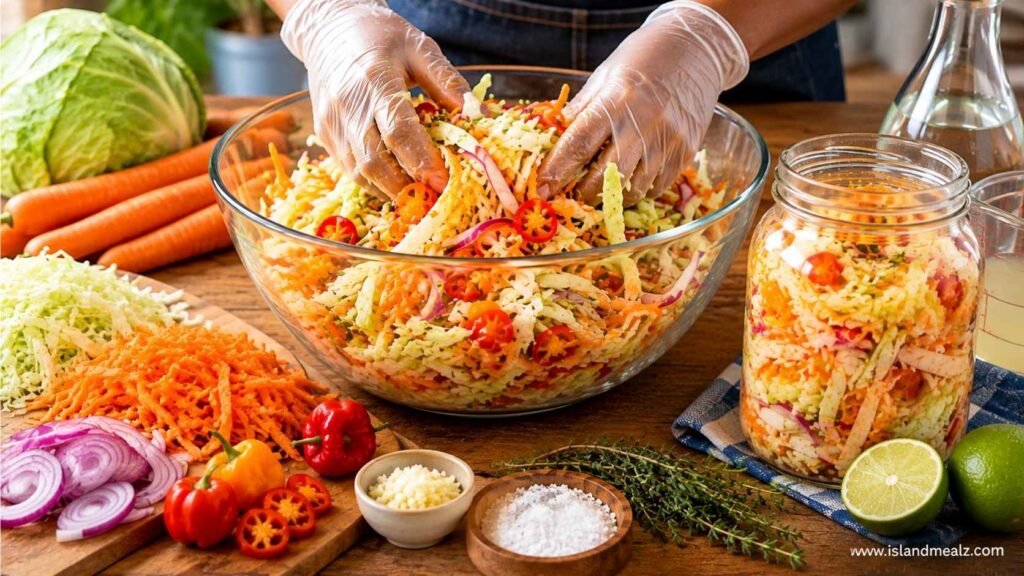
Step 2: Mix the Vegetables and Peppers
Place the cabbage, carrots, onion, and garlic in a large, clean bowl. Add the sliced peppers and salt, then toss the ingredients until evenly mixed.
Start with a smaller amount of pepper if you are unsure about the heat. You can adjust the amount in your next batch.
Step 3: Prepare the Pickling Liquid
Combine the white vinegar and lime juice in a measuring cup. Stir them together before adding the mixture to the vegetables.
Use the measured quantities specified in the tested recipe. The vinegar should be sufficient to cover the vegetables, rather than leaving large portions exposed above the liquid.
Step 4: Fill a Clean Glass Jar
Transfer the vegetable mixture to a clean glass jar. Add the optional thyme or whole spices, then pour in the pickling liquid.
Press the vegetables down gently with a clean utensil. Make sure they are covered by the liquid, and close the jar with a clean lid.
Step 5: Refrigerate Before Serving
Place the jar in the refrigerator and allow the pikliz to rest for at least 24 hours before serving. The flavor may become more developed after two or three days.
Keep the jar refrigerated and use clean utensils each time you serve the pikliz. This homemade recipe is not a shelf-stable canning recipe. Discard the contents if you notice mold or other signs of spoilage.
Tips for Making the Best Pikliz
Small preparation choices can affect the texture and flavor of homemade pikliz.
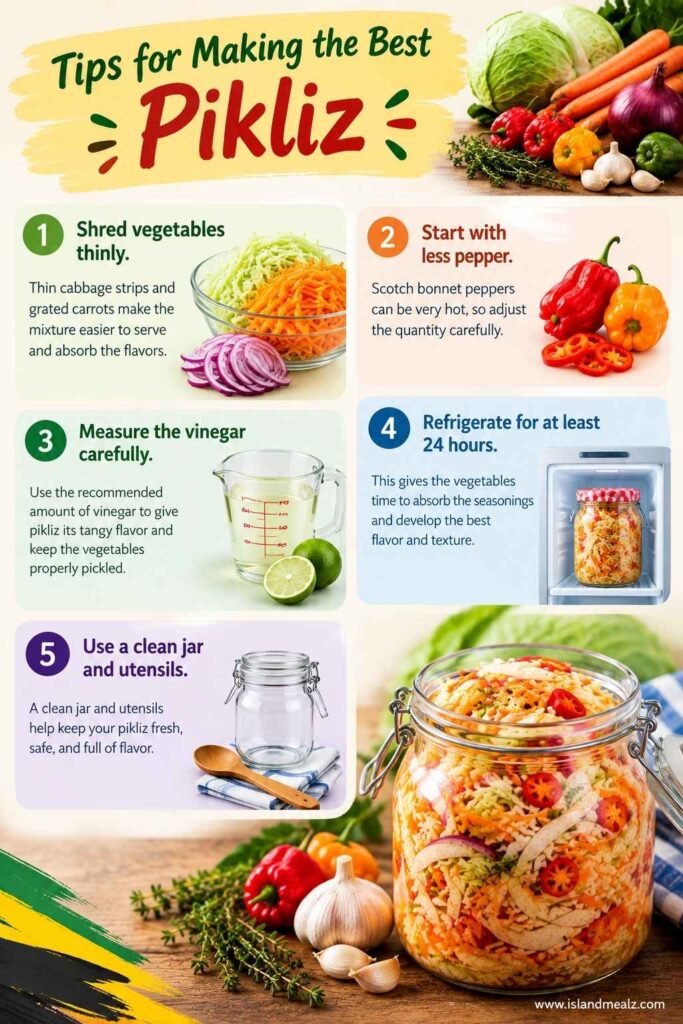
- Cut the vegetables evenly: Thin cabbage strips and grated carrots make the mixture easier to serve.
- Start with less pepper: Scotch bonnet peppers can be very hot, so adjust the quantity carefully.
- Measure the vinegar: Follow the tested recipe rather than guessing at the amount of pickling liquid.
- Allow enough resting time: Refrigerate the mixture for at least 24 hours before serving.
- Use clean equipment: Start with a clean jar and utensils to reduce the risk of contamination.
Avoid judging the flavor immediately after mixing. The vegetables need time to absorb the vinegar and seasonings, so the taste will change as the mixture rests.
How to Adjust the Spice Level
Scotch bonnet peppers give Haitian pikliz its characteristic heat. If you enjoy spicy food, you can use more peppers. If you prefer a milder flavor, start with a smaller amount.
Making Pikliz Extra Spicy
Use the amount of Scotch bonnet specified in the recipe, or adjust it to your preference. Slice the peppers thinly so they mix evenly with the vegetables. Always wear gloves when handling them.
Making a Milder Version
Use fewer Scotch bonnet peppers or replace them with a milder chili. Removing the seeds and inner membranes may reduce some of the heat, but it will not eliminate it completely.
You can also leave out the hot peppers if you want a tangy vegetable pickle without much spice. The result will differ from traditional Haitian pikliz, but it can still work well as a side condiment.
What to Serve With Pikliz
Pikliz works especially well with savory foods because its tangy flavor contrasts with rich or fried dishes. In Haitian cuisine, it is commonly served alongside meat and plantains.
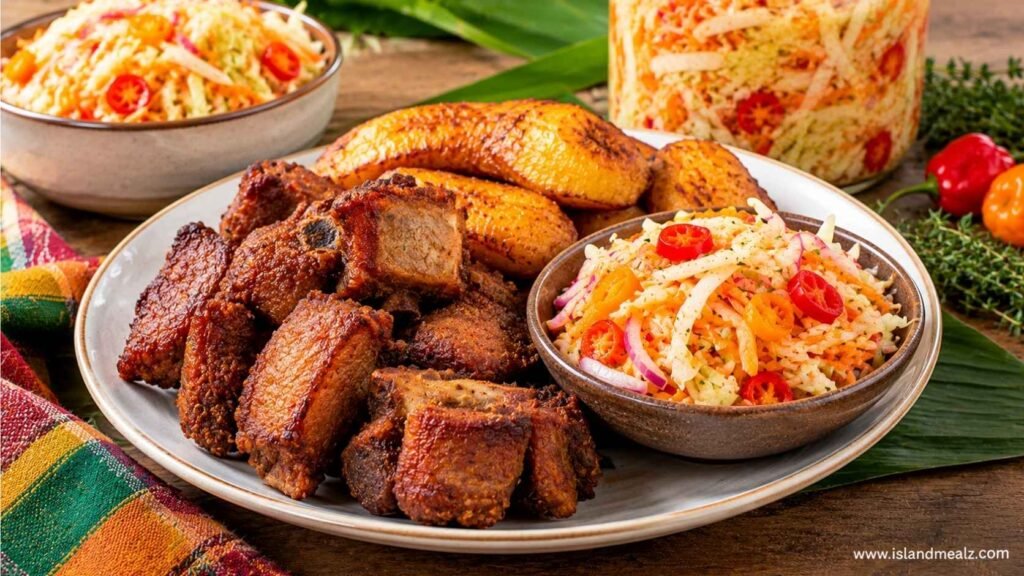
- Haitian griot: Pair the spicy vegetables with seasoned fried pork.
- Tassot: Serve pikliz with Haitian-style fried, seasoned meat.
- Bannann peze: Add it alongside twice-fried green plantains.
- Rice and beans: Serve a small portion beside a simple rice dish.
- Fried fish: Use pikliz to add a tangy contrast to crispy fish.
- Grilled chicken: Add it as a side for extra crunch and heat.
- Burgers and sandwiches: Use a small amount as a topping instead of creamy slaw.
Start with a small serving, especially if your pikliz contains Scotch bonnet peppers. Its sharp flavor and heat can be strong, so a little can go a long way.
How to Store Homemade Pikliz
Store homemade pikliz in a clean, sealed glass jar in the refrigerator. Do not leave it sitting at room temperature after preparation or serving.
Refrigeration and Storage Containers
Use clean utensils whenever you take pikliz from the jar. Keep the vegetables covered with the pickling liquid and return the container to the refrigerator promptly.
The safe storage time depends on the recipe’s acidity, preparation, and handling. Do not assume that vinegar makes the mixture safe indefinitely. Follow a reliable, tested recipe and discard the pikliz if you notice mold, unusual odors, or other signs of spoilage.
Can You Freeze Pikliz?
Freezing is not the best choice if you want to preserve the original crunchy texture. Cabbage and carrots can soften and release water after thawing.
For better texture, prepare a smaller batch and keep it refrigerated. This lets you enjoy the vegetables while they retain more of their crunch.
Common Pikliz-Making Mistakes
A few avoidable mistakes can affect the result when preparing pikliz at home.
- Cutting the cabbage too thick: Thinly shredded cabbage is easier to mix and serve.
- Using too much pepper: Start with a smaller amount if you are sensitive to heat.
- Guessing the vinegar quantity: Measure the ingredients and follow a tested recipe.
- Skipping the resting time: Give the mixture at least 24 hours in the refrigerator before serving.
- Using unclean utensils: Always use clean equipment and a clean storage container.
Pikliz has a sharper, more acidic flavor than creamy coleslaw. Give the vegetables time to absorb the vinegar, and adjust the pepper quantity in future batches to suit your taste.
Frequently Asked Questions
What Is Pikliz Made Of?
Pikliz is made with shredded cabbage, carrots, onions, hot peppers, and vinegar. Some recipes include garlic, lime juice, thyme, or other seasonings.
Is Pikliz the Same as Coleslaw?
No. Coleslaw often uses mayonnaise or a creamy dressing, while pikliz is a tangy, vinegar-based Haitian condiment that commonly includes hot peppers.
Is Pikliz Fermented?
Most traditional pikliz recipes use vinegar to pickle the vegetables rather than relying on fermentation. This recipe uses vinegar and should be refrigerated.
How Long Does Pikliz Need to Sit Before Eating?
Refrigerate the pikliz for at least 24 hours before serving. Waiting two or three days can allow the flavors to develop further.
Can I Make Pikliz Without Scotch Bonnet Peppers?
Yes. Use a milder chili, reduce the quantity, or leave the peppers out. The result will have less heat and a different flavor from the traditional version.
How Long Does Pikliz Last in the Refrigerator?
The safe storage time depends on the recipe and how the mixture is prepared and handled. Keep it refrigerated in a clean, sealed container and follow reliable food-safety guidance rather than assuming it will remain safe for a fixed number of weeks.
Final Thoughts
Homemade pikliz is a simple way to enjoy a traditional Haitian condiment with everyday meals. Cabbage, carrots, vinegar, and hot peppers create a crunchy side that pairs well with fried pork, fish, chicken, and plantains.
Prepare the vegetables ahead of time and let them rest in the refrigerator before serving. Start with less pepper if you prefer a milder taste, and adjust the next batch to suit your preferences.
Serve pikliz in small portions alongside your favorite savory dishes. Keep it refrigerated, use clean utensils, and follow a reliable recipe for safe storage.