
Making fresh guava juice at home is easy, refreshing, and full of tropical flavor. You only need ripe guavas, cold water, and a little sugar if you prefer a sweeter drink. With a blender and a few simple steps, you can prepare a delicious glass of homemade guava juice in minutes.
Fresh guava juice is easy to adjust to your taste. If you like a smooth drink, strain out the seeds and pulp. For a thicker juice, leave a little pulp in the glass. I also recommend tasting the guavas before adding sugar because ripe fruit can be sweet enough on its own.
What Is Guava Juice?
Guava juice is made by blending ripe guavas with water and straining the mixture to remove the seeds. Its flavor can range from mildly sweet to rich and fruity, depending on the variety of guava you use. Pink guavas often give the juice a rosy color, while white guavas usually make a lighter drink.
Homemade guava juice is easy to customize. You can add a little sugar if the fruit tastes tart, use more water for a thinner drink, or keep some pulp for a thicker texture. Unlike many packaged guava drinks, you decide exactly what goes into your glass.
Ingredients for Homemade Guava Juice
You only need a few simple ingredients to make fresh guava juice at home. Choose ripe guavas for the best flavor, and adjust the water and sweetness to match your taste.
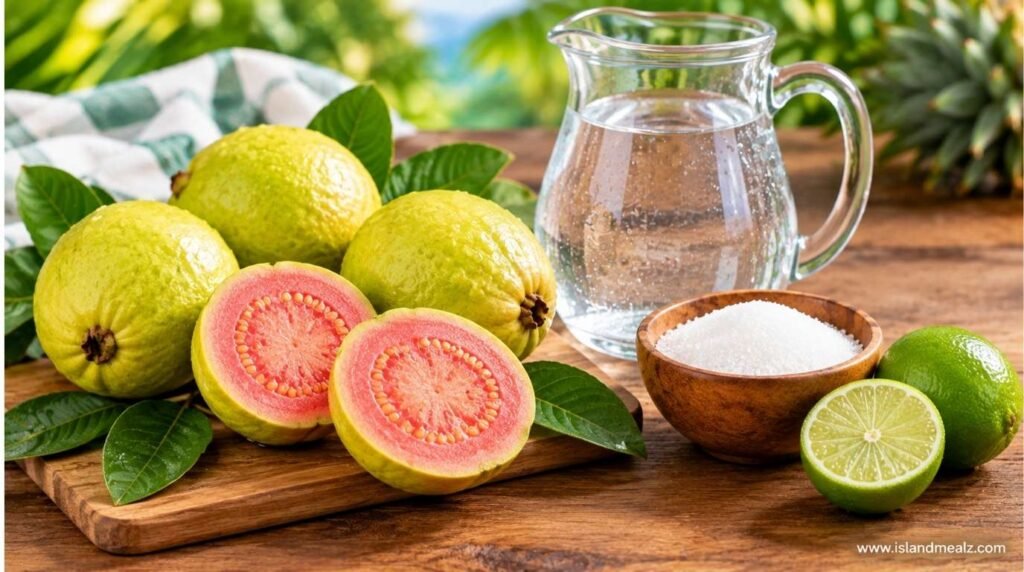
Ingredients You Will Need
- 3 medium ripe guavas: Choose fresh, fragrant guavas that feel slightly soft when gently pressed.
- 1½ to 2 cups cold water: Water helps blend the fruit and gives the juice a smooth, drinkable consistency.
- 1–2 tablespoons sugar (optional): Add sugar if your guavas need extra sweetness. You can also use honey or skip the sweetener.
- 1 teaspoon fresh lime juice (optional): Lime adds a light, tangy flavor that balances the sweetness.
- Ice cubes (optional): Serve the juice over ice for a refreshing drink.
Tips for Choosing the Ingredients
Start with 1½ cups of cold water and add more if needed. Taste the juice before adding sugar, especially when your guavas are fully ripe. Lime juice is optional, but a small splash can balance the sweetness.
How to Choose Ripe Guavas
When buying guavas for juice, look for fruit with a sweet smell and skin that gives slightly when pressed. The fruit should feel ripe without being mushy. Pink and white guavas both work well, so choose whichever is available and fresh.
Hard guavas may need a few days to ripen at room temperature. Check them daily and wash them under running water before cutting. Avoid fruit with mold, leaking spots, or a rotten smell. Ripe guavas usually have a stronger flavor and make a better-tasting drink.
How to Make Guava Juice Step by Step
Making guava juice at home takes only a few simple steps. Follow this method to prepare a fresh, flavorful drink with a smooth texture.
Step 1: Wash and Cut the Guavas
Rinse the guavas under running water and cut away the ends or any damaged spots. Chop the fruit into small pieces so it blends more easily. You can leave the skin on after washing it well.
Step 2: Add the Guavas and Water
Put the chopped guavas into a blender and add 1½ cups of cold water. Starting with less water makes it easier to control the thickness. You can always add more after straining.
Step 3: Blend Until the Fruit Breaks Down
Blend for about 30–60 seconds, checking the mixture as you go. Stop when the fruit has broken down into a thick liquid. Avoid blending longer than necessary because crushed seeds can affect the texture.
Step 4: Strain the Mixture
Set a fine-mesh strainer over a bowl or pitcher and slowly pour in the mixture. Use a spoon to press the pulp gently and collect the juice. This removes most of the seeds and larger pieces of fruit.
Step 5: Taste and Serve
Taste the juice before adding sugar. If it is too thick, stir in a little more cold water. Add lime juice if you prefer a slightly tangy flavor. Serve the juice over ice or chill it in the refrigerator before drinking.
How to Make Guava Juice Without a Blender
You can make guava juice without a blender by softening the fruit on the stove. Wash and chop the guavas, then place them in a saucepan with enough water to soften the pieces. Bring the water to a gentle simmer and cook for about 10–15 minutes, or until the fruit is soft.
Let the mixture cool before mashing the guavas with a fork or potato masher. Pour it through a fine-mesh strainer and press the pulp gently with a spoon. Add more water if needed, then sweeten to taste. The juice may have a slightly different texture from blender-made juice, but it is still a useful option when you do not have a blender.
Tips for the Best-Tasting Guava Juice
A few simple tips can help you make guava juice that tastes fresh and has the right texture. Small changes to the preparation can also help you get the most out of your fruit.
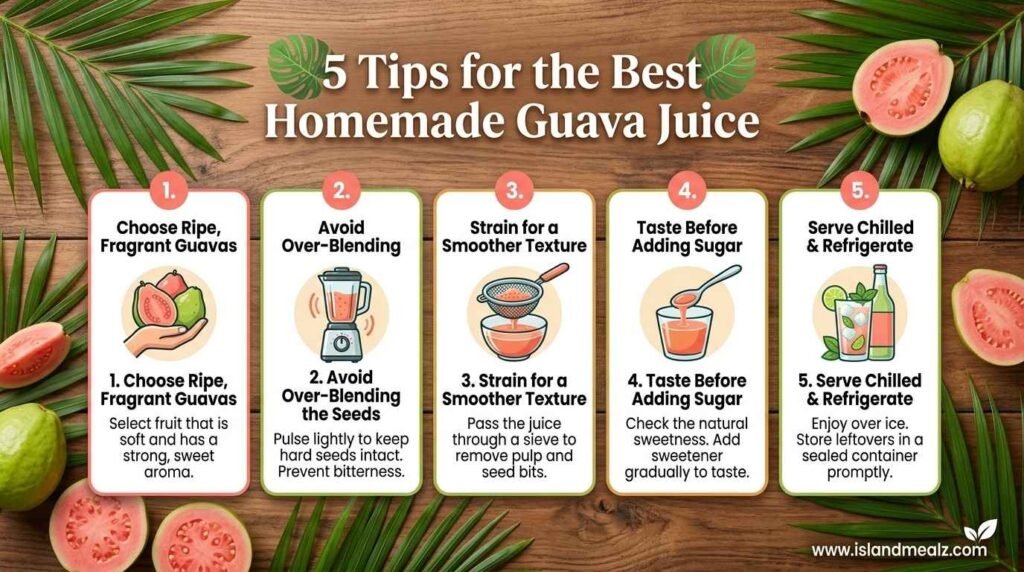
Do not over-blend. Blend just long enough to break down the fruit. This helps keep the seeds from becoming too finely crushed.
Adjust the texture after straining. Add cold water a little at a time if the juice is thicker than you like. This is easier than starting with too much water.
Taste before sweetening. Some ripe guavas are naturally sweet. Add sugar only if the finished juice needs it.
Strain for a smoother drink. Use a fine-mesh strainer and press the pulp gently. If the juice still feels gritty, strain it again.
Keep it cold. Serve the juice chilled, and refrigerate leftovers promptly in a clean, covered container.
Guava Juice Variations to Try
Once you know how to make basic guava juice, you can try different flavors with a few extra ingredients. These simple variations let you adjust the drink to suit your taste.
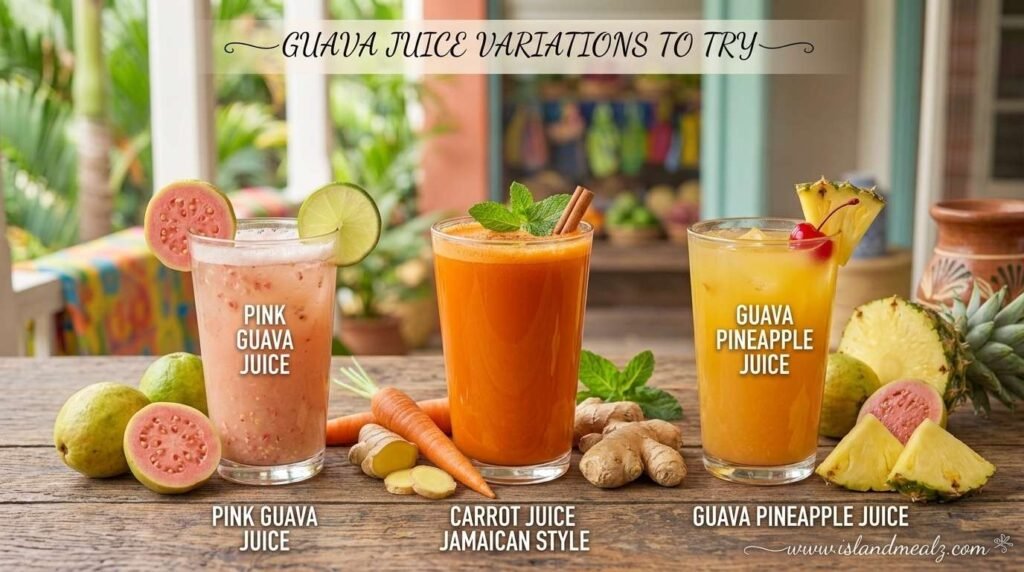
Pink Guava Juice
Use ripe pink guavas when you want a naturally rosy drink. Blend them with water and strain as usual. The final color will depend on the type of guava and how ripe it is.
Guava Lime Juice
Stir one teaspoon of fresh lime juice into the prepared guava juice. Taste it before adding more. Lime gives the drink a light citrus flavor that works well with sweet guavas.
Guava Pineapple Juice
Mix equal parts guava juice and fresh pineapple juice for a tropical fruit drink. Taste the mixture before adding sugar because pineapple can add plenty of sweetness on its own.
Guava Mint Juice
Add a few washed mint leaves to the blender with the guavas and water. Blend briefly, then strain the mixture. Start with a small amount of mint so it does not overpower the guava flavor.
How to Store Homemade Guava Juice
Fresh guava juice tastes best soon after you make it. If you have leftovers, pour them into a clean, covered container and refrigerate them promptly at 40°F (4°C) or below. For the best quality, aim to use the juice within 2–3 days.
The pulp may settle at the bottom, so stir the juice before serving. You can also freeze it in a freezer-safe container, leaving space for expansion. Thaw it in the refrigerator and stir well before drinking. Discard the juice if you notice signs of spoilage.
Read Also: Guava Juice Recipe
Frequently Asked Questions
How Do You Make Guava Juice at Home?
Blend three ripe guavas with 1½ cups of cold water. Strain the mixture, taste it, and add more water or sugar if needed.
Do You Need to Peel Guavas Before Making Juice?
No, peeling is optional. Wash the fruit well and remove any damaged parts before cutting it.
Can You Make Guava Juice Without a Blender?
Yes. Simmer chopped guavas in water until soft, let them cool, mash the fruit, and strain the mixture.
How Do You Remove Seeds From Guava Juice?
Pour the blended mixture through a fine-mesh strainer. Press the pulp gently with a spoon to release the juice without forcing the seeds through.
Can You Make Guava Juice Without Sugar?
Yes. Use ripe guavas and taste the juice before adding a sweetener. You may find that the fruit is sweet enough on its own.
How Long Does Fresh Guava Juice Last in the Refrigerator?
Keep the juice in a clean, covered container at 40°F (4°C) or below. For the best quality, use it within 2–3 days and discard it if you notice signs of spoilage.
Final Thoughts
Making guava juice at home does not require many ingredients or special equipment. Start with ripe guavas, blend them with cold water, and strain the mixture to get the texture you prefer. Taste the juice before adding sugar, and adjust the water until it suits you.
Try the basic recipe first, then experiment with lime, pineapple, or mint. Once you find the flavor you like, you can easily make it again for breakfast or a family meal.